

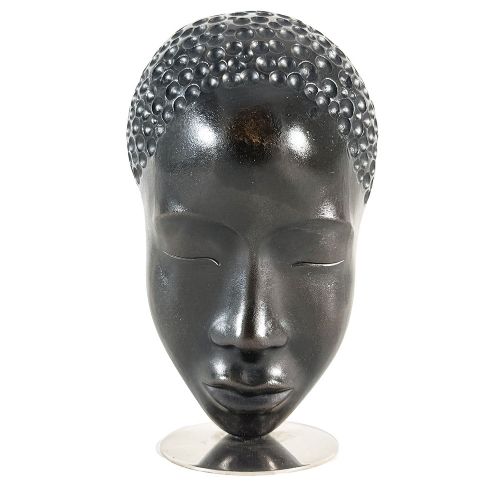

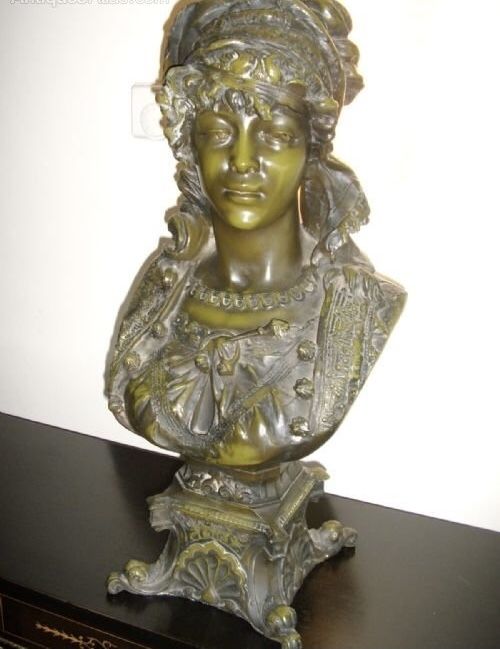
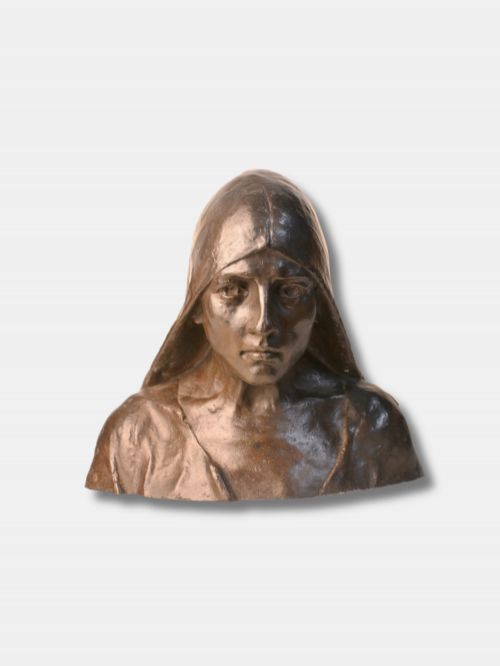


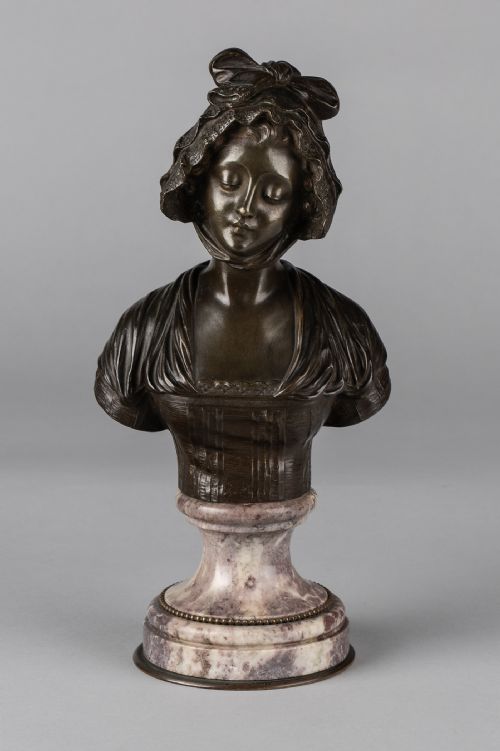


Dark Bronze Female Bust
These dark bronze female bust sculptures capture classical grace and turn every room into a quiet gallery.
Dark Bronze Female Bust
A dark bronze female bust is a portrait sculpture focusing on the head, neck and shoulders of a woman, rendered in metal with a deep patination. You meet these primarily as nineteenth-century French works, alongside Victorian and later interpretations spanning classical, Egyptian and art nouveau aesthetics.
The subjects range from allegorical figures and literary heroines such as Sappho and Lucrece to unidentified maidens and medieval women. Most pieces rest upon integral or separate stands made of marble, red marble, wood or alabaster, which elevate the metalwork.
Makers and sculptors sign many of these works, while others emerge as unsigned or later casts after established artists. Portrait busts function as tabletop ornaments, mantel centrepieces or cabinet sculptures designed to bring sculptural presence into domestic interiors.
How they were made
Foundries produced these pieces using traditional metal casting techniques, pouring molten alloy into moulds before finishing the metal by hand. Artisans applied patination chemicals to achieve the characteristic dark surface tones, often combining bronze with painted details or mixed media elements.
Dark Bronze Female Bust Retail Price Guide 2026
Typical asking prices for dark bronze female bust among the pieces listed under this phrase on Sellingantiques today, from the lower quarter to the upper quarter. They describe what is for sale here now, not the wider market.
Several ladies depicted here wear medieval headdresses or gaze into the middle distance with intense nineteenth-century thoughtfulness.
What varies in quality
The choice and execution of the base material also differentiate the pieces, from simple wooden mounts to substantial variegated marble or red marble pedestals. Original signatures and foundry marks add definition to the provenance of the work.
E Villanis·Henry Wissen Senior·Emile Jespers·E Laurent·Henri Plé·Georges Van Der Straeten·J C De Blezer·HL Blasche for Reps & Trinte
The Dark Bronze Female Bust Glossary
- Patinated bronze
- A bronze sculpture treated with chemical solutions to produce a specific surface colour, most commonly dark brown or nearly black. This layer protects the metal and defines the visual mood of the portrait.
- Ormolu
- Gilded bronze used as an ornamental mount or highlight on sculptural bases and fittings. The technique involves applying a gold amalgam to the metal surface.
- Allegorical figure
- A personification of an abstract idea, virtue or historical subject represented in human form. These subjects were popular in nineteenth-century French academic art.
- Plinth
- The heavy base or block upon which a bust or statue stands. They often utilise contrasting materials like marble or alabaster to frame the bronze sculpture.
Dark Bronze Female Bust: Frequently Asked Questions
Where do I place a bust?
These sculptures suit prominent flat surfaces where light can catch the dark metal contours. A sturdy mantelpiece, a library bookshelf or a dedicated console table offers enough stability and visibility for a heavy bronze and marble piece.
Keep them away from direct heat sources and damp areas to preserve the integrity of the patination and the supporting stone base.
How do I clean bronze?
Dust the surface regularly with a soft, dry lint-free cloth to prevent particle buildup. Avoid chemical cleaners, polishes or water, which can strip away the original patination and damage the metal.
If the piece requires deeper attention, consult a professional conservator rather than attempting home remedies.
How do I date a bust?
Examine the signature, the style of the script, and the casting style to determine the period of origin. Nineteenth-century pieces often display specific foundry stamps, classical or art nouveau stylistic cues, and heavy material construction.
Compare the subject matter and costume details, such as medieval or Egyptian revival motifs, against known production periods of the era.
Are these pieces solid bronze?
Many nineteenth-century portrait busts are hollow-cast bronze rather than solid metal, which reduced weight and material costs while maintaining structural strength. Foundry techniques allowed for detailed walls of even thickness.
Heavier components often come from the marble, alabaster or wood stands attached to the base of the sculpture rather than the metal itself.