




Dark Blue Wool Weaving
Dark blue wool weaving brings together dense tribal rugs and flatweaves crafted by regional makers using rich natural dyes.
Dark Blue Wool Weaving
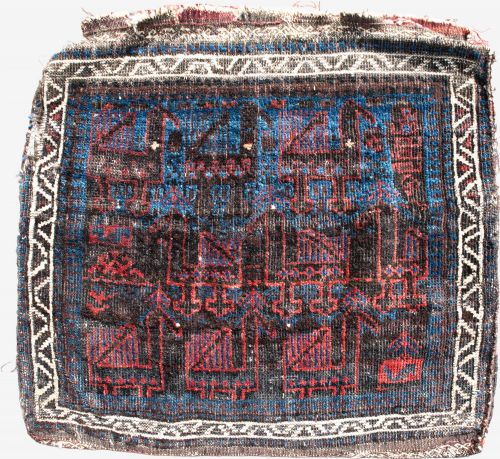
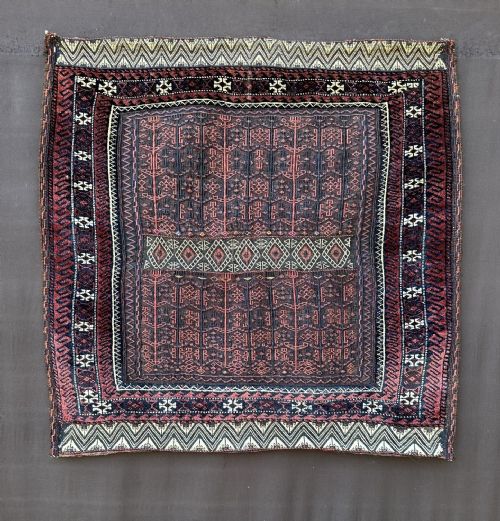
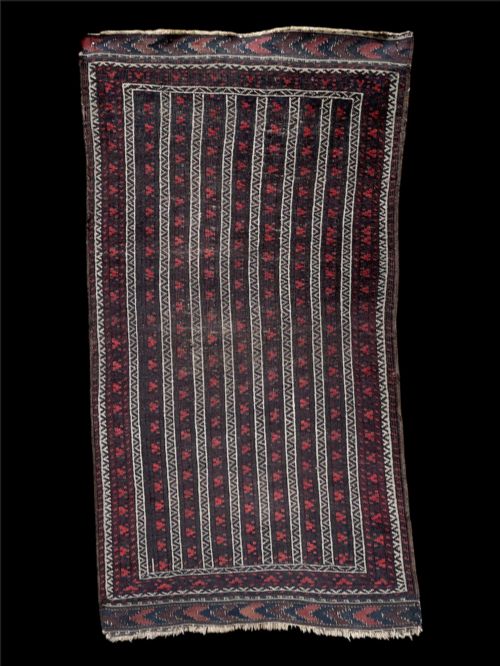
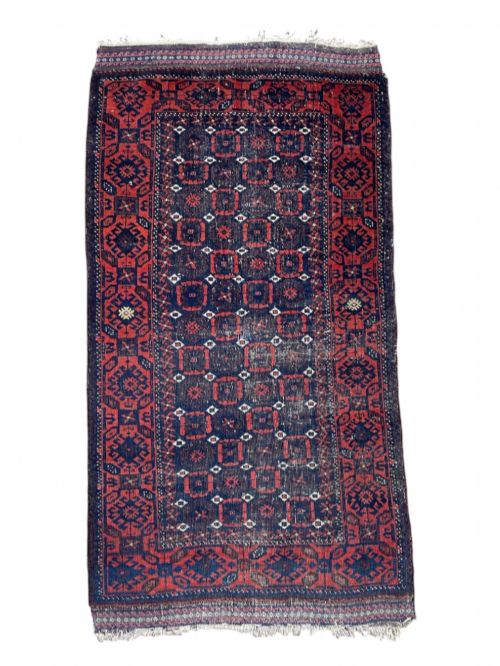
Dark blue wool weaving encompasses hand-knotted rugs, village carpets, and nomadic bag faces originating from Persia, Afghanistan, and the Caucasus. These textiles feature deep indigo foundations paired with tribal motifs, ranging from simple prayer formats to complex medallion layouts.
Buyers exploring this category will frequently encounter Baluch rugs, Timuri pieces, and Kurdish village work dating from the late nineteenth century into the early decades of the twentieth century. These regional pieces reflect distinct tribal traditions preserved through generations of hand production.
Common formats span small saddle-bag faces and runner rugs up to larger village carpets suitable for grounding a room. Each piece displays the characteristic depth of saturated wool piles or flatwoven structures.
Materials and construction
The foundation of these textiles rests on hand-spun wool and cotton, worked into sturdy pile rugs or flatweaves by tribal weavers. Natural dyes provide the enduring palette, yielding deep indigo blues alongside earthy secondary tones.
Weavers utilised techniques like hand-knotting and soumak wrapping to build durable structures using goat hair and wool. These organic materials give the surface texture and allow the natural dyes to age with character.
Bread sofhs carry the quiet history of nomadic meals woven straight into the warp.
Assessing quality and handle
Quality in these textiles depends on the density of the weave, the clarity of the tribal motifs, and the richness of the natural dye palette. Tighter knotting and precise geometric execution distinguish finer village and tribal pieces from simpler utility formats.
The handling of the wool, the stability of the foundation, and the depth of the indigo dye further separate standard examples from exceptional survivals. Well-preserved pile condition and balanced proportions elevate a piece within its regional group.
The Dark Blue Wool Weaving Glossary
- Sofreh
- A flatwoven spread or cloth used for dining or food preparation by tribal groups. These items often feature utilitarian designs combined with fine tribal weaving techniques.
- Torba
- A small storage bag face produced by Turkmen and related tribal weavers. They were traditionally hung inside tents to hold household belongings.
- Soumak
- A flatweaving technique where decorative face threads wrap over the warp threads in various patterns. This method creates a textured, durable surface without a cut pile.
- Mina Khani
- A repeating grid pattern of rosettes and connecting stems found across Persian and tribal rugs. The motif originates from classical Persian garden designs.
- Medallion
- A central ornamental design motif placed in the middle of a rug field. Tribal weavers often used geometric or box variants of this layout.
Dark Blue Wool Weaving: Frequently Asked Questions
How are tribal rugs cleaned?
Professional washing by specialists familiar with antique vegetable-dyed wool is essential for preserving the fibres and colours.
Regular gentle surface cleaning helps maintain the textile without disturbing the historical weave structure.
Where were these textiles made?
Production centres span the tribal regions of southwest Asia, including Persia, western Afghanistan, and the Caucasus.
Nomadic and village groups created these pieces for daily utility, trade, and personal use within their communities.
Can I use runners in hallways?
Sturdy village runners suit high-traffic areas when paired with a quality underlay to prevent sliding and reduce friction.
Placing them away from direct, harsh sunlight protects the natural indigo dyes from fading over time.
What is a bag face?
A bag face is the decorative front portion of a functional storage sack woven by nomadic tribes for transport.
Collectors often frame or display these panels as independent textile art due to their concentrated designs.