


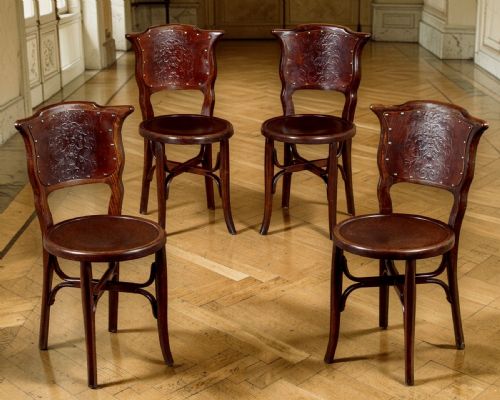


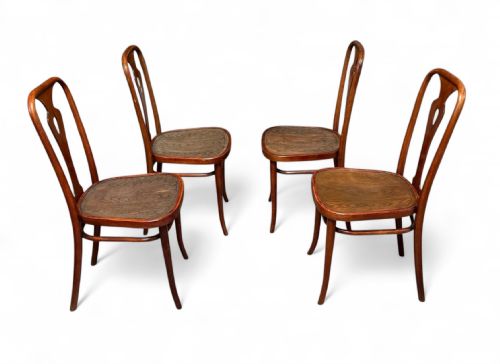


Dark Beech Bentwood Chair
A dark beech bentwood chair offers a resilient, steam-bent silhouette that brings lightness and clean lines to any dining room.
Dark Beech Bentwood Chair
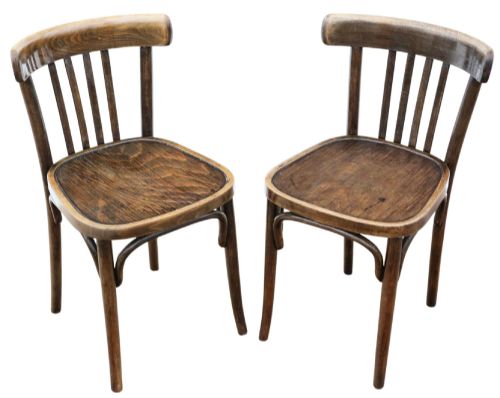
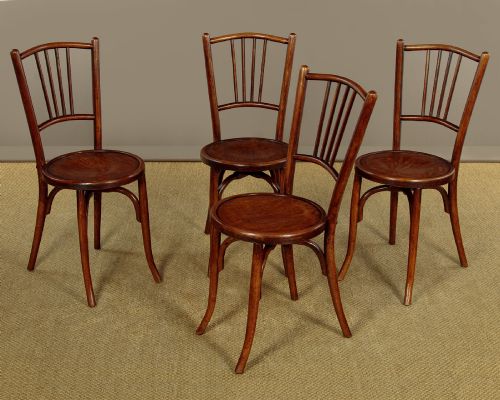
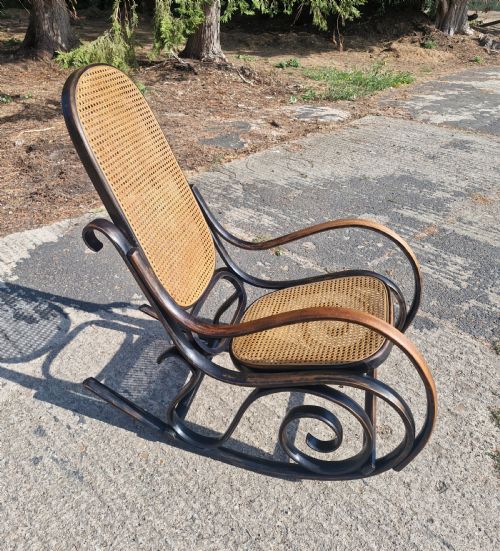
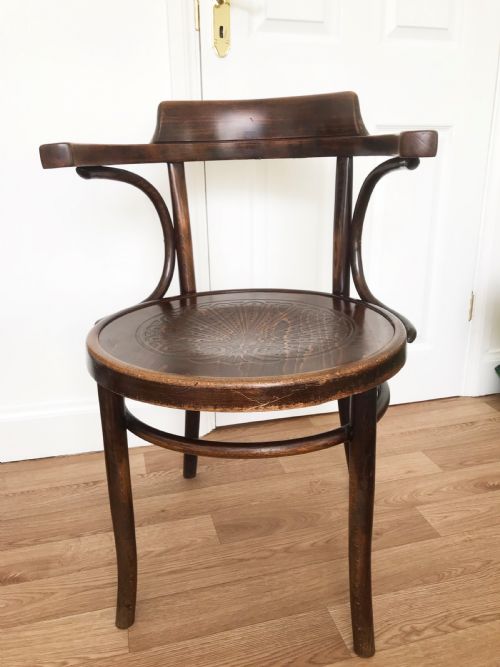
A dark beech bentwood chair is defined by its curving wooden frame shaped through the application of steam, resulting in organic lines that feel remarkably light yet durable. When searching for a dark beech bentwood chair, buyers encounter various forms ranging from simple bistro dining seats to elaborate rocking armchairs and carvers.
The pieces available span multiple decades, drawing from the Victorian, Edwardian, and Art Nouveau periods up to mid-century designs. Makers such as Thonet, Jacob and Josef Kohn, and Codina shaped this tradition, producing chairs utilised in cafes, offices, and domestic interiors alike.
Forms include sets of dining chairs alongside single armchairs, desk chairs, and rocking chairs. The darker finish highlights the grain of the beech and stained wood, giving each piece a distinct presence that anchors a room.
Materials and construction
Solid beech, beechwood, and bentwood form the core structural elements of these pieces, selected for their ability to withstand the steaming process without splintering. Craftsmen exposed the wood to steam until pliable, then bent the material into continuous loops and curves using metal straps and cast-iron forms.
Additional components incorporate plywood, leather, and rattan cane for seats and backs, while stained wood finishes provide the characteristic dark tone. Metal screws and bolts often secure the steam-bent components to the seat bases and underframes.
Listings feature periods spanning the 19th Century through the 1960s, encompassing styles from Victorian and Edwardian to Art Nouveau and Vienna Secession.
Factors of quality
Quality in these pieces rests upon the crispness of the steam-bent curves and the structural integrity of the joints. Finer examples display smooth, continuous bends without excessive distortion or splitting along the grain.
The complexity of the model also dictates distinction, moving from plain dining seats to embossed designs, armchairs, and rocking chairs bearing attribution to notable makers. Original upholstery elements, canework, and branded stamps further separate standard production pieces from workshop highlights.
Thonet·Jacob and Josef Kohn·Codina
The Dark Beech Bentwood Chair Glossary
- Bentwood
- Wood that has been rendered pliable by steam and shaped into curves. This technique allows for lightweight, continuous frames without traditional heavy joinery.
- Beech
- A hard, fine-grained timber commonly utilised in European furniture making. It takes stains evenly and responds exceptionally well to steam-bending.
- Carver
- An armchair designed with low arms, traditionally placed at the head of a dining table or used as a desk chair. These pieces offer additional support compared to standard side chairs.
- Cane
- Strips of rattan woven into an open pattern for seat and back panels. This material provides flexible, breathable support.
- Vienna Secession
- An artistic movement originating in Austria that rejected historicism in favour of clean, geometric, and simplified forms. Pieces from this circle exhibit restrained ornamentation and strong structural lines.
Dark Beech Bentwood Chair: Frequently Asked Questions
How do I care for bentwood?
Keep the wood away from direct heat sources and excessive moisture to prevent the steam-bent joints from drying out or loosening over time. Regular dusting with a soft cloth preserves the stained finish.
Condition cane seats occasionally with a damp sponge to maintain elasticity. Avoid harsh chemical cleaners that can degrade the surface of the stained wood.
Are these chairs suitable for daily dining?
These pieces were originally designed for commercial cafes and domestic dining rooms, meaning they are built for daily use. Their lightweight construction makes them easy to move around a table.
Ensure that the screws and bolts securing the frame are checked periodically. This simple maintenance keeps the joints firm during everyday sitting.
How do I identify a maker?
Makers often impressed paper labels, stamps, or burned-in branding marks onto the underside of the wooden seat base. These marks frequently indicate the workshop or manufacturer.
Stylistic details such as specific screw patterns, embossed seat motifs, and the radius of the bentwood curves also point towards particular makers. Comparing these elements with documented examples helps clarify provenance.
What is grotto style?
Grotto style furniture incorporates naturalistic motifs resembling rustic rockwork, shells, and organic branches. In bentwood pieces, this translates to flowing, undulating frame lines.
Such designs emerged during the late nineteenth and early twentieth centuries. They introduce a sculptural, playful element to standard seating forms.