
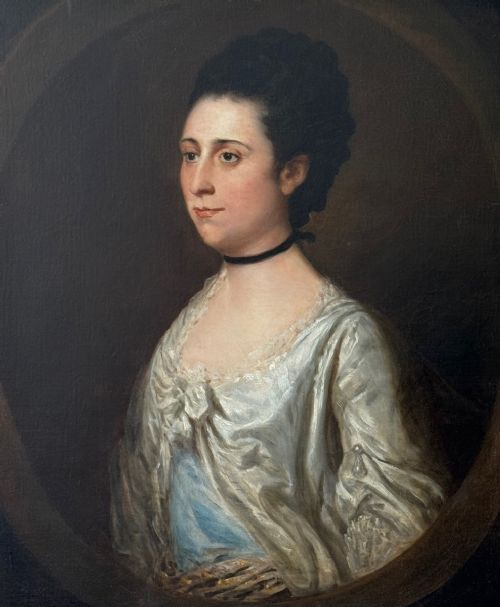


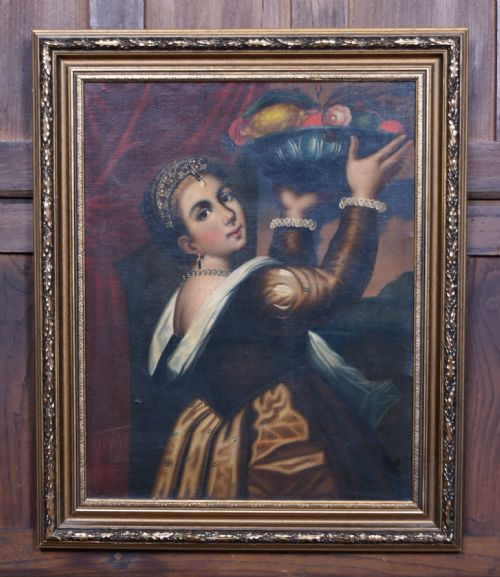


Dark Background Canvas Portrait
A dark background canvas portrait draws the eye straight to the subject through deep shadow and careful light.
Dark Background Canvas Portrait
When you search for a dark background canvas portrait, you are looking at oil paintings spanning several centuries, from the seventeenth century through to the twentieth century. These works capture sitters, animals, and children against deep, shadowy grounds that throw the principal figure into sharp relief.
The versions you are most likely to meet on this page include nineteenth-century and eighteenth-century British and European school works. They range from formal depictions of bishops, dukes, and generals to intimate studies of children, women, and animals rendered in oil on canvas.
Styles represented across the selection move through Baroque, Flemish Baroque, Georgian, Victorian, Regency, and Edwardian periods. Each piece employs the dark backdrop to create a sense of drama and sculptural presence characteristic of traditional portraiture.
How they were made
These works are executed in oil paint applied to woven canvas supports, sometimes housed within frames of giltwood, wood, or stucco. The foundational technique relies on building up dark, brooding background tones that contrast with the luminous flesh tones and fabrics of the subject.
Several centuries of serious bishops, dukes, and generals share wall space here with Persian kittens and a horse.
What varies in quality
Condition also plays a part in the standing of a piece, particularly the stability of the canvas and the preservation of the original pigment layers. Works that retain their initial depth without heavy, intrusive overpainting hold greater artistic integrity.
THOMAS BEACH·MARGARET SARAH CARPENTER·Agnes Augusta Talboys·ENOCH SEEMAN·Sir Godfrey Kneller·John Raphael Smith·Edward Bird·Eden Upton Eddis·John Closterman·William Huggins·Lemuel Francis Abbott·Sir Oswald Hornby Joseph Birley·Henry Wyatt·Cowan Dobson·John Ward Dunsmore
The Dark Background Canvas Portrait Glossary
- Oil on Canvas
- A traditional painting medium where coloured pigments are suspended in a drying oil, such as linseed, and applied to a stretched woven fabric support. This combination allows for rich blending and deep tonal variations.
- Giltwood
- Wood that has been covered with a thin layer of gold leaf or gilt powder. It frequently frames historical portraits to add a reflective border.
- Flemish Baroque
- An artistic movement originating in the seventeenth century known for exuberant vitality, rich colour, and dramatic contrasts between light and dark. It heavily influences several of the earlier portraits in this collection.
- Stucco
- A fine plaster used for decorative mouldings and frame ornamentation. It provides a solid, textured surround for antique canvases.
Dark Background Canvas Portrait: Frequently Asked Questions
What is a dark background canvas portrait?
A dark background canvas portrait is an oil painting on fabric where the sitter emerges from deep, shadowy surroundings. This technique uses strong contrast to focus attention entirely on the facial expression and attire of the subject.
These works date from the seventeenth century through to the mid-twentieth century, capturing historical figures, everyday individuals, and animals in styles ranging from Baroque to Edwardian.
How should I hang an oil portrait?
Hang your oil painting away from direct sunlight and damp environments to protect the canvas and the wooden stretcher bars. Stable indoor temperatures prevent the paint and canvas from expanding and contracting.
Position the piece at eye level where adequate room lighting can illuminate the dark background without creating distracting glare on the varnished surface.
How do I identify the period of a portrait?
Period identification relies heavily on the sitter's clothing, hairstyle, and framing conventions. Lace ruffs, heavy armour, and elaborate wigs typically point to the seventeenth and eighteenth centuries.
Later Victorian and Edwardian works often feature softer garments and more relaxed postures, while the underlying canvas and stretcher construction offer further clues to the date.