


Dapple Grey Wooden Horse
A dapple grey wooden horse brings traditional nursery charm into the home, offering solid wood construction and hand-painted dappled finishes.
Dapple Grey Wooden Horse
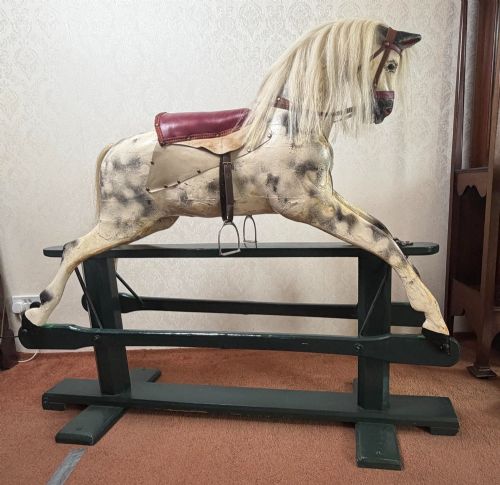
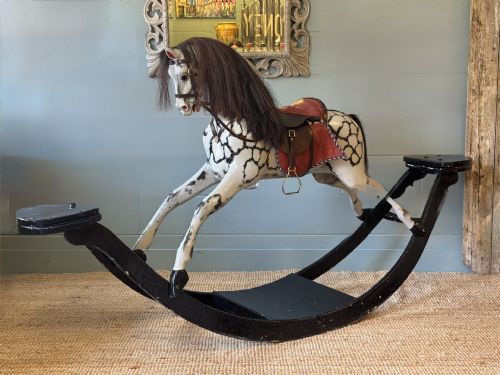
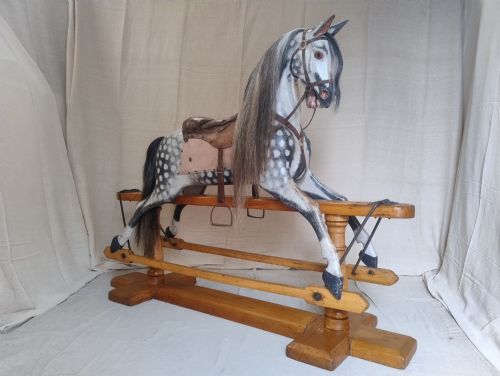
A dapple grey wooden horse is primarily represented on this page by antique and vintage rocking horses from the Victorian, Edwardian, and interwar periods. These pieces take the form of traditional rocking horses mounted on original curved wooden rockers or pine trestle bases.
Originating largely from British workshops, these carved wooden figures capture the playful spirit of historical children's toys. They serve today as decorative centrepieces and cherished survivors of past eras.
Materials and construction techniques
Construction relies heavily on carved pine and solid wood bodies shaped to form the horse, often mounted on robust pine or wooden rocker bases. Metal and iron components provide structural stability to the swinging mechanisms and internal bracing.
Surface texture and realism are achieved through the application of genuine horsehair for manes and tails, alongside leather tack and harness details. The characteristic dappled grey finish is applied using layered paint techniques over carved wooden surfaces, sometimes incorporating glass eyes.
Many of these sturdy wooden survivors retain their original glass eyes, watching over the room with undiminished equine vigilance.
Assessing quality and craftsmanship
Quality in a dapple grey wooden horse is largely determined by the depth of anatomical carving in the wooden body and the integrity of the original painted dappling. Examples bearing the distinct marks or structural hallmarks of established makers generally represent the higher echelon of craftsmanship.
The survival of original elements such as leather tack, horsehair manes, and sturdy wooden rockers elevates the standing of a piece. Finer examples maintain their original finish and structural proportions without excessive modern intervention.
G and J Lines of London·F.H. Ayres·Lines Bros Sportiboy·Collinson and Sons Liverpool
The Dapple Grey Wooden Horse Glossary
- Dapple grey
- A coat colour pattern for horses featuring darker spots or rings over a grey background, recreated here through hand-painted finishes on wood. This decorative surface treatment is characteristic of traditional nursery rocking horses.
- Rockers
- The curved wooden pieces attached beneath the horse's feet that allow it to swing back and forth. Original curved rockers are a key feature sought by collectors.
- Tack
- The equipment used in horse riding, including bridles, reins, and saddles, often made from real leather on these figures. Original leather tack adds historical context to the piece.
- Folk art
- Art produced from an indigenous culture or peasant society, encompassing traditional handcrafted objects like early wooden horses. These items reflect vernacular styles rather than formal academic training.
Dapple Grey Wooden Horse: Frequently Asked Questions
Are these horses suitable for children to ride?
Most antique rocking horses are treated primarily as decorative display items or collectible pieces of folk art due to their age and historical value. Their sturdy wooden construction reflects original functional use, but modern owners generally preserve them rather than use them for active play.
Careful consideration should be given to the structural stability of the pine base and rockers before allowing any weight upon them.
What materials make up the mane and tail?
Traditional antique rocking horses use genuine horsehair for both the mane and the tail to achieve an authentic texture. This natural material is securely fastened into the carved wooden head and body.
Checking the hair helps verify the period authenticity of the piece alongside the painted dapple grey finish.
How should I care for a painted wooden horse?
Keep the piece away from direct sunlight and steady moisture sources to protect the painted pine surface and the leather tack. Gentle dusting with a dry cloth is sufficient for routine maintenance.
Avoid harsh chemical cleaners that might damage the historic dapple grey paint layers or dry out the original leather elements.