


Danish Silver Spoon
When you pick up a danish silver spoon, you hold decades of quiet craftsmanship shaped by Scandinavian silversmiths.
Danish Silver Spoon
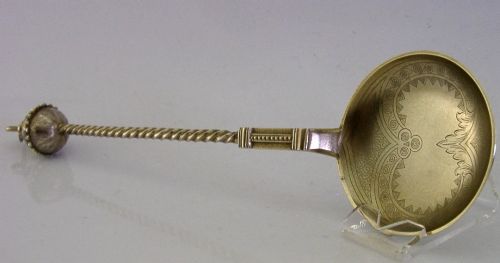
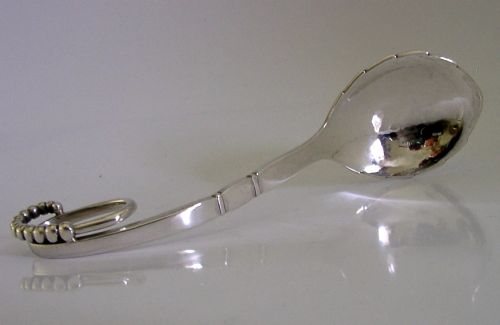
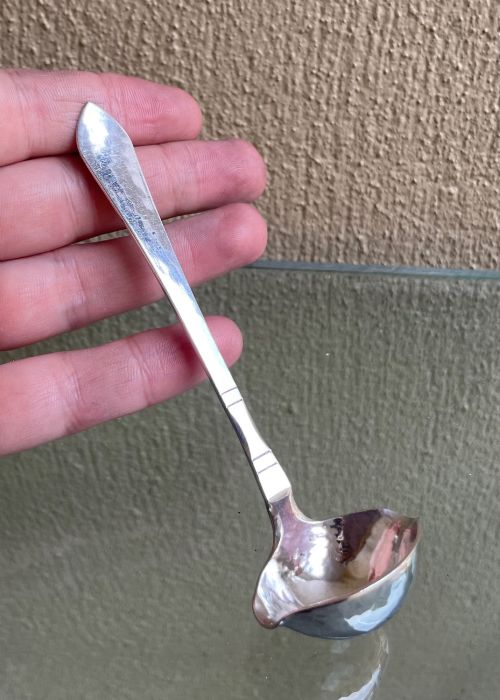
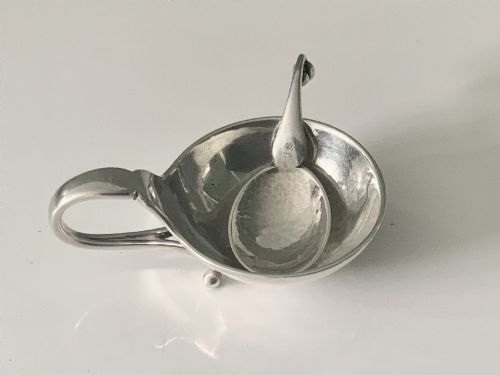
A danish silver spoon encompasses a range of domestic and ceremonial forms, from humble teaspoons and caddy spoons to large serving spoons and baptismal ladles. The selection spans the twentieth century, reflecting shifts in design from ornate Edwardian and Art Nouveau creations to clean lines of Danish Modern.
You are most likely to encounter smaller utilitarian pieces alongside decorative items such as enameled Christmas spoons and demitasse sets. These objects combine practical utility with distinct regional aesthetics that developed across successive decades.
How they were made
Silversmiths utilised sterling silver and solid silver as the primary foundations, often applying gold gilt to bowl interiors or entire surfaces. Enamel work frequently adds vibrant colour to specialised commemorative and seasonal pieces.
Traditional techniques involve hammering, casting, and hand-finishing, paired with specialised decorative methods like plique-à-jour for translucent effects. Maker workshops applied these processes to achieve both structural durability and refined surface detail.
Lobsters, crabs, and Christmas angels occasionally hide inside silver bowls, keeping watch over your morning coffee.
What varies in quality
The standard of a danish silver spoon rests on the clarity of its maker's marks, the precision of its hand-chased ornamentation, and the preservation of any applied silver gilt or enamel. Examples bearing recognised workshop attributions typically demonstrate superior metal weight and balance.
Complexity of design separates standard production items from exceptional work, particularly where intricate motifs like foliate patterns or openwork enamel are executed with exact control.
Georg Jensen·Evald Nielsen·Simon Groth·Christian Heise
The Danish Silver Spoon Glossary
- Silver gilt
- Silver that has been coated with a thin layer of gold on its surface. This technique protects the underlying metal and provides a rich contrasting finish.
- Caddy spoon
- A short spoon specifically designed for measuring loose tea leaves from a storage caddy. These often feature decorative bowls and short handles.
- Plique-à-jour
- An enamelling technique where enamel is applied to a cellular framework without a backing, allowing light to shine through the transparent colours. It resembles miniature stained glass.
- Demitasse spoon
- A small spoon intended for use with espresso or Turkish coffee. They frequently appear in matched sets and sometimes incorporate colourful enamel bowls.
- Sterling silver
- An alloy consisting of pure silver and other metals, usually copper, to increase durability. It contains a standard millesimal fineness.
Danish Silver Spoon: Frequently Asked Questions
How do I clean an old silver spoon?
Use a soft cloth and a specialised silver cleaner to gently remove tarnish without abrading the surface. Avoid harsh chemical dips, particularly on pieces with enamel or gold gilt.
Store them in a dry environment away from direct sunlight to minimise future oxidation and protect delicate decorative details.
Are enameled spoons fragile?
Enamel consists of fused glass powder applied to metal, meaning it can chip or crack if dropped against hard surfaces. Handle enameled spoons with care during use and washing.
Hand wash them gently in lukewarm water rather than placing them in a mechanical dishwasher.
How can I tell the age of a spoon?
Look for stamped hallmarks, maker marks, and date numbers on the reverse of the handle or bowl. These official stamps indicate the assay office, standard of silver, and year of production.
Stylistic cues such as Art Nouveau curves or Mid-Century minimalism also help narrow down the decade of manufacture.