


Antique Christening Spoon
An antique christening spoon marks a birth with lasting silver or fruitwood.
Antique Christening Spoon
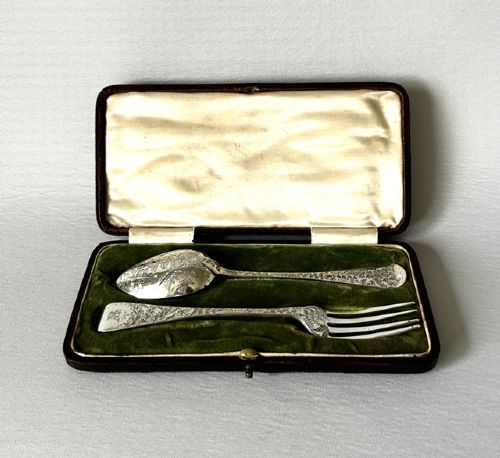
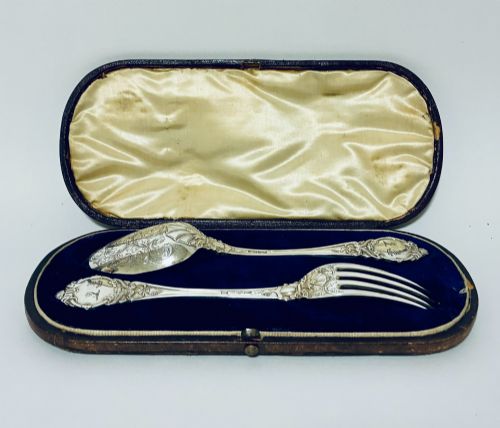
An antique christening spoon is a traditional gift for a baptism or birth, taking the form of a single spoon or a boxed set with a fork. When you search for an antique christening spoon, you encounter items intended to commemorate childhood milestones rather than everyday dining.
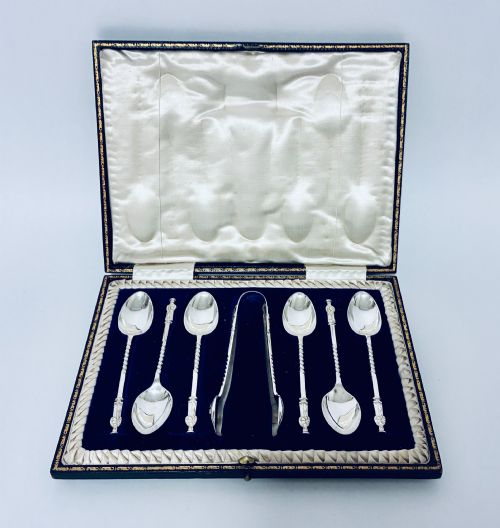
The pieces on this page span the seventeenth century through to the early twentieth century, with Victorian examples appearing most frequently. You will find single baptism spoons alongside fitted sets housed in velvet, silk, leather, and leatherette cases.
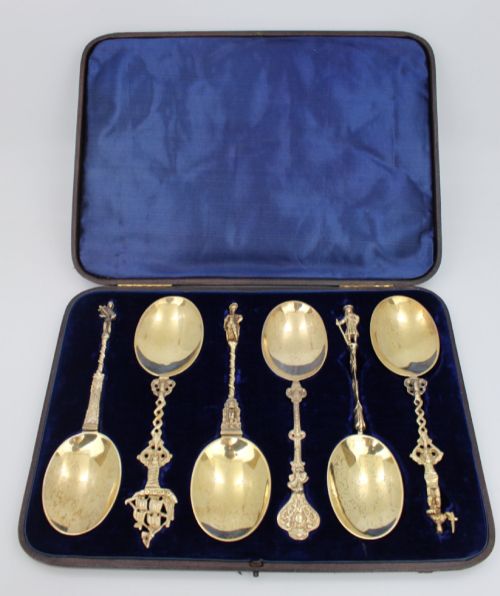
Beyond standard flatware, the selections include apostle spoons, stag presentation patterns, and Swiss folk art fruitwood pieces. These objects originate from British makers as well as continental European workshops.
What varies in quality
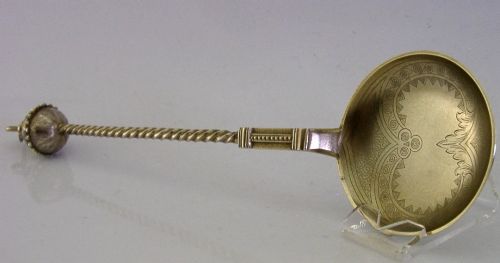
Quality rests in the weight of the metal and the clarity of the chased or engraved decoration upon the handle. Pieces bearing distinct apostle figures, stag motifs, or figural terminals demonstrate greater labour than plain utility flatware.
The integrity of the original fitted box influences the overall standard of a set. Cases retaining intact silk linings and secure leather or leatherette exteriors preserve the piece much better than loose spoons.
A tiny wooden spoon from Switzerland proves that not every baby welcomed the twentieth century with a silver spoon in its mouth.
Walter and John Barnard·John Round·Thomas Harwood and Co
The Antique Christening Spoon Glossary
- Apostle spoon
- A spoon with the figure of an apostle cast or shaped on the end of the handle. These historic designs often appear in sets or as single commemorative pieces.
- Silver gilt
- Silver that has been coated with a thin layer of gold on the surface. This technique provides the warm colour of gold while maintaining a solid silver structure underneath.
- Presentation spoon
- A spoon created to mark a specific event, person, or civic occasion. They frequently feature engraved dedications or specialised motifs like a stag hunt.
- Flatware
- Dining utensils used for eating and serving food, including spoons and forks. Christening sets often group these implements together in a lined presentation box.
- Hallmark
- A series of official marks stamped onto precious metals. These symbols indicate the maker, the purity of the silver, and the year the item was assayed.
Antique Christening Spoon: Frequently Asked Questions
Why are some spoons gilt?
Gilding applies a layer of gold over solid silver to create a rich two-tone appearance. This treatment was common for ceremonial baptism spoons.
It protects the underlying silver from direct contact with food or handling.
Were these spoons used for eating?
Most christening spoons were intended as keepsake gifts rather than daily tableware. Their fine chasing and delicate bowls meant they were kept in presentation boxes.
Sets often included a matching fork for display or ceremonial use.
How do I date a silver spoon?
British silver relies on stamped hallmarks that include date letters corresponding to specific assay years. Makers' marks and standard duty marks provide further clues.
Continental pieces depend on style, regional hallmarks, and maker records.
What is Swiss folk art wood?
Swiss folk art wood items utilise carved fruitwood rather than precious metals. These pieces reflect regional European craft traditions from around nineteen hundred.
They served as condiment spoons or alternative christening gifts.