




Danish Cabinet
A danish antique cabinet brings architectural presence and honest Scandinavian utility into a room, offering timeless storage built from pine, mahogany, or painted softwood.
Danish Cabinet
A danish antique cabinet encompasses a broad selection of storage forms, ranging from grand bureau bookcases and corner units down to compact oval pedestal cabinets. These pieces span several distinct historical eras, with nineteenth-century examples and earlier eighteenth-century designs appearing most frequently.
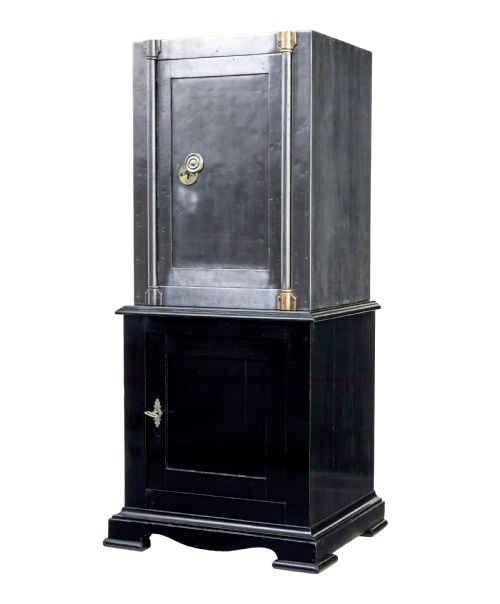
The aesthetic vocabulary shifts considerably across the selection, moving between the restrained warmth of Scandinavian country painted pieces and the darker, figured grains of Danish Biedermeier and Empire styles. Buyers encounter everything from tall kitchen cupboards to glazed display units and steel safes mounted on cabinetry.
The utility of these items remains as practical today as it was centuries ago, providing deep shelving, display space, and secure compartment storage. Each piece reflects the specific domestic needs of its era, whether for holding household provisions, linen, or bound volumes.
How they were made
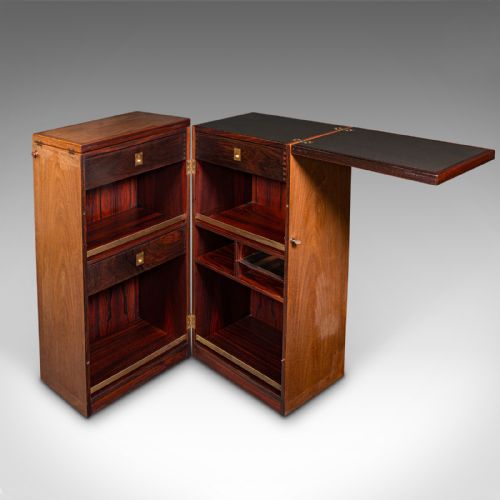
Construction relies heavily on solid timbers and carefully selected veneers, with pine and painted softwood forming the carcass of country and utilitarian pieces. Mahogany and flame mahogany dominate the more formal neoclassical and Biedermeier expressions, displaying rich, figured grain patterns across flat surfaces and curved door panels.
Hardware and secondary elements incorporate brass, iron, and glass, providing structural reinforcement and visual contrast to the wood. Painted finishes, frequently seen on dressers and kitchen cupboards, add a distinct layer of historical surface character that endures beneath modern maintenance.
Materials across these listings range from warm mahogany and wood veneer to utilitarian pine, painted softwood, brass, iron, and glass.
What varies in quality
Quality reveals itself through the selection of timber and the harmony of the overall proportions. Formal Biedermeier and Empire pieces depend on the dramatic application of flame mahogany veneer, whereas country and industrial examples rely on honest, robust joinery in solid pine and hardwood.
The finesse of the hardware, the clarity of the glass in glazed doors, and the preservation of original painted surfaces distinguish exceptional survivals from standard utility pieces. Every era brings its own standard of joinery, from delicate neoclassical detailing down to utilitarian steel and iron integration.
The Danish Cabinet Glossary
- Biedermeier
- A influential Central European and Scandinavian design style characterised by utilitarian comfort, clean lines, and minimal ornamentation. It favours warm mahogany veneers and architectural restraint over heavy carving.
- Bureau Bookcase
- A dual-purpose furniture form featuring a sloping writing flap above storage drawers, surmounted by a bookcase cabinet with shelving. These pieces combine workspace and library storage into a single tall elevation.
- Pedestal Cabinet
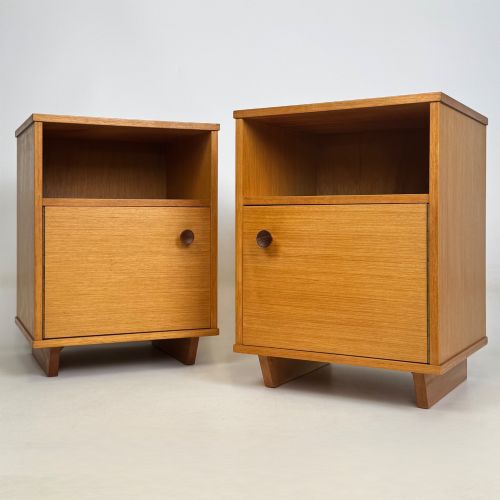
- A compact standalone storage unit, frequently oval in plan, designed to stand beside beds or seating. They often feature a single door enclosing internal shelving or drawers.
- Flame Mahogany
- A highly decorative veneer cut from the fork of the mahogany tree where the branch meets the trunk. This timber yields a distinctive, swirling flame-like pattern prized by cabinetmakers.
- Softwood
- Timber derived from conifers such as pine, commonly utilised for country furniture and pieces intended to receive a painted finish. It offers a lighter weight and softer texture than hardwoods.
Danish Cabinet: Frequently Asked Questions
What styles of danish antique cabinet exist?
The selection includes formal neoclassical and Biedermeier mahogany pieces alongside rustic Scandinavian country painted furniture and nineteenth-century industrial hybrids. Each style reflects the distinct aesthetic preferences of its period of origin.
Forms vary from tall kitchen cupboards and bureau bookcases to compact oval pedestal cabinets, glazed corner units, and steel safes mounted on wooden bases.
How do I date a danish antique cabinet?
Dating relies on observing the stylistic markers, timber choices, and construction methods characteristic of periods spanning the eighteenth and nineteenth centuries. Neoclassical and Empire influences point towards the earlier decades, while Biedermeier and industrial pieces generally occupy the mid to late nineteenth century.
Secondary woods, hardware types, and the presence of original painted finishes or flame mahogany veneers further help narrow down the era of manufacture.
Were these cabinets used in kitchens?
Larger examples, such as nineteenth-century kitchen cupboards and dressers, served as primary storage for domestic provisions, earthenware, and kitchen implements in Scandinavian homes. Their robust construction in pine and softwood suited daily utilitarian service.
Other variations, including glazed display cabinets and pedestal units, were designed for formal living spaces, parlours, and bedrooms to store books, linens, and personal valuables.
How should I care for wood veneer?
Mahogany and other wood veneers require stable indoor humidity levels away from direct heat sources and strong sunlight to prevent drying and lifting. Regular dusting with a soft, dry cloth preserves the polished surface without the need for heavy chemical polishes.
Maintaining a consistent environment protects the underlying timber and ensures the historic finish remains stable for decades to come.