
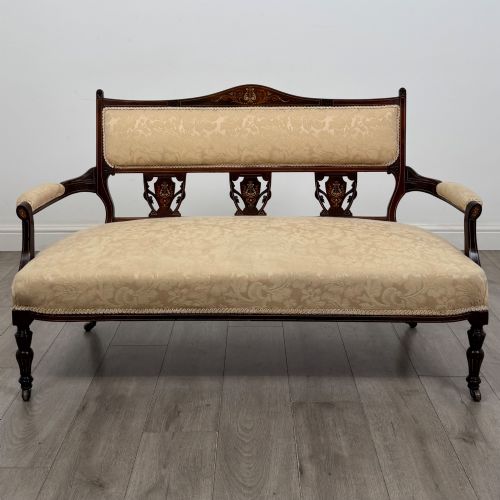

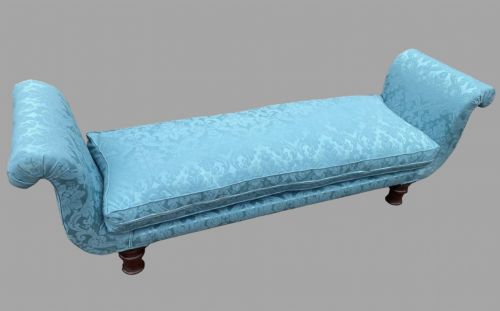
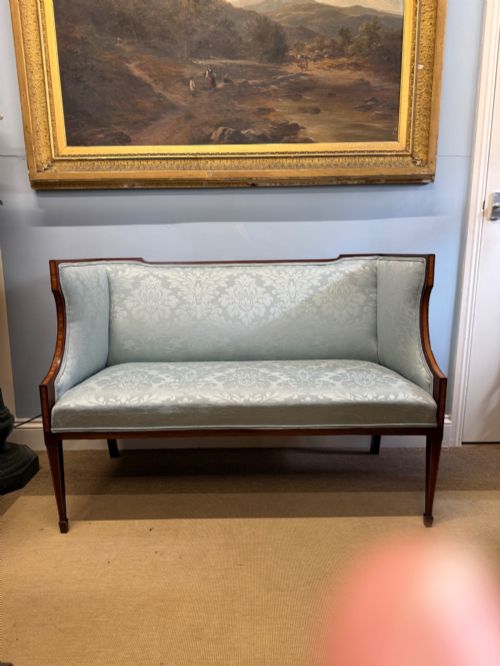
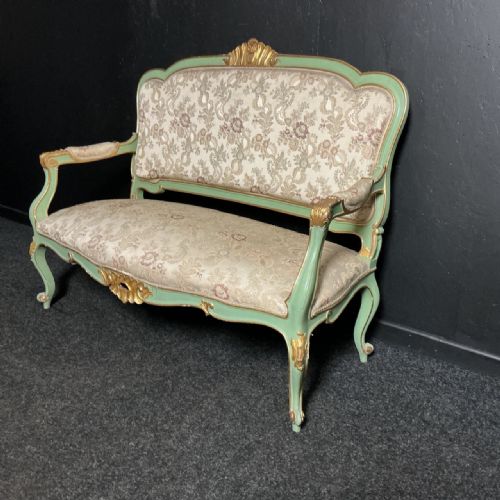


Damask Upholstered Bench
A damask upholstered bench brings patterned silk or wool texturing and formal seating history into a room.

Damask Upholstered Bench
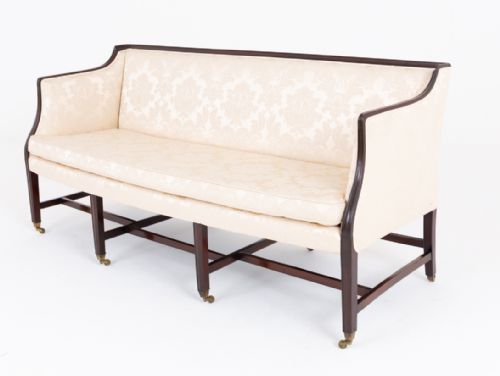
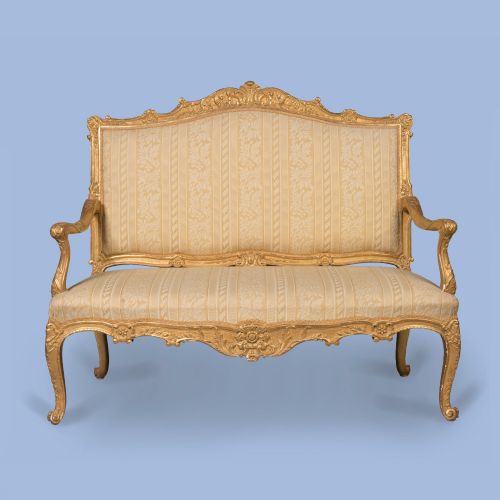
A damask upholstered bench encompasses seating forms ranging from compact dressing stools and window seats to long settees and sofas. These pieces appear across nineteenth century, Victorian, Edwardian, and Georgian periods, alongside French revival styles.
The most frequent form encountered on this page is the stool or window seat, often supported by mahogany, walnut, or giltwood frames. Settees and daybeds also emerge, carrying historical influences from Louis styles to Regency and Chippendale designs.
Distinctions in construction and finish
Quality rests on the crispness of the timber carving and the precision of the frame joinery, separating standard production from finely resolved pieces. Heavier framing timbers and balanced proportions indicate greater care in the workshop.
The integration of the upholstery relative to the frame dictates the visual success of the piece. Well executed pieces maintain structural integrity in the legs and stretchers while supporting the patterned fabric correctly.
Listings span the eighteenth to twentieth centuries, featuring mahogany, walnut, oak, and giltwood frames paired with damask fabric.
The Damask Upholstered Bench Glossary
- Damask
- A reversible figured fabric woven on a jacquard loom with patterns formed by contrasting warp and weft threads. This textile supplies the patterned surface seen on these upholstered seats.
- Canapé
- A decorative French sofa or settee featuring an upholstered back and seat within an exposed wooden frame. These pieces often display carved giltwood or painted finishes.
- Window seat
- A long, narrow bench designed specifically to fit within a window recess. They typically lack a high back and rest on cabriole or straight legs.
- Ormolu
- Gilded bronze mounts applied as decorative ornaments to furniture frames. This technique appears frequently on French nineteenth-century pieces.
- Cabriole leg
- A furniture leg that curves outward at the knee and tapers inward toward the foot. It forms a defining feature on many Georgian and revival stools and settees.
Damask Upholstered Bench: Frequently Asked Questions
How do I place a window seat?
A window seat fits naturally beneath a low window or at the foot of a bed. These narrow forms provide functional seating without obstructing natural light or blocking circulation in a room.
They also serve well in hallways or dressing rooms where long, low furniture maintains an open sightline.
How do I care for damask upholstery?
Damask upholstery requires gentle maintenance to protect the woven threads from friction and direct sunlight. Regular light vacuuming with a soft brush attachment prevents dust accumulation within the pattern.
Professional cleaning preserves the integrity of the textile fibres over time.
How do I distinguish Georgian from Victorian pieces?
Georgian seating relies on restrained proportions and classical timber finishes like mahogany and walnut, reflecting eighteenth-century design canons. Victorian pieces often introduce heavier ornamentation, buttoning, and varied revival influences.
Examining the joinery and timber characteristics helps clarify the period of manufacture.