
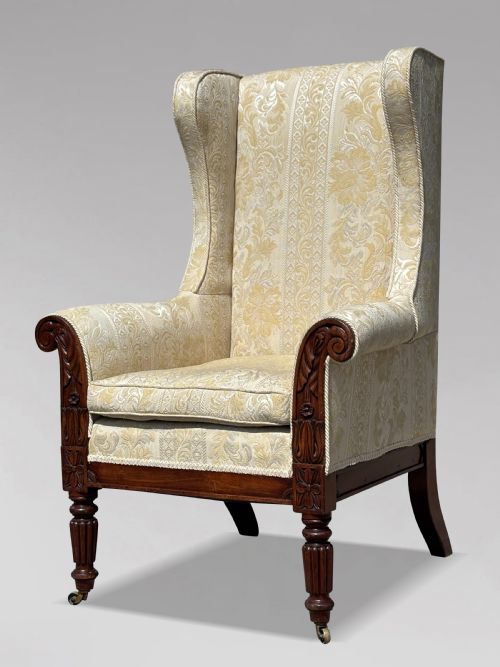

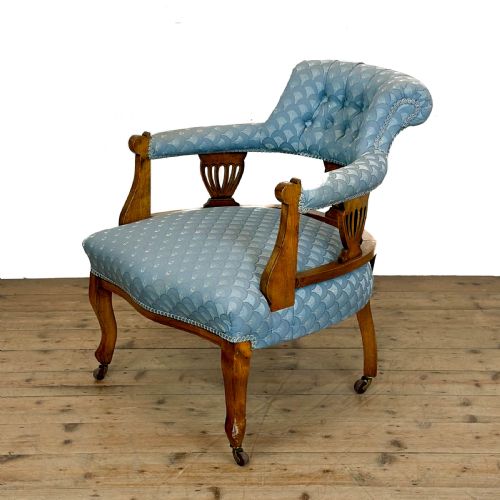

Damask Reading Chair
A damask reading chair is a substantial upholstered seat designed for long hours of study or repose, upholstered in patterned fabric.
Damask Reading Chair
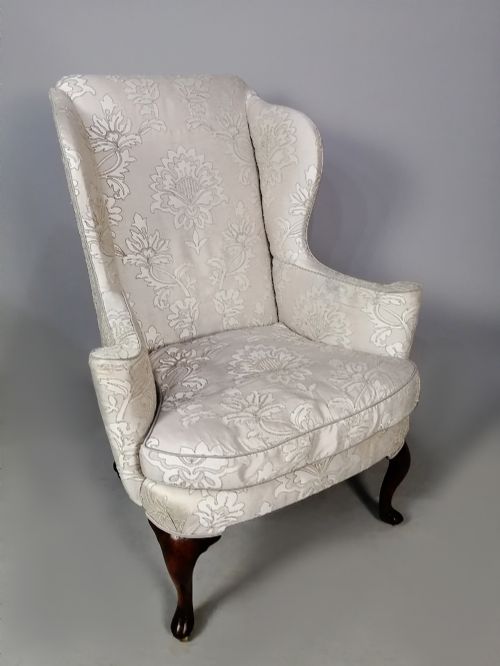
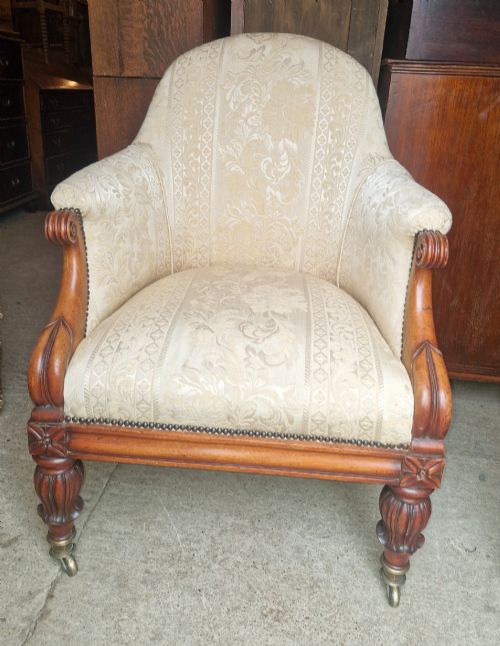
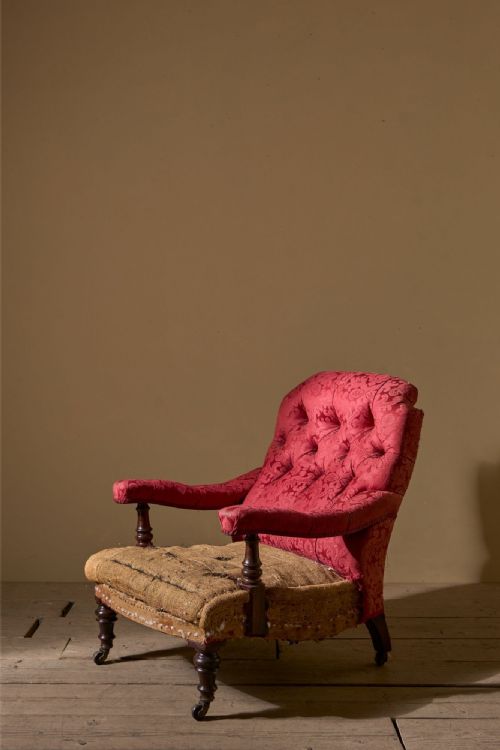
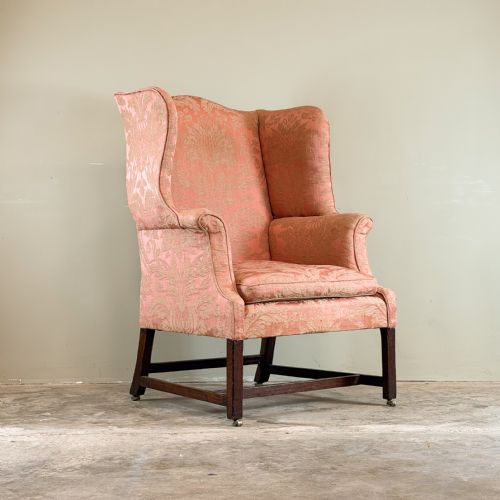
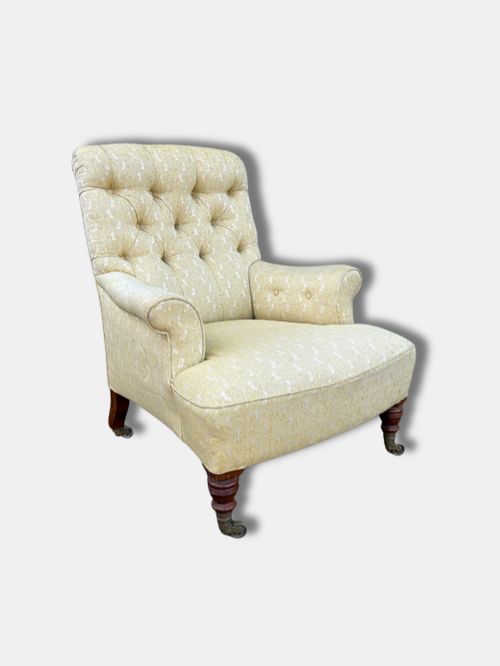
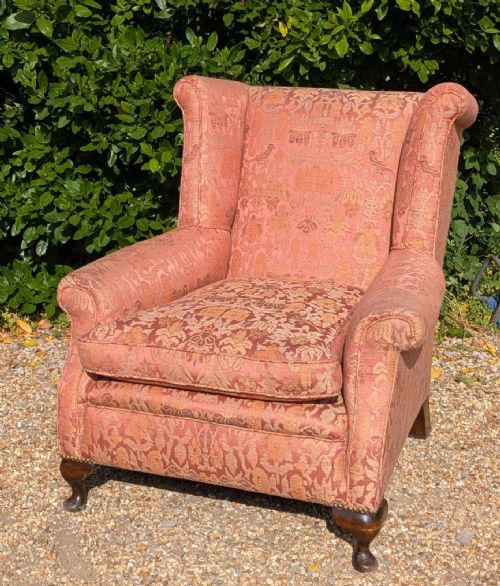
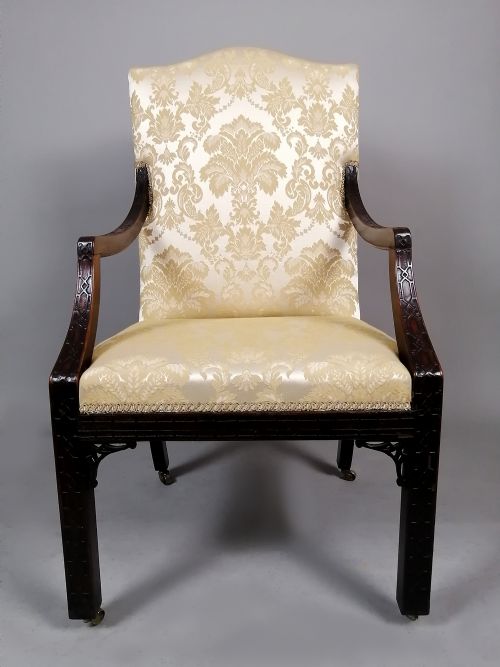
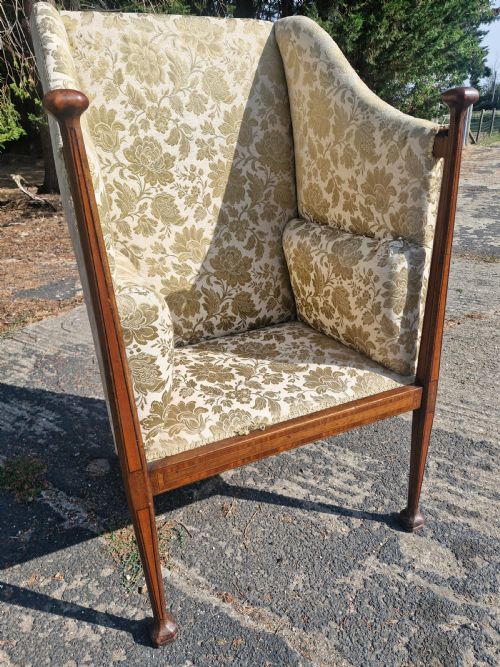
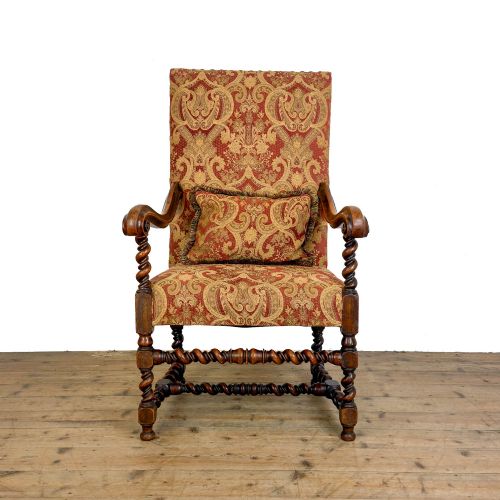
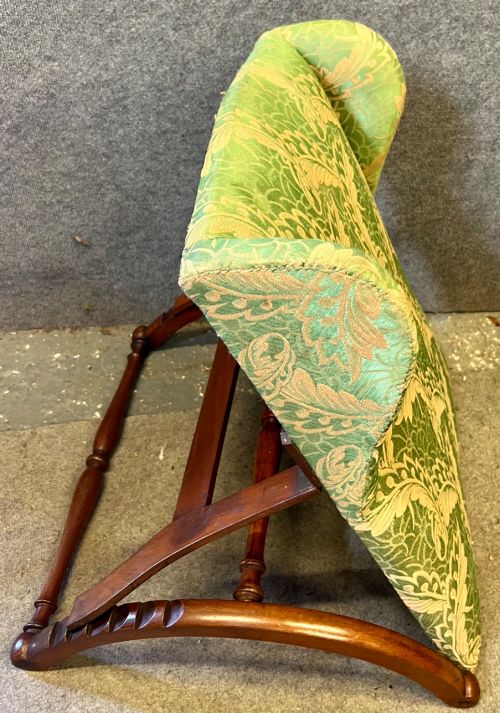
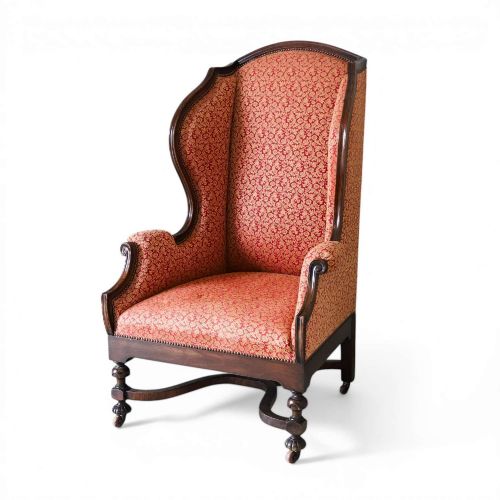
When you search for a damask reading chair, you encounter a selection of seating forms spanning the eighteenth, nineteenth, and early twentieth centuries. These pieces encompass library armchairs, wing chairs, and adjustable models designed to support the reader.
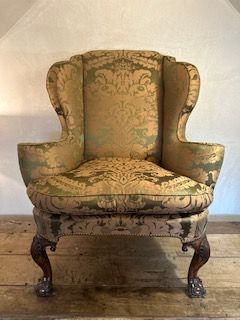
The versions met most frequently on this page belong to the nineteenth century and the Edwardian period, often constructed with mahogany or walnut frames. Winged backs and open armchairs dominate the selection, reflecting domestic requirements for comfort near the hearth or bookcase.
Stylistic revivals appear frequently alongside period pieces, incorporating Georgian, Carolean, and Queen Anne influences into nineteenth and twentieth-century frames. Such chairs combine historical silhouettes with resilient upholstery.
Form follows function in these seats, where deep proportions and supportive armrests accommodate extended periods of sitting. The inclusion of damask fabric and feather fillings enhances the domestic utility of the design.
Materials and construction methods
Makers utilised solid hardwoods such as mahogany and walnut for the structural frames, ensuring longevity and strength in weight-bearing joints. Brass hardware, including castors and adjustable mechanisms, frequently supports these timber frames.
Upholstery relies upon textiles like damask and silk, stretched over internal stuffing that often incorporates feathers for softness. Wood frames display hand-carved details or smooth polished surfaces depending on the prevailing style.
Listings span multiple eras from the eighteenth century to 1930, featuring mahogany, walnut, brass, and damask fabric.
Distinctions in quality and execution
The distinction between standard examples and superior pieces rests upon the crispness of timber carving and the integrity of the frame construction. Carved mahogany or walnut displays deliberate hand execution rather than mechanical repetition.
Upholstery materials and internal filling define the tactile success of the chair, with feather stuffing and high-grade damask fabric offering superior comfort. The retention of original period timber surfaces elevates the integrity of the piece.
Howard and Sons
The Damask Reading Chair Glossary
- Damask
- A reversible figured fabric with patterns woven into the plane, traditionally utilised for upholstery and wall hangings. It provides a subtle lustre that catches light in a room.
- Wing chair
- An armchair featuring side panels attached to the armrests and rising to the back, designed originally to shield the occupant from draughts. These panels are often padded and upholstered.
- Library chair
- A comfortable armchair designed for reading rooms, frequently constructed from mahogany or walnut with upholstered seat and back. Such chairs prioritise ergonomic support.
- Adjustable backrest
- A mechanical mechanism permitting the inclination of the chair back to alter the seating angle. This feature appears in campaign and reading variants.
- Carolean style
- A decorative manner reflecting the late seventeenth-century restoration court, characterised by scrolled woodwork and turned framing. Revivals of this style emerged during the nineteenth century.
Damask Reading Chair: Frequently Asked Questions
What is a damask reading chair used for?
These chairs were built to provide comfortable, supported seating for reading and writing in libraries and parlours. Their high backs and padded arms created a private enclosure for quiet study.
Over time, they became central pieces of domestic furniture, valued as much for their appearance as for their ergonomic utility.
How do I identify an eighteenth-century reading chair?
Eighteenth-century examples display distinct timber characteristics, such as dense mahogany or walnut with hand-cut joinery. Their proportions reflect the prevailing Georgian or Chippendale aesthetics of the era.
Later nineteenth-century revivals often imitate these forms, making timber analysis and construction inspection essential for dating.
Are these chairs suitable for daily use?
Most of these seating pieces are structurally robust and designed for regular habitation. Their wooden frames and sprung or feather-filled interiors remain durable.
Care should be taken with delicate textile upholstery like silk damask to preserve the fabric against heavy wear.
What distinguishes a wing chair from a standard armchair?
A wing chair incorporates protective side panels flanking the upper backrest, an architectural feature designed to trap heat and block room draughts. Standard armchairs omit these side wings in favour of open sides.
Both forms utilise upholstered frames, but the wing variant offers greater enclosure for the seated person.