


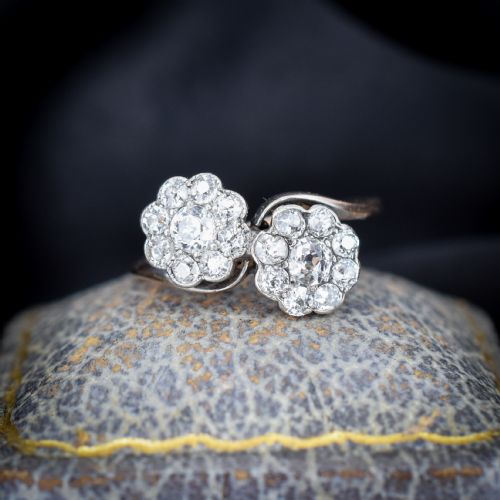

Daisy Cluster Diamond Ring
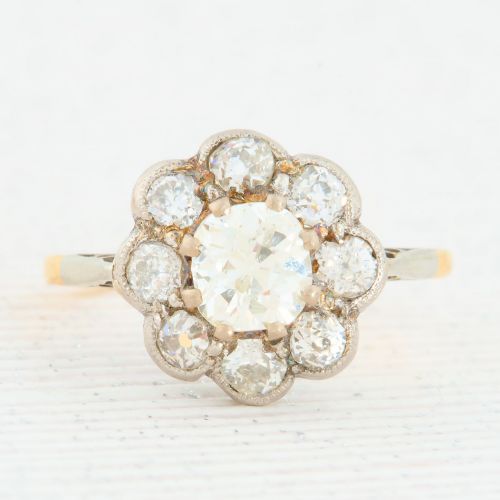
A daisy cluster diamond ring gathers central sparkle within a surrounding floral halo of smaller stones.
Daisy Cluster Diamond Ring
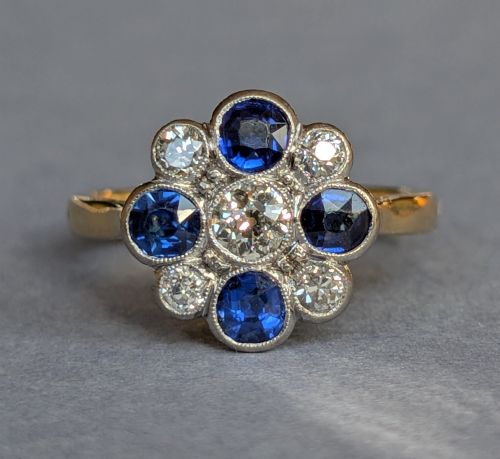
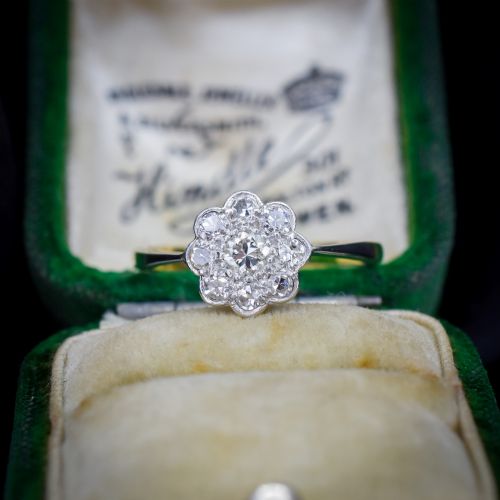
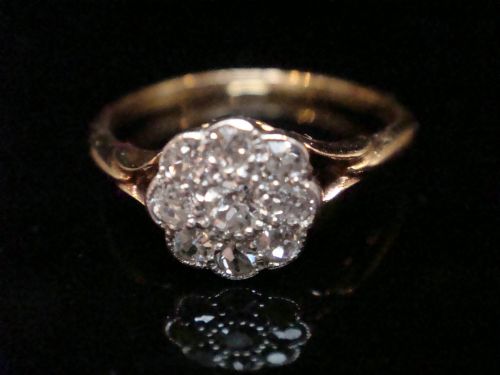
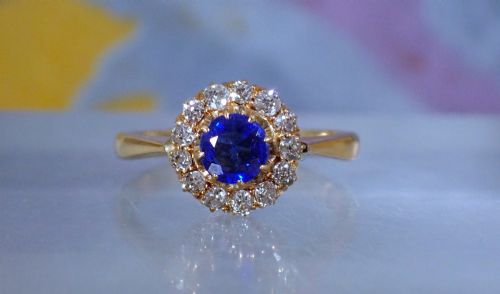
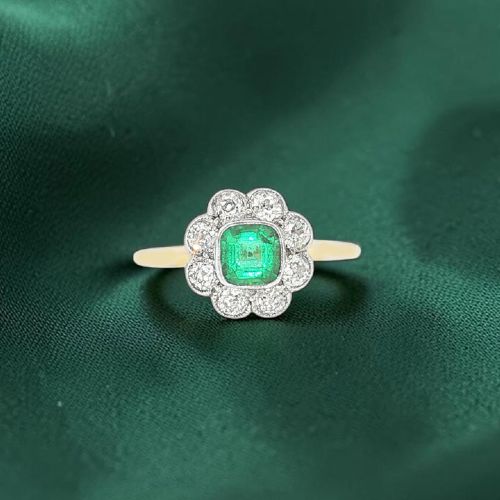
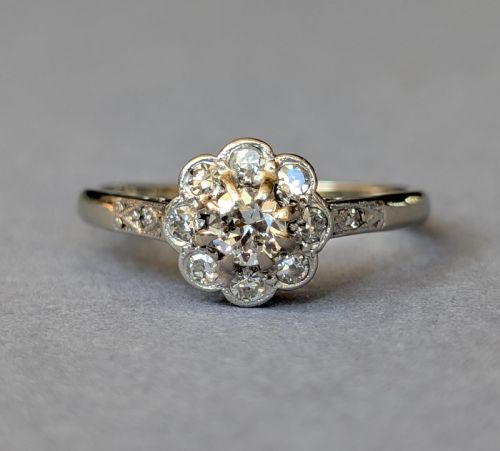
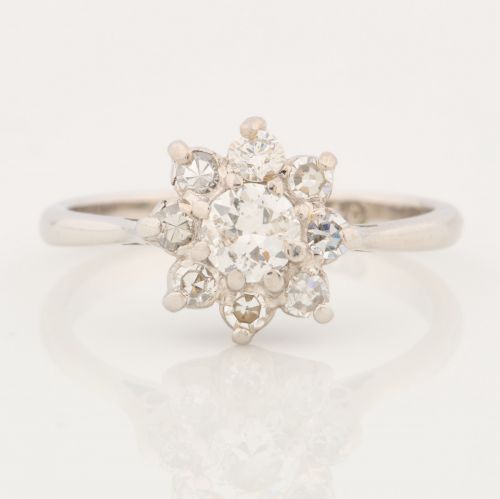
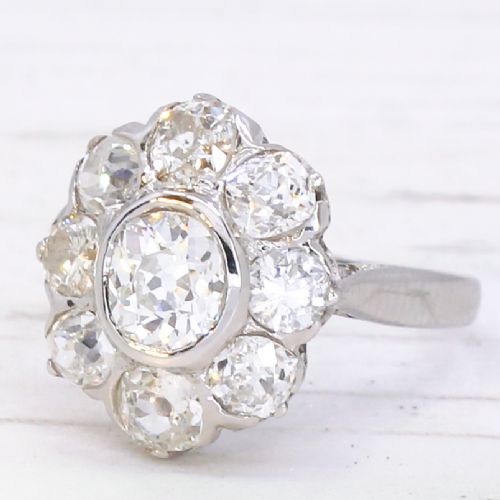
A daisy cluster diamond ring forms a recognizable floral silhouette that places a larger diamond or gemstone at the centre, encircled by a ring of matching stones.
Most examples found on this page date from the Edwardian and Art Deco periods, though Victorian and mid-century pieces also appear regularly.
The characteristic flower motif translates readily into engagement rings and dress rings fashioned with circular, oval or target outlines.
How they were made
Goldsmiths utilised 18ct yellow gold, 18ct white gold and platinum, often pairing platinum settings with yellow gold shanks during the Edwardian era to enhance the brilliance of the stones.
Gemstones were secured with delicate claw settings, grain settings or bezel mounts that emphasised the symmetrical floral arrangement without overwhelming the delicate metalwork.
Lapidaries cut diamonds using old European and old mine techniques in earlier examples, shifting toward brilliant cuts in mid-century iterations.
Daisy Cluster Diamond Ring Retail Price Guide 2026
Typical asking prices for daisy cluster diamond ring among the pieces listed under this phrase on Sellingantiques today, from the lower quarter to the upper quarter. They describe what is for sale here now, not the wider market.
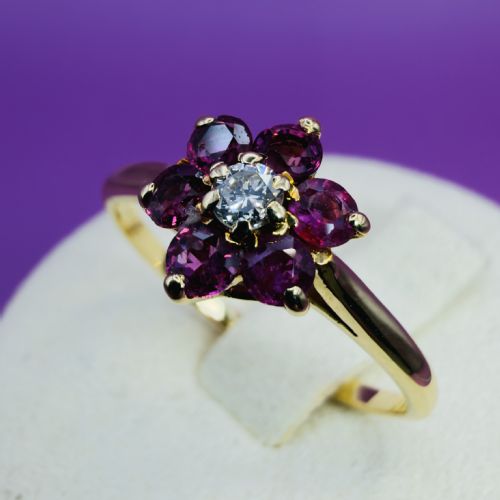
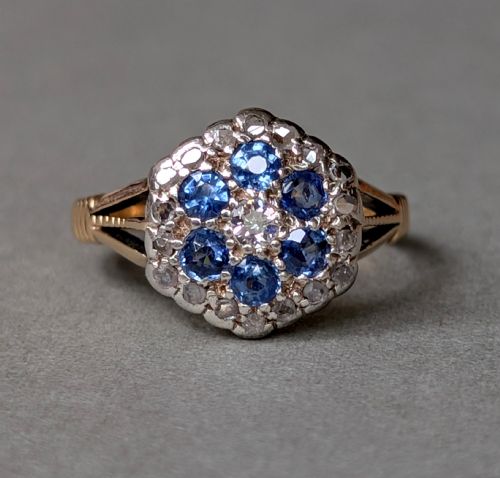
The archive records multiple variations incorporating sapphires, rubies and emeralds alongside central diamonds.
What varies in quality
The overall harmony of the floral layout depends on the uniformity of the surrounding stones and the proportion they bear to the central gem.
Mastery of construction shows in the discretion of the metalwork, where minimal prong visibility allows the light to pass freely through the cluster.
The integrity of the original mountings and the crispness of the gallery wirework distinguish exceptional workshop output from standard production.
The Daisy Cluster Diamond Ring Glossary
- Cluster ring
- A ring design featuring a central stone surrounded by a ring of smaller gems. This configuration creates maximum visual impact from a compact arrangement.
- Old cut
- A diamond cut executed by hand before the advent of modern machinery. These stones possess smaller tables and deeper pavilions that produce a softer, candlelight shimmer.
- Platinum
- A dense, durable white metal utilised extensively in Edwardian and Art Deco jewellery. Its strength permitted extraordinarily fine claw settings.
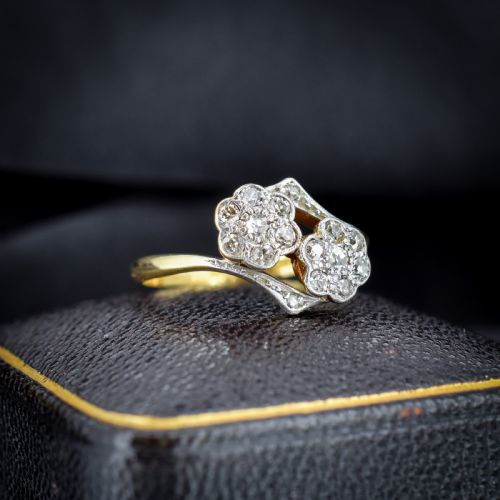
- Toi et Moi
- A French term translating to you and me, denoting a two-stone ring design. Some variants incorporate twist bands alongside floral clusters.
- Target ring
- A specific cluster style featuring concentric rings of contrasting gemstones or metal around a central stone. This concentric geometry mimics the face of a target.
Daisy Cluster Diamond Ring: Frequently Asked Questions
What is a daisy cluster ring?
A daisy cluster ring arranges a central diamond or coloured gem inside a symmetrical circle of smaller stones, mimicking the petals of a flower.
This floral configuration gained immense popularity during the late nineteenth and early twentieth centuries for engagement and everyday wear.
How do I date a daisy cluster ring?
Dating relies on identifying material combinations like platinum-topped gold, distinctive gemstone cuts such as old European facets, and characteristic mounting styles.
Edwardian pieces often display intricate pierced gallery work, while Art Deco examples favour geometric symmetry and platinum settings.
Are these rings suitable for daily wear?
Most antique cluster rings employ durable metals like 18ct gold and platinum that withstand regular daily use when properly maintained by a jeweller.
Checking the security of the claws holding the outer stones ensures the longevity of the floral arrangement.
What gemstones appear in these rings?
Diamonds form the primary component, frequently paired with sapphires, rubies, emeralds, pearls or opals in the central or surrounding positions.
Combinations of diamonds and sapphires represent the most frequent alternative to all-diamond floral configurations.