



Czech Glass Perfume Bottle
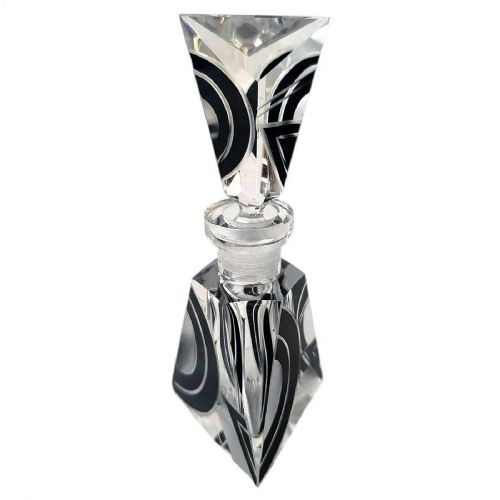
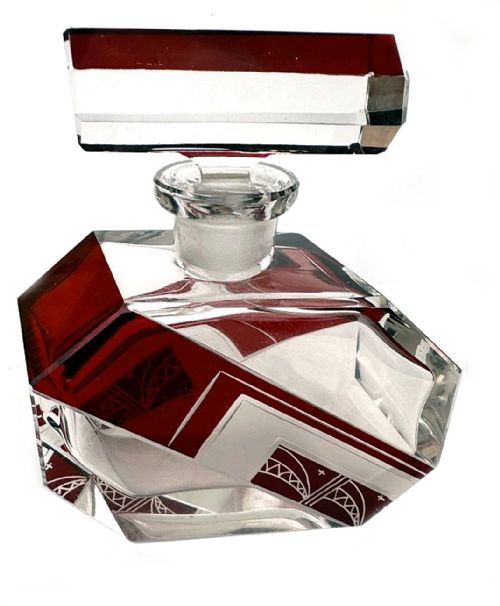
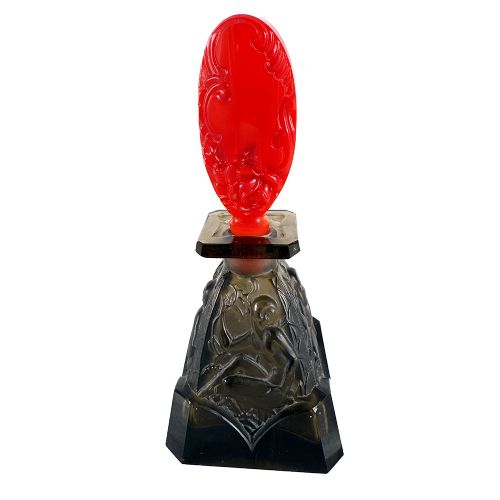
These czech glass perfume bottle pieces are striking Art Deco vanity items crafted from glass and crystal, prized for their bold geometric design.
Czech Glass Perfume Bottle
A czech glass perfume bottle is a vanity object dating predominantly from the 1920s and 1930s. These pieces embody the Art Deco style through distinct geometric forms, moulded contours, and vibrant blue or clear glass compositions.
The objects take the form of scent bottles, perfume bottles, and atomisers. Buyers frequently encounter examples from Bohemia and the Czech Republic originating in the interwar period.
Makers and designers from the region produced matching globe sets and atomiser configurations alongside standard stoppered bottles. The surviving inventory demonstrates a clear concentration of 1930s production.
Materials and Technique
Makers utilised glass and crystal as primary structural mediums, frequently employing cut glass and moulded glass techniques. Surface decoration incorporated enamel, black enamel, gold leaf, and chrome mounts.
Interwar workshops combined heavy pressing with precise manual cutting to achieve sharp facets. Metal hardware such as atomiser spray mechanisms and silver mountings were integrated directly into the bottle design.
Object forms span scent bottles, perfume bottles, and complete matching globe sets.
Assessing Quality
Quality rests upon the precision of the glass cutting and the complexity of the moulded form. Heavier crystal blanks and deeply carved geometric facets distinguish superior production from simpler pressed alternatives.
The application of supplementary materials such as gold leaf, enamel work, and integrated metal hardware alters the visual hierarchy. Complete matching sets and the presence of original atomiser components elevate the stature of a piece.
Karl Palda·Rudolf Hlousek·Hermanova
The Czech Glass Perfume Bottle Glossary
- Art Deco
- A design style dominant in the 1920s and 1930s characterised by geometric symmetry and stylised motifs. This aesthetic dictates the angular cuts and streamlined profiles seen on these vanity objects.
- Atomiser
- A perfume bottle fitted with a spray mechanism and bulb for misting fragrance. These components require metal hardware attached to the glass body.
- Bohemian
- Pertaining to the historical region in central Europe renowned for glassmaking traditions. Much of the interwar output originates from this specific manufacturing heritage.
- Enamel
- Opaque vitreous material fused to the glass surface for colour decoration. Black and coloured enamel accents highlight the geometric facets of the vessels.
Czech Glass Perfume Bottle: Frequently Asked Questions
What periods do these bottles date from?
The available inventory originates primarily from the interwar era, specifically the 1920s and 1930s. Production during this window reflects the height of the Art Deco movement in central European glassworks.
Pieces from this timeframe demonstrate characteristic manufacturing techniques such as heavy pressing and hand cutting. Later reproductions do not share the period material composition.
How were these bottles used originally?
These vessels served as functional vanity accessories for holding and dispensing scent on dressing tables. Many incorporated atomiser sprays or glass stoppers to preserve volatile perfumes.
Beyond personal grooming, they functioned as decorative objects that displayed the owner's taste in modern design. Matching sets were often produced for coordinated vanity displays.
How do I care for a glass bottle?
Display these items away from direct sunlight to preserve any applied enamel or gold leaf decoration. Handle the pieces with care to protect delicate glass facets and metal mounts.
Avoid submerging atomiser hardware in water to prevent corrosion of the internal metal components. Gentle dusting with a dry cloth is sufficient for routine maintenance.
How can I identify a Karl Palda piece?
Attribution relies on distinct structural characteristics, such as precise geometric cutting and integrated metal or enamel detailing. Specific forms associated with this workshop include heavy cut glass vessels and matching globe sets.
Documentation and historical records link these specific design signatures to the maker's interwar output in Bohemia.