



1930s Czech Scent Bottle
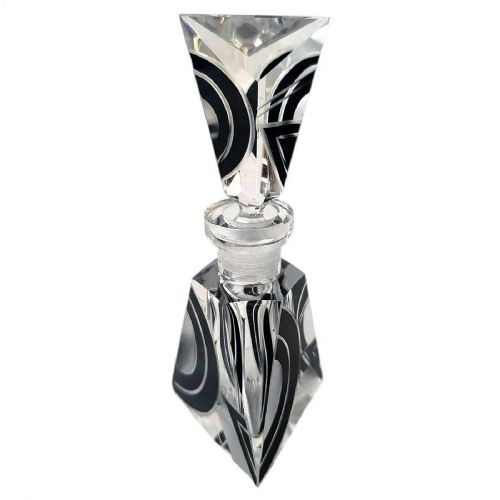
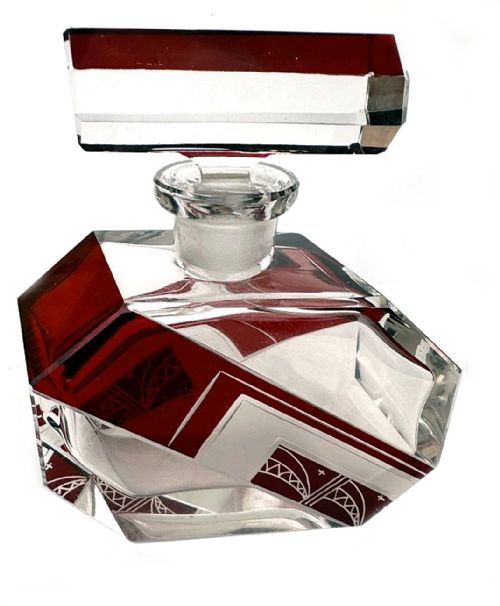
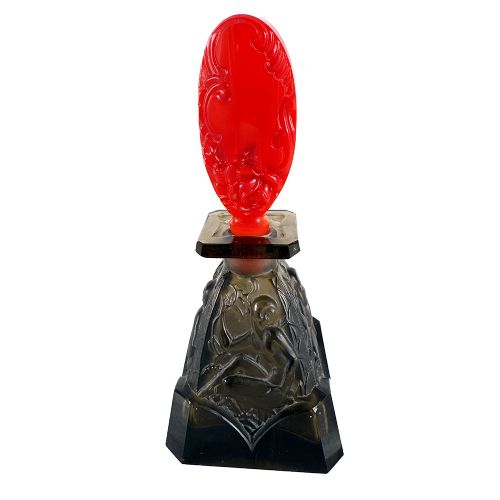
These 1930s czech scent bottle examples bring sharp Art Deco geometry and rich glasswork to a dressing table.
1930s Czech Scent Bottle
A 1930s czech scent bottle is a vessel designed for fragrance, originating from Czechoslovakia during the interwar period. These objects typically display the distinct geometric vocabulary of the Art Deco movement.
The pieces appearing on this page take the form of perfume bottles and atomizers. Many adopt moulded or cut glass constructions that reflect the lighting of a vanity table.
Originating largely from the 1930 and 1920 periods, these items showcase Bohemian glassmaking traditions adapted to modern twentieth-century tastes. They range from simple blue glass forms to elaborate coordinated sets.
Materials and construction
Makers utilised glass and crystal as the primary mediums, shaping them through moulding and precise cutting techniques. These transparent and coloured bodies form the structural core of each vessel.
Surface decoration frequently incorporates black enamel, gold leaf, and chrome mounts to accentuate the geometric contours. Fabric elements and silver components also appear in specific ladies' dressing table accessories.
Materials documented in these listings include glass, crystal, chrome, enamel, and gold leaf.
Distinctions in quality
The hierarchy among these vessels rests upon the complexity of the glass cutting and the precision of the enamel or metal work. Pieces bearing attributed designs demonstrate sharper facet work and more deliberate integration of chrome and enamel.
Simpler moulded vessels offer robust utilitarian forms, whereas works associated with recognised workshops display refined proportions and layered surface finishes.
Karl Palda·Rudolf Hlousek·Hermanova
The 1930s Czech Scent Bottle Glossary
- Atomizer
- A mechanical spray fitting attached to a perfume bottle for misting scent. These mechanisms often integrate chrome components.
- Enamel
- A fused glassy substance applied to metal or glass surfaces for colour and decoration. Black enamel provides high contrast against clear or coloured glass.
- Bohemian
- Pertaining to the historical region renowned for glass production. This designation links these vessels to traditional Central European craft centres.
- Moulded glass
- Glass shaped by being pressed into a form while molten. This technique allows for repeating geometric patterns across the body of the bottle.
1930s Czech Scent Bottle: Frequently Asked Questions
What defines a 1930s czech scent bottle?
These vessels are defined by their Art Deco styling, geometric glass cutting, and origins in Czechoslovakia during the interwar years.
They combine Bohemian glassmaking heritage with modern industrial aesthetics typical of the period.
How were these bottles used?
They served as dressing table containers for personal perfumes and colognes, often paired with matching atomizers.
Some functioned as standard stoppered bottles, while others utilised spray mechanisms for application.
How should I display them?
Place them on mirrored trays or glass surfaces where light can pass through the coloured and cut glass facets.
Keep them away from direct edges to protect the delicate chrome and enamel details.
How do I spot specific makers?
Look for distinctive cutting patterns and structural forms associated with known workshops from the region.
Design attribution often relies on documented silhouettes and matching archival examples.