
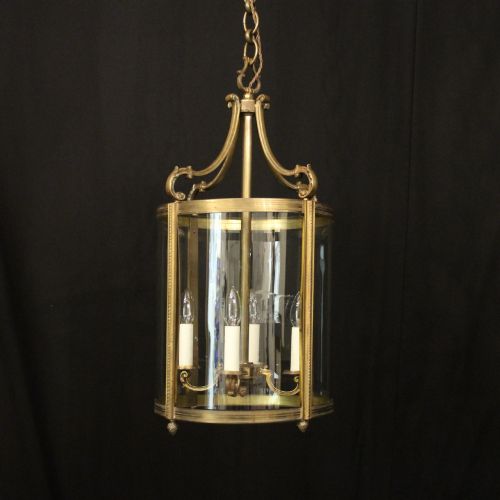
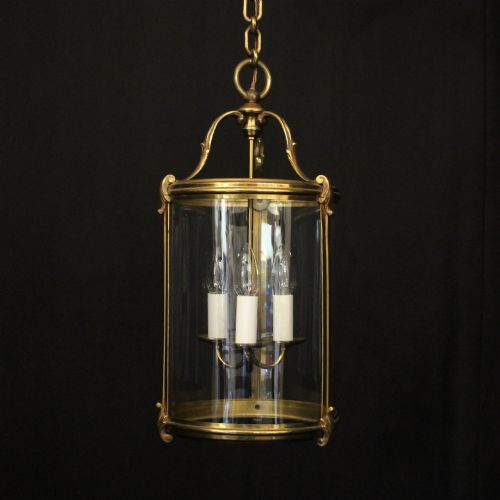
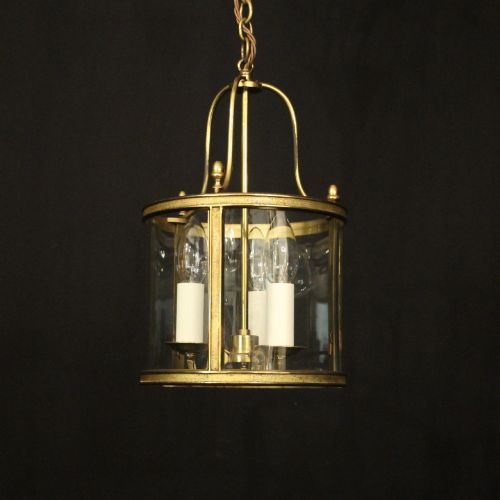
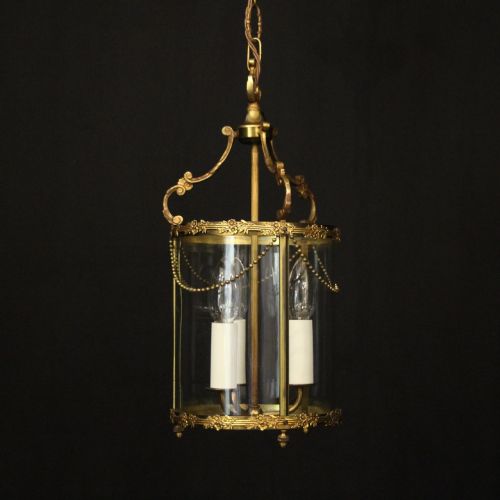
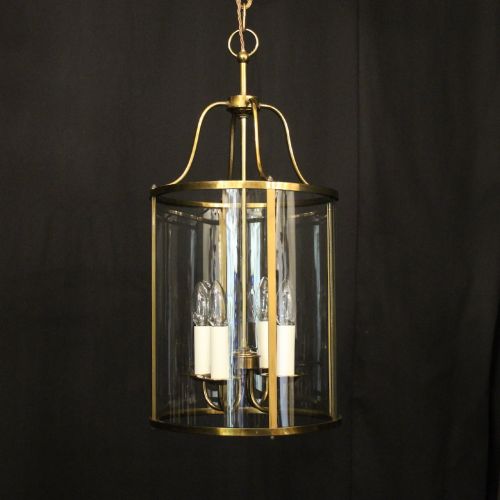
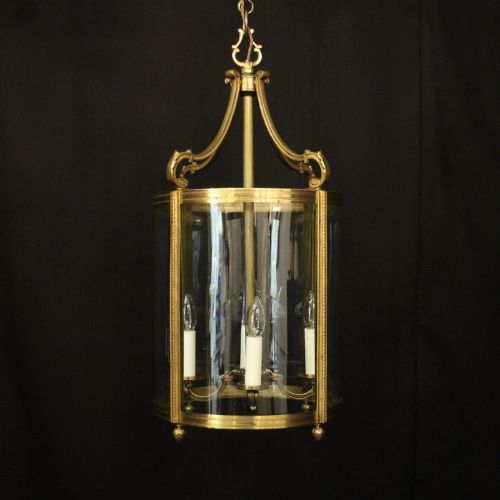


Cylindrical Glass Pendant
These cylindrical glass pendant fixtures bring focused vertical light and classic metalwork into hallways and landings.
Cylindrical Glass Pendant
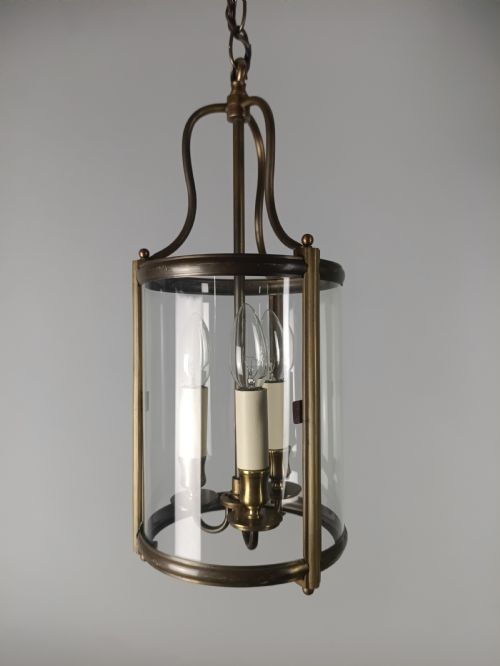
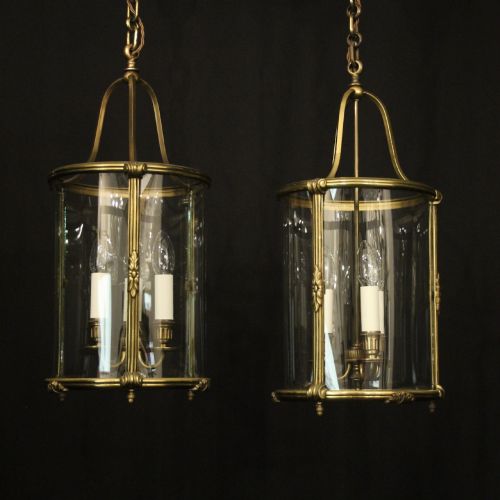
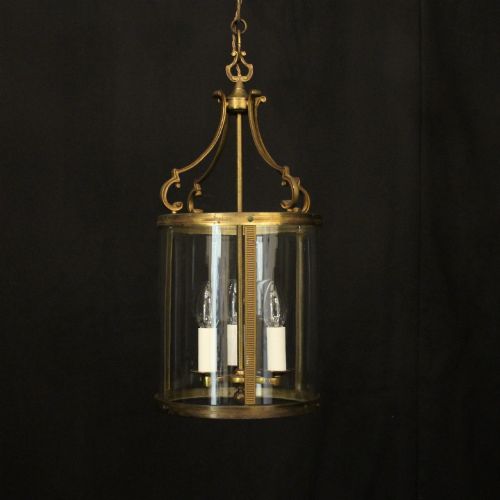
A cylindrical glass pendant encompasses hanging lanterns and ceiling lights designed with vertical glazed sides, originating primarily from French and English workshops during the nineteenth and early twentieth centuries. These pieces function principally as entrance and hallway illumination, casting direct downward light while containing bulbs or candles within protective metal and glass housings.
The selections available here lean heavily toward French chateau and neoclassical styles from the 1920s and 1930s, alongside earlier nineteenth-century examples and Edwardian pieces. Buyers will frequently encounter convex glass panels set into gilded bronze, brass, or copper frames, configured for single or multiple lights.
Materials and construction
Metalwork forms the structural backbone of these pendants, utilising cast bronze, brass, and copper that is often gilded or polished to achieve a bright metallic finish. Frames are joined to hold curved or flat glass panes securely in place, supporting the weight of multi-light internal clusters.
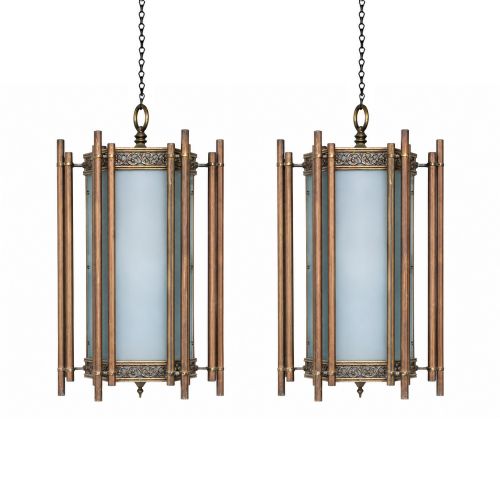
Glass production involves heavy plate or blown elements, sometimes frosted to diffuse the internal glow evenly across the room. Metal components are cast and hand-chased before assembly, ensuring tight seals around the glazing.
Materials recur across brass, copper, and frosted glass, deployed in configurations ranging from single bulbs to monumental four-light arrays.
Factors determining quality
Quality rests heavily on the thickness and clarity of the glass panels, where heavier convex panes demonstrate superior craftsmanship compared to thin, flat alternatives. The precision of the metal casting in the bronze or brass frames also dictates the refinement of the overall silhouette.
The execution of the gilding or surface polish separates standard production from finer examples, with hand-chased details on the bronze mounts indicating higher workshop standards. Internal light configurations, from single bulbs to complex triple or quadruple arrangements, reflect the original ambition of the piece.
The Cylindrical Glass Pendant Glossary
- Convex glass
- Curved glass panels that bulge outward to soften the internal light source and widen the illumination angle. This technique requires skilled moulding to fit the metal frame precisely.
- Gilded bronze
- Bronze metal coated with a thin layer of gold leaf or gold powder. This finish provides a warm, reflective surface that resists tarnishing over decades of use.
- Hall lantern
- A ceiling-hung lighting fixture specifically scaled for narrow corridors and entranceways. They provide robust vertical illumination while occupying minimal floor clearance.
- Art Deco
- A design style spanning the 1920s and 1930s characterised by stylised geometric forms and streamlined metalwork. It marks a shift away from ornate classical revival motifs.
- French neoclassical
- A decorative movement inspired by classical antiquity featuring restrained ornamentation and symmetrical proportions. These pieces emphasise architectural balance and refined metal casting.
Cylindrical Glass Pendant: Frequently Asked Questions
Where should I hang a cylindrical glass pendant?
These fixtures suit entrance halls, stairwells, and high-ceilinged corridors where vertical space allows the hanging drop to catch the eye.
Ensure sufficient clearance beneath the lowest point of the lantern so passage underneath remains completely unobstructed.
How do I clean the glass panels?
Remove dust with a soft, dry cloth before applying a mild glass cleaner directly to a microfibre cloth rather than spraying the frame.
Take care near the gilded bronze or brass mounts to avoid harsh chemical contact that might strip the historic finish.
Can these pendants use modern LED bulbs?
Most antique fixtures accept standard modern LED screw or bayonet bulbs provided the wattage matches the historical wiring capacity.
Consult a qualified electrician to check the internal lampholders and ensure the ceiling hook supports the combined weight safely.
How do I distinguish Edwardian pieces from 1920s designs?
Edwardian lanterns often feature simpler brass frames and round profiles rooted in late nineteenth-century domestic architecture.
Pieces from the 1920s and 1930s frequently incorporate heavier gilded bronze castings and distinct Art Deco geometric influences.