
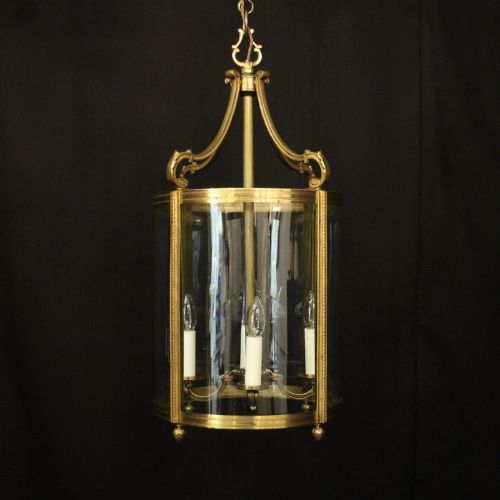


Cylindrical Glass Hall Light
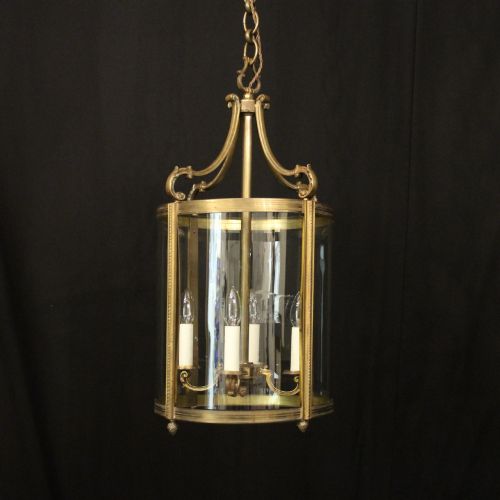
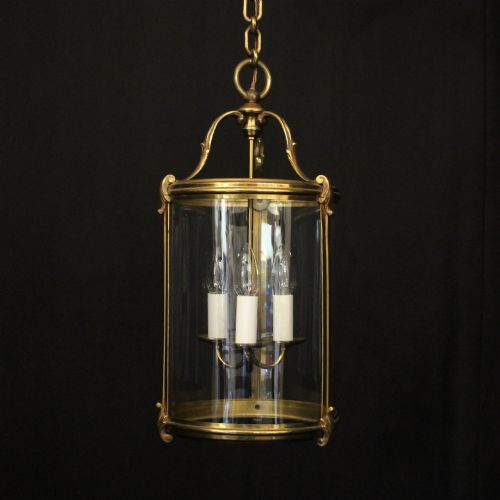
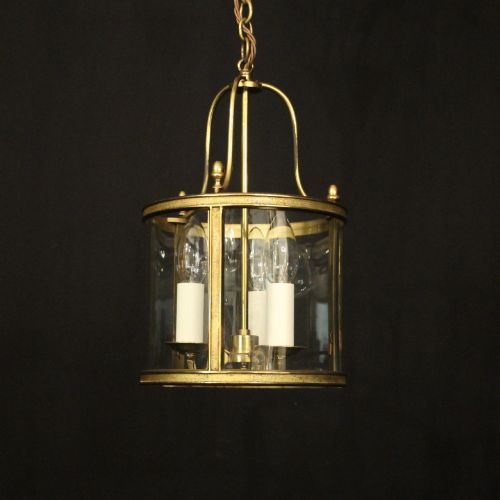
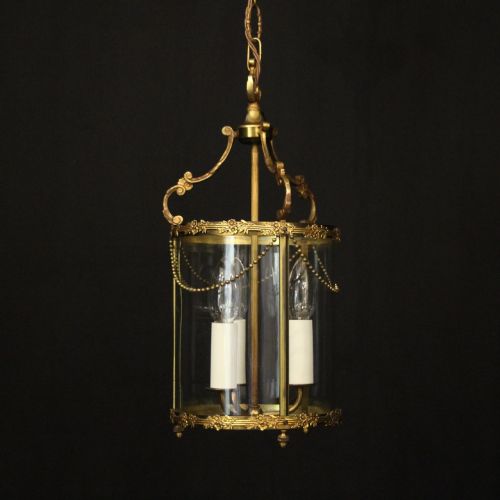
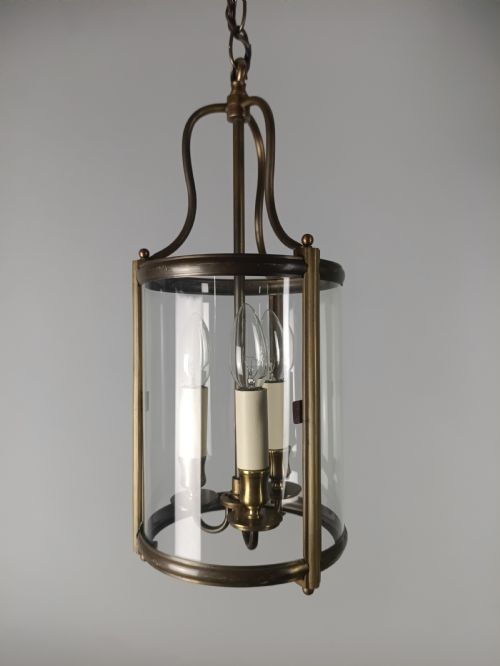
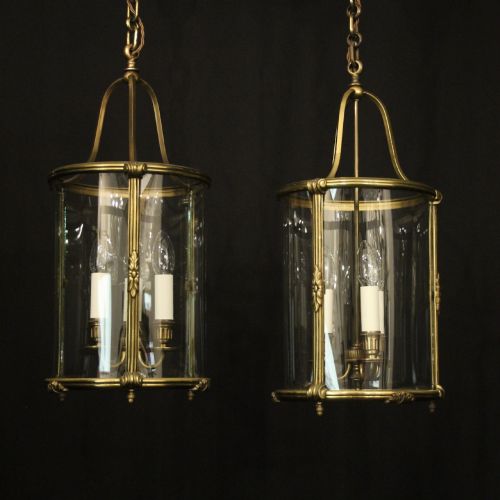
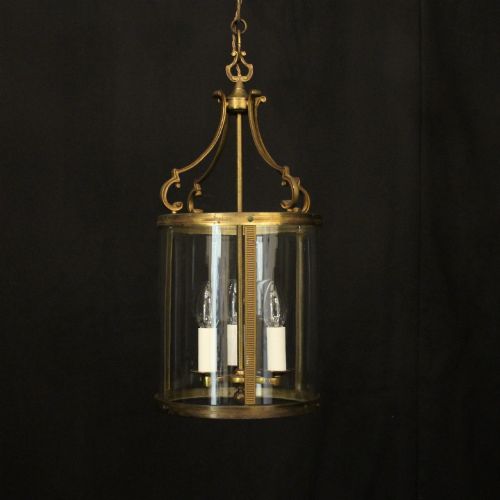
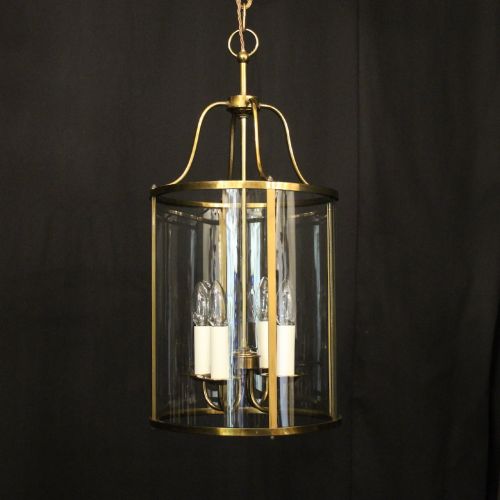
These cylindrical glass hall lights are heavy brass and bronze hanging lanterns that bring a warm, welcoming glow to an entrance.
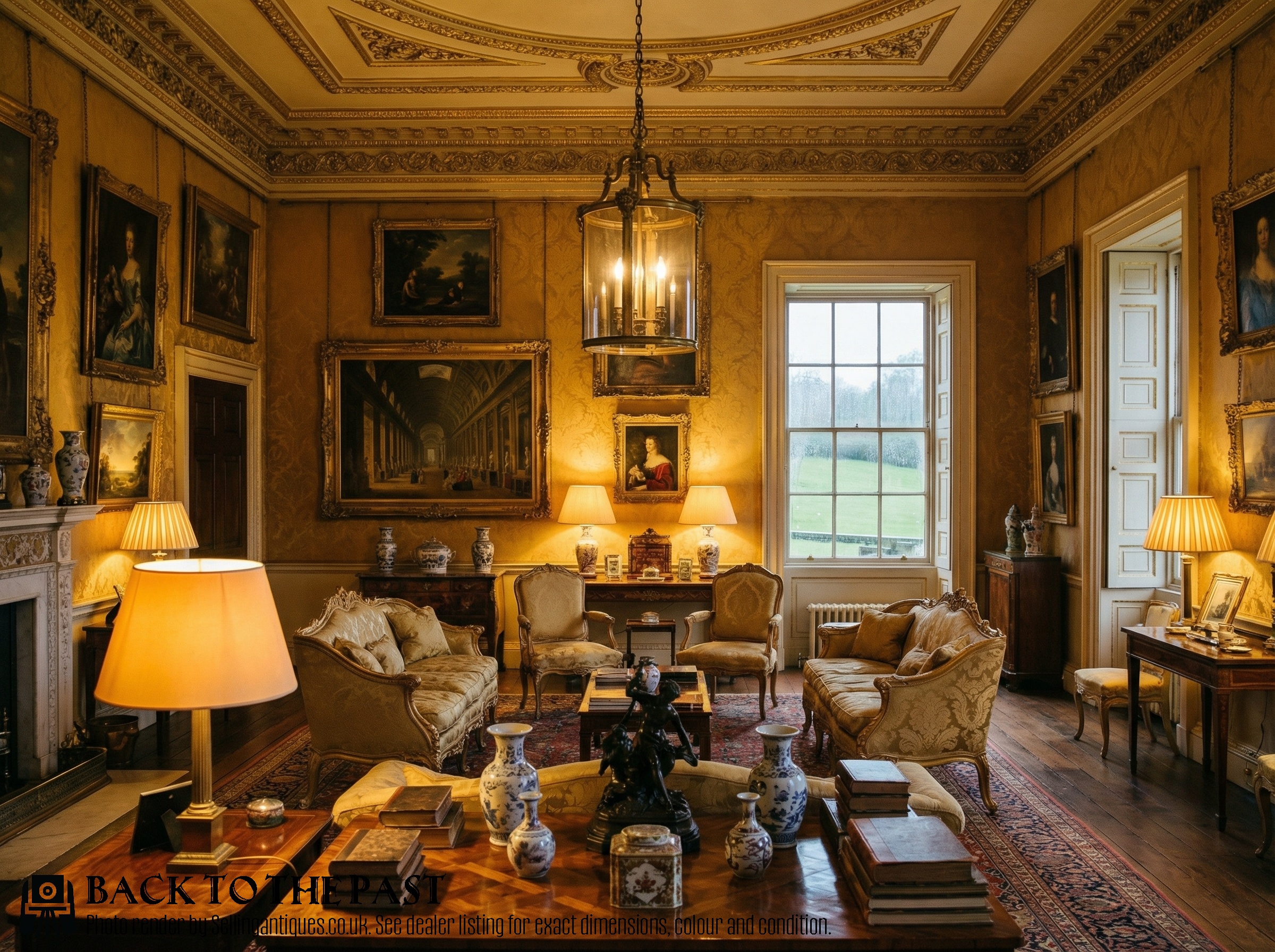
Cylindrical Glass Hall Light
A cylindrical glass hall light is primarily designed for hallways, corridors and entryways where overhead illumination is needed without taking up floor space. When searching for this specific form, buyers encounter hanging lanterns enclosed in clear or curved glass panels.
The pieces listed here span the nineteenth century, the Edwardian era, nineteen hundred, nineteen-twenty, and nineteen-thirty. French designs dominate the selection, heavily influenced by neoclassical, Louis fifteenth, Louis sixteenth, Empire, and grand Regency styles, alongside occasional English examples.
Most items function as ceiling lanterns or pendant lights, often fitted for multiple bulbs to cast a bright, even light downwards. Forms range from simple round lanterns to large convex fixtures holding three or four lights inside a brass or bronze framework.
What varies in quality
The distinction between standard fixtures and finer examples lies in the weight of the cast bronze and the depth of the gilding applied to the metal. Heavier metalwork and intricate decorative casting on the frames indicate superior craftsmanship.
Quality also depends on the treatment of the glass, particularly where convex panes are fitted seamlessly into the metal armature. Better pieces maintain crisp decorative details across the brass or bronze mounts without losing definition.
Materials across these listings include plain glass, brass, gilt bronze, gilded brass, gilt brass, gilded bronze, bronze, and general metal.
The Cylindrical Glass Hall Light Glossary
- Convex glass
- Glass formed with an outward curve, designed to disperse light more widely. This shape is common in lanterns from the nineteen-twenties and thirties.
- Gilded brass
- Brass coated with a thin layer of gold or gold-coloured leaf to enhance its appearance. This finish appears frequently on French neoclassical lighting.
- Hall lantern
- A ceiling-hung lighting fixture intended for corridors and entrance spaces. These pieces are typically enclosed to protect the flame or bulbs from drafts.
- Bronze
- An alloy of copper and other metals, valued for its strength and heavy weight. It forms the robust structural body of many large nineteenth-century lanterns.
Cylindrical Glass Hall Light: Frequently Asked Questions
Where should I hang a hall lantern?
These lanterns suit entrance halls, narrow corridors, and high-ceilinged vestibules where pendant lighting is practical. They provide a clear focal point immediately upon entering a home.
Ensure the ceiling height allows enough clearance underneath for people to walk past safely. A central position in the hallway allows the light to distribute evenly in all directions.
How do I identify a French antique lantern?
French pieces often display stylistic details rooted in Empire, Louis periods, or neoclassical design. Look for cast bronze frames and ornate mounts that reflect traditional continental craftsmanship.
Many examples from the early twentieth century adopt these classic French aesthetics while updating the internal fittings for electric lighting.
What is the difference between brass and bronze frames?
Bronze is a heavier, harder alloy that typically takes a deep patina or rich gilding. It was often chosen for larger, more substantial nineteenth-century lanterns.
Brass is a copper and zinc alloy that offers a brighter golden tone when polished. It appears frequently in Edwardian and later twentieth-century lighting designs.
Are these lanterns wired for electricity?
Most pieces listed from the Edwardian period onwards are adapted or manufactured for electrical wiring. They frequently house multiple light bulbs inside the glass enclosure.
It is advisable to have a qualified electrician check the internal wiring before installation to ensure it meets current safety standards.