
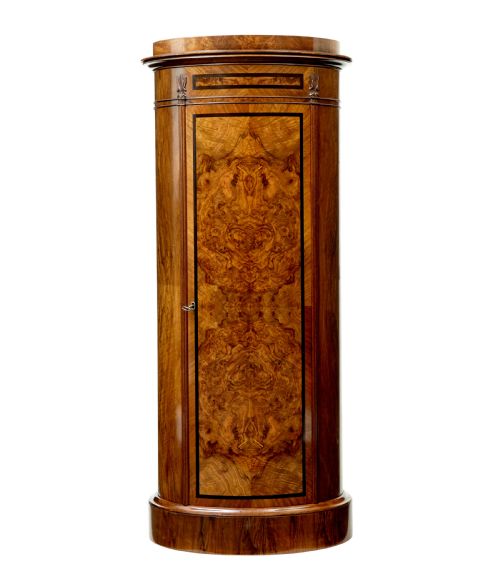


Cylinder Bedside Cupboard
A cylinder bedside cupboard is a neat, compact piece designed to sit beside a bed while hiding away chamber pots or small belongings.
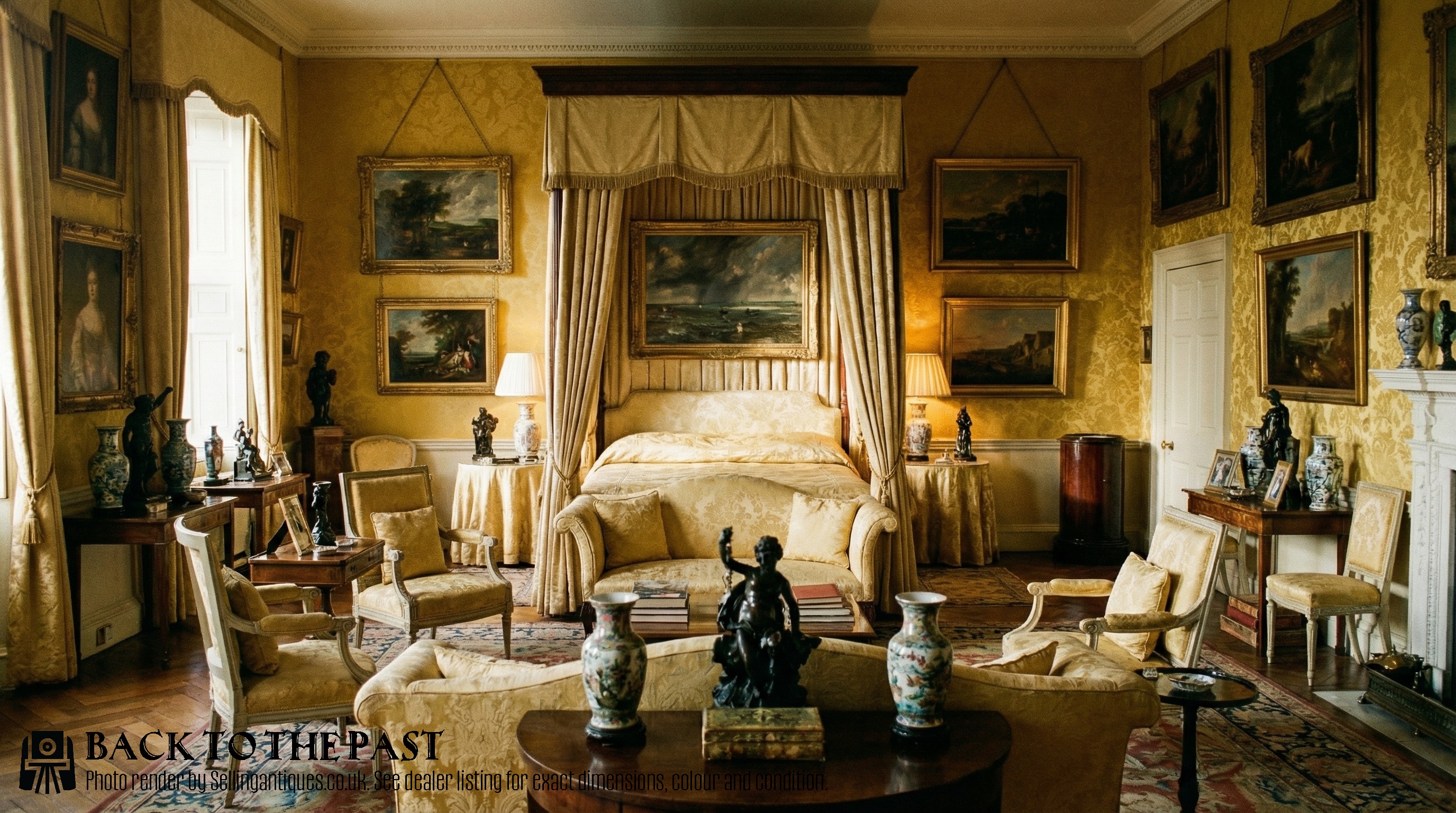
Cylinder Bedside Cupboard
A cylinder bedside cupboard offers a clever circular footprint that tucks neatly into compact spaces beside a bed or in a corner. These pieces mostly date from the nineteenth century, including Regency, early Victorian, and later Victorian periods.
How they were made
Cabinet makers constructed the curved bodies of these cupboards using solid timbers or by laying veneers over a sturdy core. Mahogany and flame mahogany dominate the evidence, frequently paired with contrasting burr walnut or oak.
Many examples incorporate decorative metal elements, such as brass mounts or handles, alongside fitted marble tops designed to provide a durable, wipe-clean surface.
The listings show nineteenth century pieces spanning Regency, French Empire, and Victorian styles, constructed primarily in mahogany, burr walnut, and oak.
What varies in quality
The distinction between standard examples and finer pieces lies in the choice of timber figure, such as the richness of flame mahogany or burr walnut. Superior construction shows in the precision of the curved door fitting flush to the cylindrical frame.
Added details like heavy marble slabs or restrained brass decoration elevate certain pieces from utilitarian bedroom storage to more refined cabinet work.
The Cylinder Bedside Cupboard Glossary
- Flame mahogany
- A wood veneer showing a distinct, fiery grain pattern resembling flickering flames. Cabinet makers prized this figure for its visual impact on prominent curved surfaces.
- Burr walnut
- Timber taken from a tree growth that produces swirling, intricate patterns within the grain. It provides a highly decorative surface on nineteenth century pedestal cupboards.
- Pot cupboard
- A specialised small cabinet originally built to house a chamber pot behind a single door. These practical items form a large portion of surviving cylindrical bedside furniture.
- French Empire
- A neoclassical design style spanning the late eighteenth and early nineteenth centuries. Pieces from this era often feature rich mahogany timbers and restrained classical proportions.
Cylinder Bedside Cupboard: Frequently Asked Questions
What is a cylinder bedside cupboard used for?
These cabinets served primarily to keep personal items and chamber pots neatly enclosed beside a bed. Today they function well as compact bedside tables or small lamp stands.
Their enclosed circular shape helps conceal clutter while occupying a very small floor area in a bedroom or hallway.
How do I date a cylinder bedside cupboard?
Dating relies on observing the timber choices, construction methods, and stylistic cues present in the piece. Nineteenth century examples often feature solid mahogany or flame veneers.
Earlier Regency and French Empire pieces tend to display crisp classical lines, whereas later Victorian versions sometimes incorporate marble tops and simpler turned elements.
Are these cupboards always made of mahogany?
Mahogany is certainly the most common timber found across these listings, appearing in plain, flame, and veneered varieties. Other woods do occur in the record.
Makers also utilised burr walnut and oak for these cylindrical forms, sometimes pairing the timber with inset marble or brass details.
Can I use one as a lamp stand?
The flat top surface makes a cylindrical cupboard suitable for holding a small reading lamp or decorative figure. Many surviving pieces served alternate roles as display stands.
Cabinets fitted with a stone or marble top offer extra durability against water rings from glasses or plant pots placed on them.