
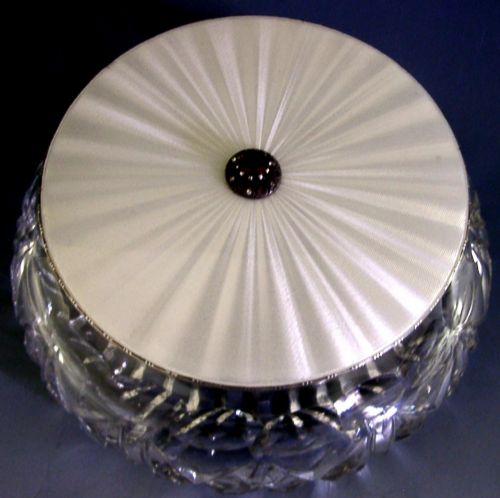


Cut Glass Vanity Pot
These cut glass vanity pot examples bring heavy materials and polished metals to the dressing table.
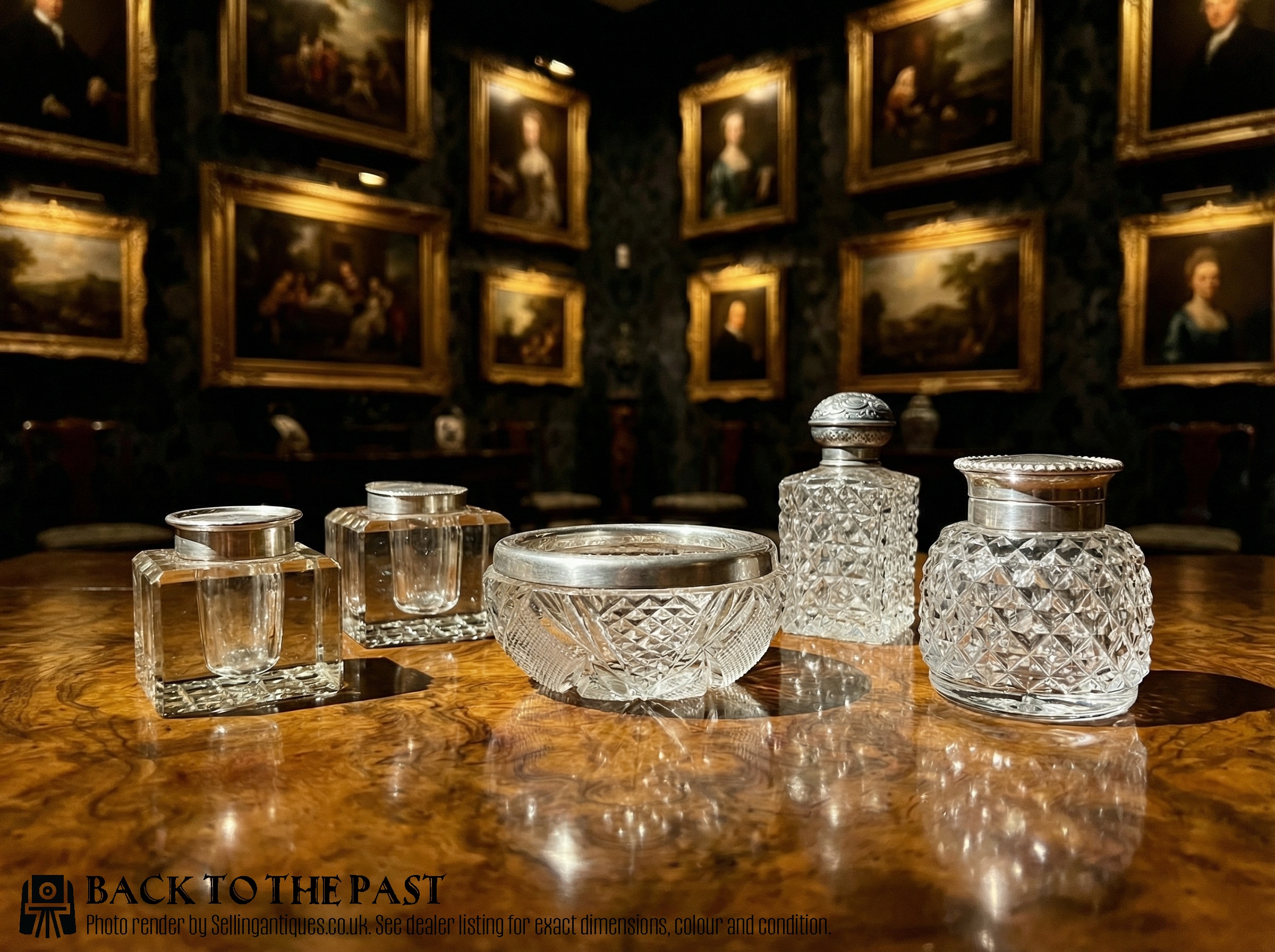
Cut Glass Vanity Pot
A cut glass vanity pot is a dressing table container designed for cosmetics, hairpins or small trinkets during the Victorian, Edwardian and Art Deco periods. These items sit on dressing tables and vanity surfaces, combining heavy glass bases with protective metal or organic lids.
The most common versions met here pair heavy faceted glass with sterling silver, silver plate, enamel, or tortoiseshell covers. They take the form of vanity jars, trinket boxes and lidded bowls spanning from the late nineteenth century through to the nineteen thirties.
How they were made
The heavy glass bodies are shaped and faceted to catch the light, paired with lids formed from sterling silver or silver plate. Some pieces incorporate coloured enamel or natural tortoiseshell fitted tightly to the metal mounts.
Cut Glass Vanity Pot Retail Price Guide 2026
Typical asking prices for cut glass vanity pot among the pieces listed under this phrase on Sellingantiques today, from the lower quarter to the upper quarter. They describe what is for sale here now, not the wider market.
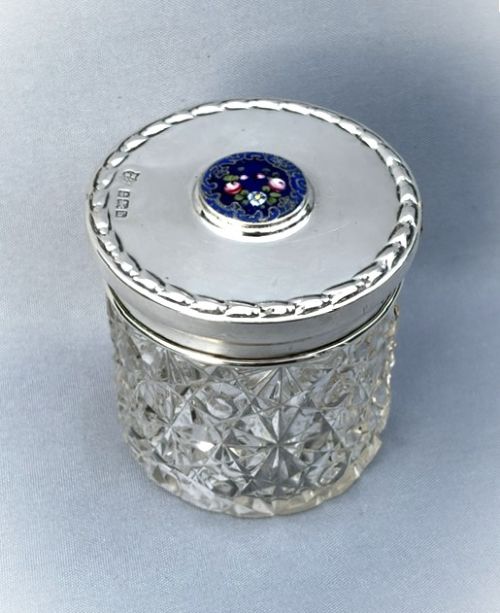
A solitary four-inch jar manages to pack cut glass, sterling silver, and blue enamel into one pocket-sized dressing table piece.
What varies in quality
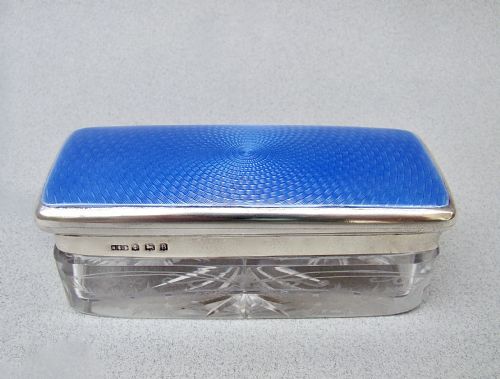
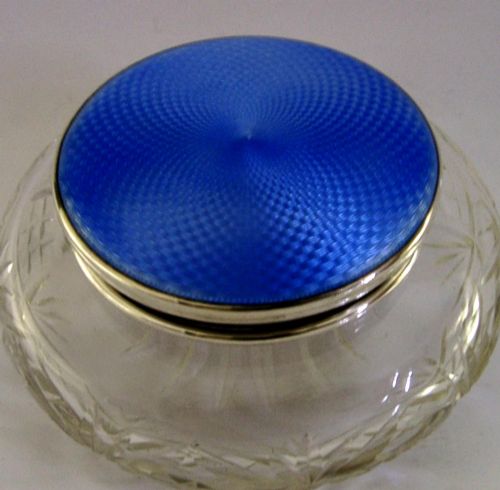
Quality rests in the crispness of the glass faceting and the weight of the metal lid. Pieces featuring undamaged guilloche enamel or unwarped tortoiseshell sit distinctly above simpler plain silver mounts.
The Cut Glass Vanity Pot Glossary
- Guilloche enamel
- A decorative mechanical technique producing intricate geometric patterns beneath a translucent coloured coating. This is frequently seen on Art Deco lids.
- Sterling silver
- A silver alloy containing ninety-two point five percent pure silver by mass, standard for British table accessories. Hallmarks on these mounts usually indicate the assay office and year.
- Tortoiseshell
- The outer shell of certain turtle species utilised for decorative lids and boxes before modern regulations. It provides a warm, mottled brown and amber tone.
- Trinket box
- A small lidded container intended for holding jewellery or small personal accessories. They form a core part of dressing table sets.
Cut Glass Vanity Pot: Frequently Asked Questions
What were vanity pots used for?
These containers held creams, pins, powders and small personal items on dressing tables in the nineteenth and early twentieth centuries. They kept everyday toilet articles tidy and protected from dust.
Lidded versions also served to conceal small valuables and hair ornaments when not in use.
How do I date a silver lid?
British silver mounts usually carry hallmarks stamped directly into the metal. These small marks indicate the assay office, the standard of silver, and a specific date letter.
Comparing these stamps against official assay records reveals the exact year the metal component was tested and marked.
Are tortoiseshell lids fragile?
Tortoiseshell is an organic material that reacts to changes in humidity and temperature. Direct sunlight and very dry conditions can cause warping or cracking over time.
Handling these lids with care helps preserve the natural amber and brown patterns embedded in the shell.
How should I clean cut glass?
Wash the glass body gently in warm soapy water using a soft cloth to avoid scratching the facets. Care must be taken to keep moisture away from tortoiseshell and enamel components.
Dry the glass thoroughly with a lint-free cloth to restore its original sparkle and clarity.