



Cut Glass Lustres
Cut glass lustres bring sparkle to a room through hanging crystal prisms that catch and refract the light.
Cut Glass Lustres
Cut glass lustres are decorative mantel or table pieces designed to hold candles or illuminate rooms while dangling faceted crystal drops from a central stem. Buyers seek these items for their ability to project warm refracted light and add a decorative focal point to a mantelpiece or side table.
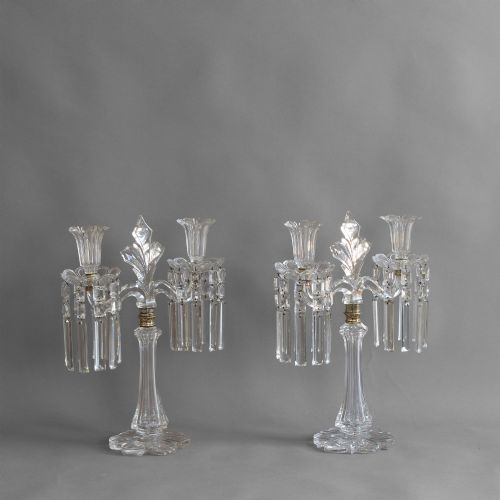
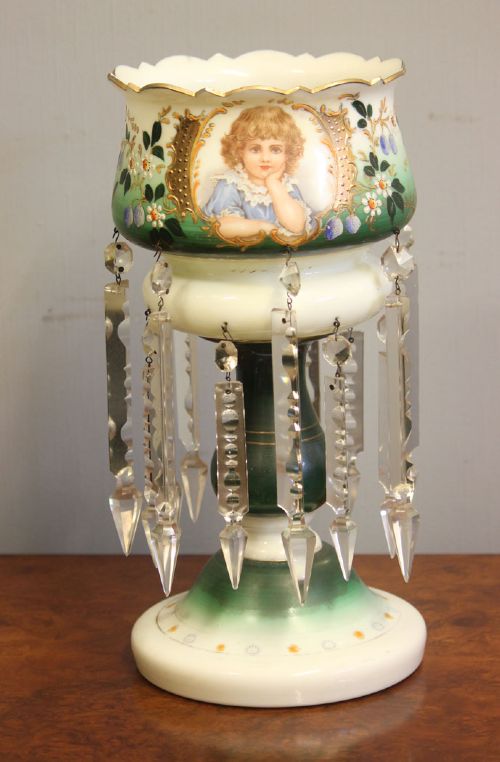
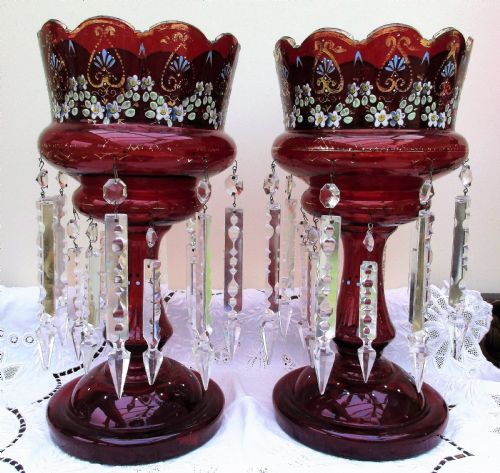
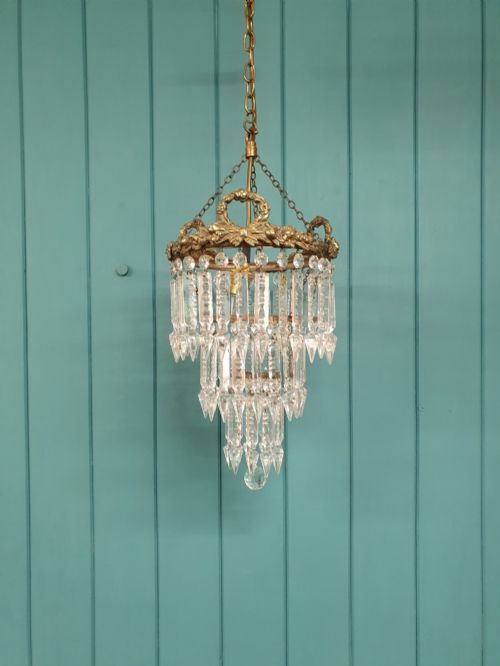
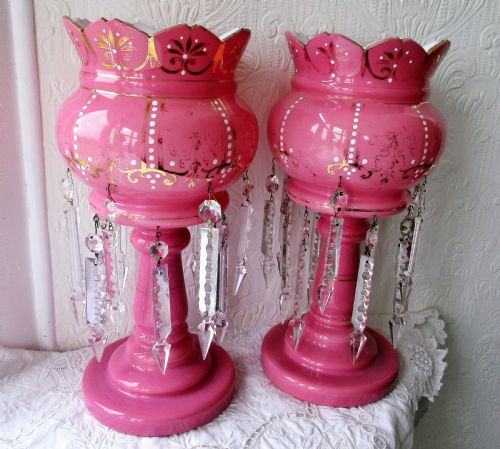
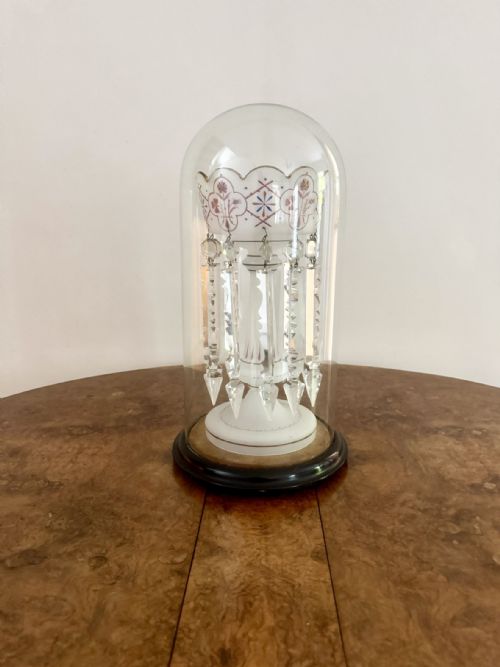
The versions most frequently met on this page include pairs of Victorian coloured glass mantel lustres and Regency clear cut-glass table examples. These pieces typically combine a solid glass or brass base with suspended crystal prisms that ring softly when a draft passes.
Originating largely from English, French, and Bohemian workshops, these decorative objects span the nineteenth and early twentieth centuries. Styles range from restrained Regency clear glass to exuberant Victorian ruby, green, and cranberry glass variations fitted with elaborate drops.
How they were made
Makers produced these objects using heavy lead glass or crystal, shaped by blowing or moulding before artisans cut geometric facets by hand on a rotating wheel. This cutting process created sharp edges that maximise light refraction through each prism and stem.
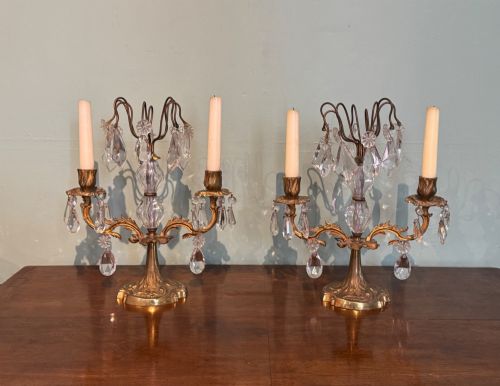
Metal components such as brass, gilt-brass, or bronze often form the structural mounts and candle nozzles, joined to the glass bodies with threaded pins or secured by cast collars. Enamel painting, gold leaf, and flash-craying techniques were applied to overlay surfaces, particularly on Bohemian flash glass variations.
Listings feature items spanning the Regency, Victorian, and Edwardian eras, utilising materials including crystal, brass, enamel, and gold leaf.
What varies in quality
Quality rests primarily in the depth and crispness of the hand-cutting on the glass body and the matching clarity of the suspended crystal drops. Superior examples display sharp, clean facets that do not blur at the edges, paired with heavy lead crystal that possesses a clear ring when tapped.
The cohesion of the design separates standard production from finer work, visible in the proportion between the supporting base and the hung prisms. Original matching crystal drops with sharp prism points indicate a higher grade of survival than mismatched or replacement glass components.
Clarkes
The Cut Glass Lustres Glossary
- Lustre
- A decorative tabletop or mantelpiece candlestick fitted with hanging glass prisms. These pieces multiply candle flame reflection through suspended crystal drops.
- Prism
- A cut glass pendant hung from the rim or body of a lustre. Each piece is faceted to disperse ambient light into spectral colours.
- Flash glass
- A vessel made with a thin outer layer of coloured glass fused over a clear or white glass body. Artisans cut through the coloured layer to expose the contrasting base glass beneath.
- Ormolu
- Finely ground high-carat gold cast onto a bronze base. This material appears on mounts and frames supporting nineteenth-century lighting.
- Mantel lustre
- A specific form designed to sit upon a fireplace mantelpiece. These items were paired symmetrically to flank clocks or mirrors.
Cut Glass Lustres: Frequently Asked Questions
What are cut glass lustres?
Cut glass lustres are ornamental candleholders featuring a central stem and bowl from which dangling crystal prisms are suspended. They were designed to sit on mantelpieces and tables, utilising the hanging drops to refract light from candles.
Most surviving examples date from the nineteenth century, encompassing English, French, and Bohemian origins in various coloured and clear glass forms.
How were lustres used originally?
These pieces served as functional lighting and decorative ornamentation in nineteenth-century drawing rooms and dining rooms. Placed in pairs on mantelpieces or side tables, they held candles while the glass drops amplified the available light.
When candles were unlit, the pieces functioned as decorative objects that caught daylight from windows and reflected it across the room.
How do I clean cut glass lustres?
Cleaning requires removing the hanging crystal drops individually and washing them in warm water with mild soap. The main glass body should be wiped down carefully with a soft cloth to avoid damaging any gilt or enamel surface decoration.
Metal components must be kept dry during the process to protect brass and ormolu finishes from moisture damage.
How can I tell Victorian lustres apart?
Victorian examples often feature vibrant coloured glass bodies, such as ruby, green, pink, or cranberry, frequently decorated with enamel work or gilt motifs. Regency pieces tend to favour clear, heavy cut crystal with simpler, classical proportions.
Examining the attachment loops on the prisms and the cut of the glass helps distinguish between mid-nineteenth-century production and later Edwardian reproductions.