


Cut Glass Dressing Box
A cut glass dressing box is a fitted receptacle for personal vanity items, combining heavy faceted crystal with precious metal mounts.
Cut Glass Dressing Box
When you search for a cut glass dressing box, you encounter heavy crystal and glass containers designed for dressing tables, vanity sets, and boudoir use. The forms range from small trinket pots and heart-shaped boxes to large vanity jars, scent bottle caskets, and multi-piece sets.
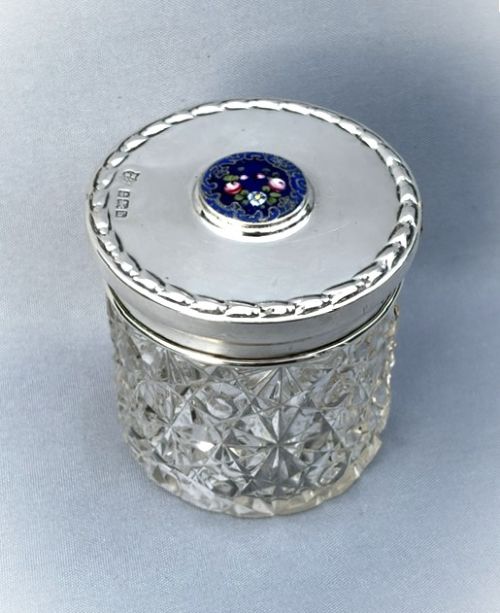
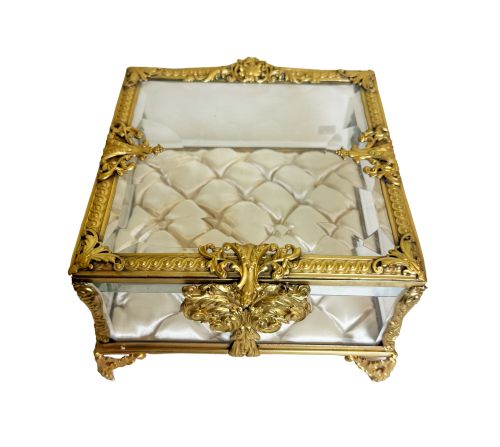
The pieces appearing on this page span several centuries and design movements, originating across the Victorian, Edwardian, and Art Deco periods, alongside French nineteenth-century and Georgian examples. You are most likely to meet silver-topped crystal jars and trinket boxes from the early twentieth century, alongside nineteenth-century boxes framed in brass, gilt bronze, or silver gilt.
Materials and construction
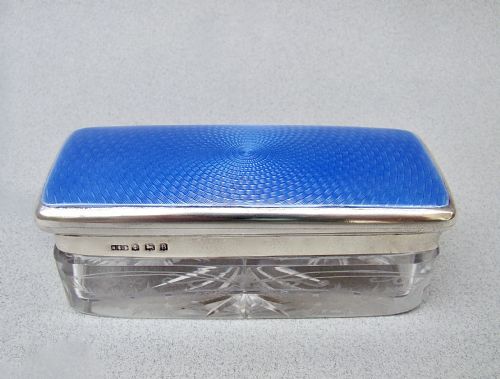
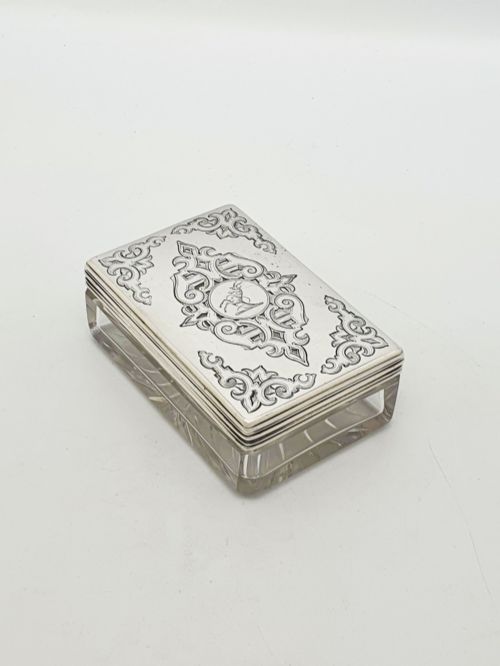
Makers formed the bodies of these vessels from cut glass, cut crystal, and occasionally coloured or blue glass, using deep wheel-cutting and etching to create light-reflecting facets and geometric patterns. These glass bodies were paired with sterling silver, silver gilt, brass, bronze, and tortoiseshell mounts, often secured with hinged lids.
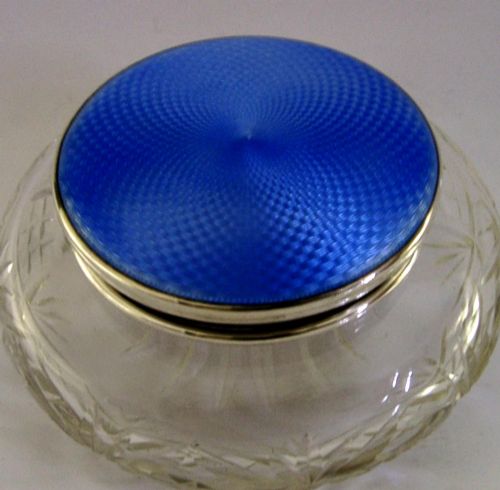
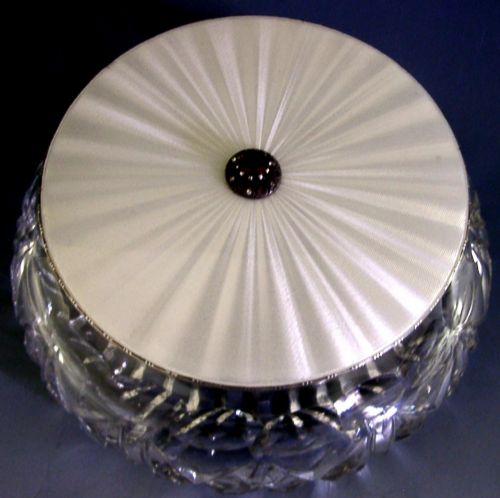
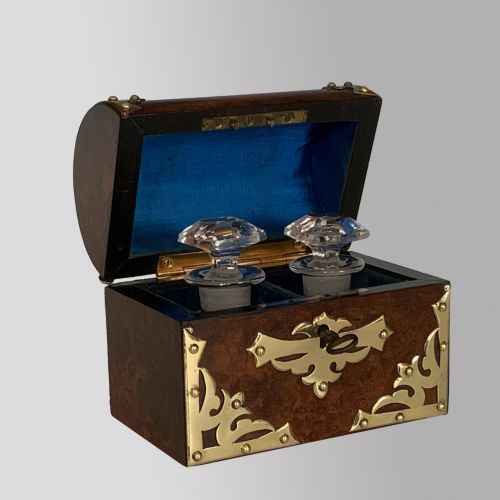
Surface decoration frequently incorporated guilloché enamel in various shades, alongside embossed leather, walnut, and coromandel wood frames. Interiors were commonly lined with velvet to cushion jewellery, perfume bottles, and vanity accessories.
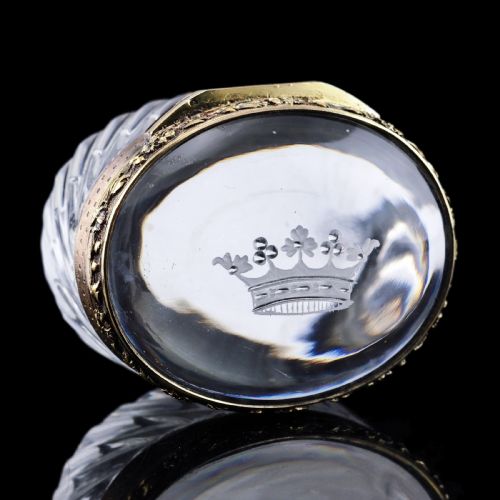
Several boxes contain secret compartments or hidden spring-loaded trays designed to keep private letters and family crests away from prying eyes.
Distinguishing quality in these containers
The distinction between standard containers and finer examples rests upon the weight and clarity of the crystal, the crispness of the wheel-cut facets, and the substance of the metal mounts. Thick, heavy-gauge sterling silver lids and heavily chased or enamelled mountings indicate superior craftsmanship compared to thin plated alternatives.
Design complexity also separates pieces, such as those featuring multi-layered guilloché enamel work, matched sets of interior scent bottles, or intricate gilt bronze frames. The presence of clear hallmarks providing specific makers, assay offices, and dates elevates the historical standing of a box.
Henry Clifford Davis·Posen of Frankfurt and Berlin·Goldsmith's and Silversmith's Co.·Jonathan Douglas
The Cut Glass Dressing Box Glossary
- Guilloché enamel
- A decorative technique where precise, intricate patterns are mechanically engraved into metal beneath a translucent layer of coloured enamel. This finish appears frequently on early twentieth-century dressing table jars and vanity boxes.
- Silver-gilt
- Sterling silver that has been coated with a thin layer of gold, providing a rich, warm tone to the metal mounts and frames. It is also known as vermeil.
- Scent bottle casket
- A fitted box or case designed specifically to hold multiple glass perfume bottles securely within an interior compartment. These often include velvet or silk linings.
- Coromandel
- A dense, dark exotic timber with striking contrasting grain, imported from Asia and utilised for high-end nineteenth-century jewellery and vanity boxes.
- Ormolu
- Gilt bronze mounted onto decorative objects and furniture, popular in French and Victorian pieces to highlight corners, hinges, and frames.
Cut Glass Dressing Box: Frequently Asked Questions
What is a cut glass dressing box?
A cut glass dressing box is a lidded container fashioned from heavy faceted glass or crystal, typically fitted with a sterling silver, metal, or tortoiseshell top. These containers sat upon dressing tables to hold trinkets, powder, soap, or jewellery.
Over the centuries, makers produced them in varied forms including round jars, heart-shaped boxes, and compartmentalised caskets designed to house glass scent bottles.
How do I date an antique dressing box?
Dating these pieces relies primarily upon metal hallmarks stamped onto the silver mounts, which indicate the assay office, standard of metal, and year of manufacture. Stylistic indicators also help, as Neoclassical Revival, Victorian, Edwardian, and Art Deco designs each utilise distinct motifs, enamelling techniques, and wood types.
Examining the construction methods, such as the depth of the glass cutting and the type of hinge mechanism, further narrows the period of origin.
Were these boxes part of larger sets?
Many dressing boxes and jars were originally manufactured as components of extensive vanity sets or dressing table services. These comprehensive groupings included multiple crystal jars, scent bottles, brushes, and mirrors housed within fitted leather cases or wooden caskets.
Surviving pieces often appear either as standalone items or as partial sets gathered together over time.
How should I clean the silver mounts?
Cleaning the silver mounts requires care to avoid damaging the adjacent glass, enamel, or velvet linings. Use a soft cloth formulated for silver maintenance, applying it gently around the engraved patterns or guilloché enamel without submerging the entire box.
Keeping moisture away from the interior linings and hinges preserves the structural integrity of the piece.