




Silver Topped Glass Container
These silver topped glass containers bring practical elegance to dressing tables and desks, combining heavy crystal bodies with hallmarked metal lids.
Silver Topped Glass Container
A silver topped glass container is a desktop or dressing table accessory designed to hold small items like stamps, trinkets, biscuits, or cosmetics safely out of sight. When searching for a silver topped glass container, buyers typically encounter pieces originating from the Victorian, Edwardian, and Art Deco periods.
The selections span vanity jars, trinket boxes, stamp boxes, biscuit barrels, and cologne bottles, reflecting how widely households utilised cut crystal and silver mounts. Edwardian examples appear frequently alongside Victorian and 1930s pieces, showing the enduring appeal of metal-mounted glassware across multiple decades.
Materials and construction methods
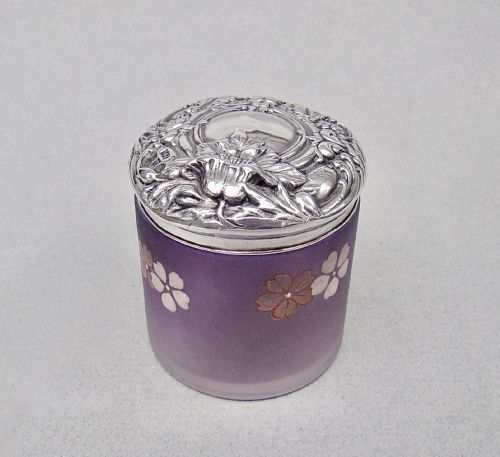
The bodies of these containers rely on heavy cut crystal, faceted glass, or frosted glass, often shaped into biscuit barrels, tall jars, or heart-shaped trinket boxes. This glass is paired with solid sterling silver, silver plate, or occasionally tortoiseshell and guilloche enamel details.
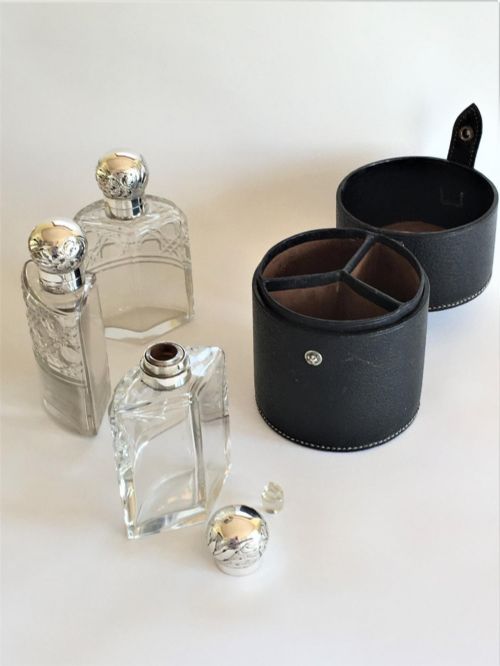
Silversmiths formed the lids and mounts separately before securing them to the glass bases, sometimes incorporating leather cases or intricate hinged mechanisms for stamps and cologne bottles.
Some Edwardian travellers required a dedicated locked leather case just to keep their cologne bottles secure on bumpy horse-drawn carriage rides.
Assessing quality in mounted glass
Quality rests in the crispness of the glass cutting and the weight of the silver mount rather than the sheer size of the object. Deeply faceted cut crystal and thick, solid sterling silver lids indicate superior production compared to lighter metal plating and plain glass.
The presence of clear hallmarks indicating specific assay offices and makers adds distinct character and confirms the pedigree of the metalwork.
Levi & Salaman·Goldsmith's and Silversmith's Co.·James Dixon and Sons
The Silver Topped Glass Container Glossary
- Hallmark
- An official stamp applied to precious metals indicating the standard of purity, the assay office, and the date of manufacture. These small stamped marks help date the silver mount accurately.
- Cut crystal
- Glass containing lead oxide that increases its weight, brilliance, and clarity. The facets catch light sharply across these containers.
- Guilloche enamel
- Decorative metalwork covered in translucent enamel over an engine-turned geometric pattern. It appears on the lids of vanity jars and dressing table accessories.
- Biscuit barrel
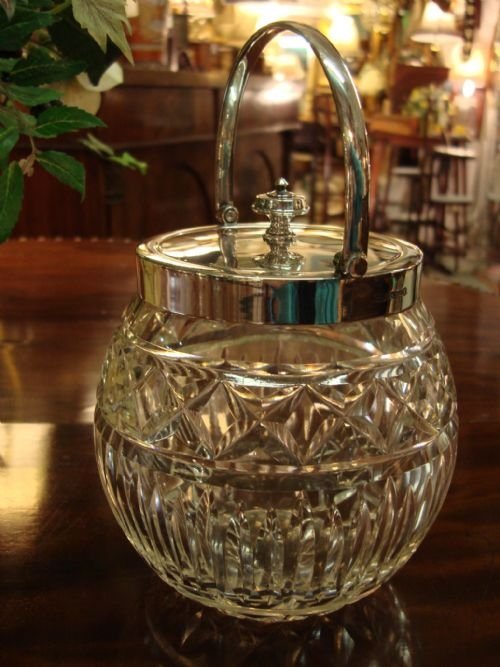
- A lidded container historically used for storing dry biscuits in the drawing room or dining room. Many examples combine a cut glass body with a swinging silver handle and lid.
Silver Topped Glass Container: Frequently Asked Questions
How do I clean the silver top without damaging the glass?
Use a soft cloth and a gentle silver polish, taking care to keep abrasive creams away from the glass body and any enamel or tortoiseshell inserts.
If the lid is removable, detach it from the container entirely before cleaning to avoid getting moisture trapped between the metal mount and the glass rim.
What were vanity jars originally used for?
Vanity jars held powders, creams, pins, and hair combs on a Victorian or Edwardian dressing table.
Their heavy silver lids kept cosmetics sealed and protected from dust in daily use.
How can I tell an Edwardian piece from a Victorian one?
Edwardian containers often feature lighter, airier Art Nouveau styling or crisp geometry, whereas Victorian pieces tend to be heavier with deep, elaborate cut crystal patterns.
Checking the hallmarks inside the silver lid provides the exact year and assay office for definitive dating.
Are biscuit barrels still practical to use today?
These lidded glass containers make striking storage jars for biscuits, sweets, or bathroom cotton wool balls.
The generous proportions of a cut crystal barrel accommodate dry goods easily on a modern kitchen counter or shelf.