
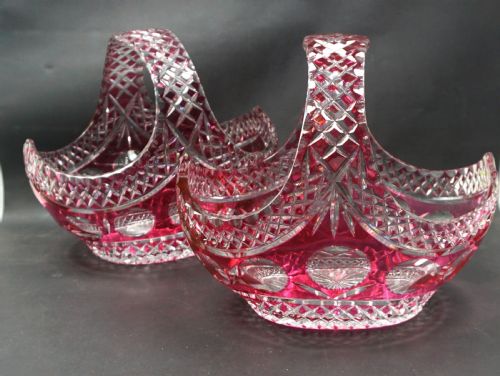
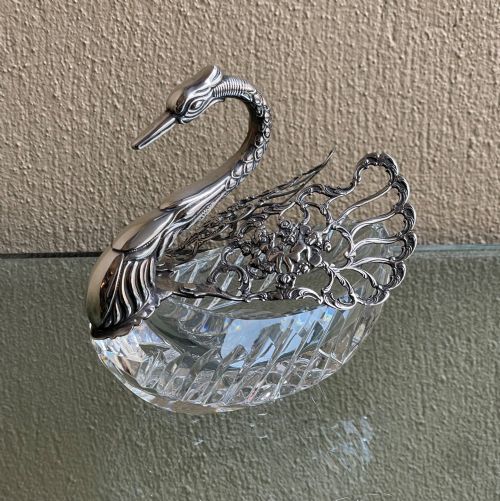


Cut Glass Centerpiece Bowl
A cut glass centerpiece bowl anchors a dining table or sideboard, bringing heavy refractile sparkle and metal mounts together.
Cut Glass Centerpiece Bowl
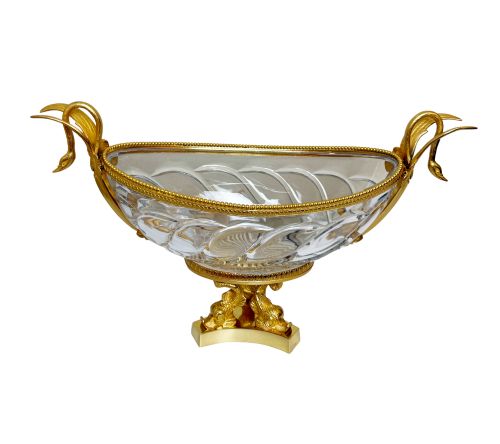
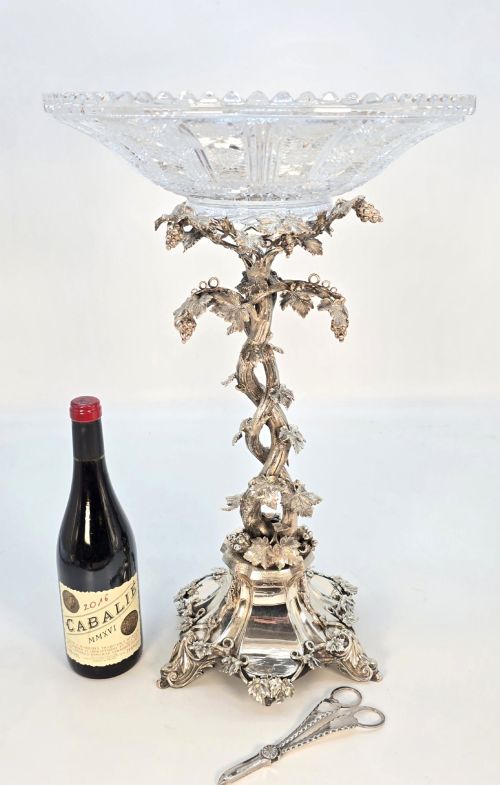
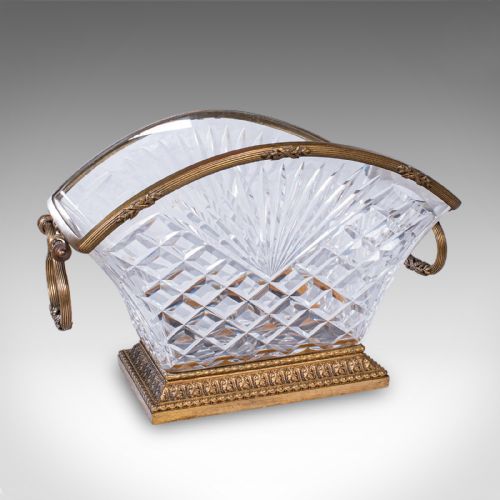
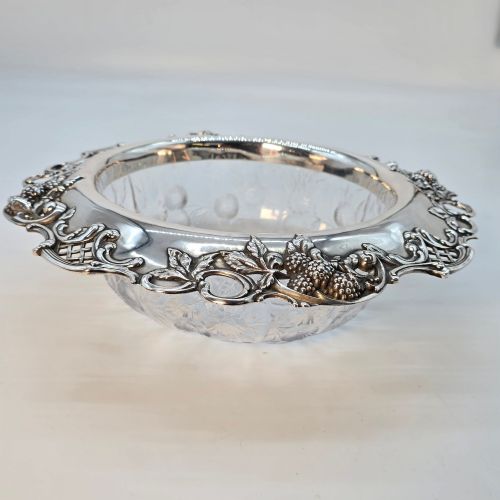
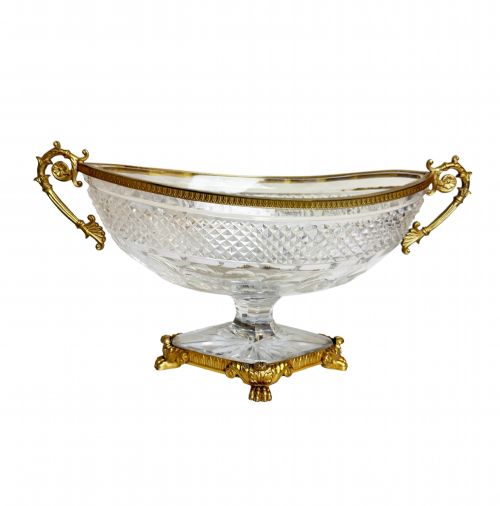
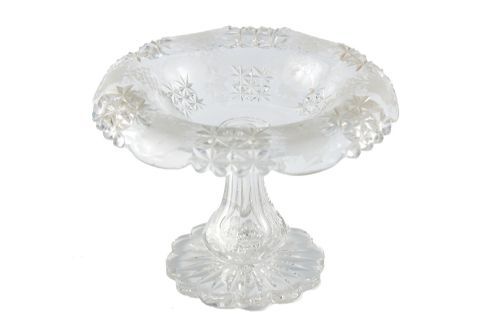
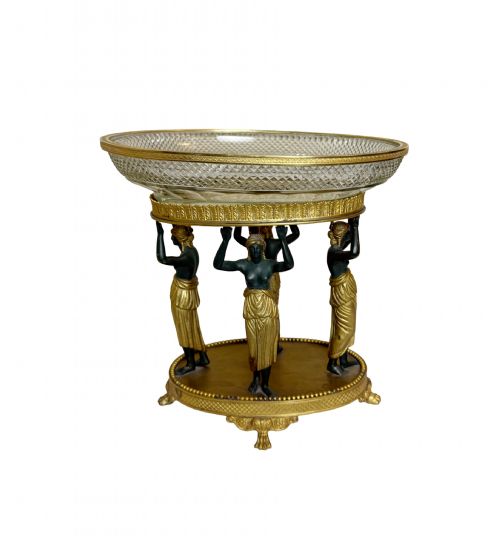
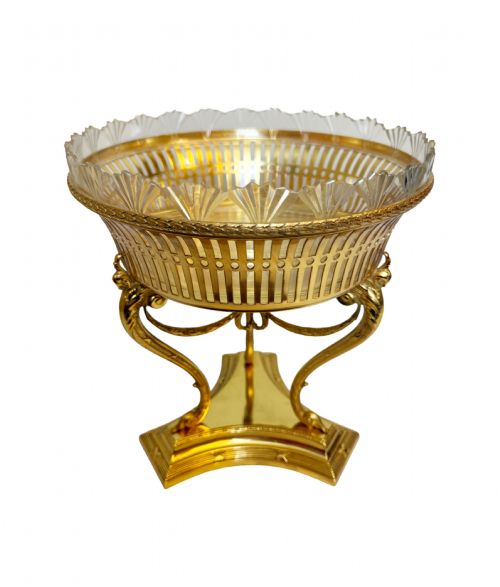
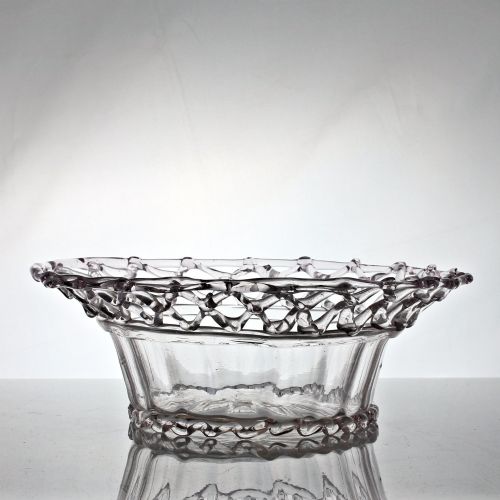
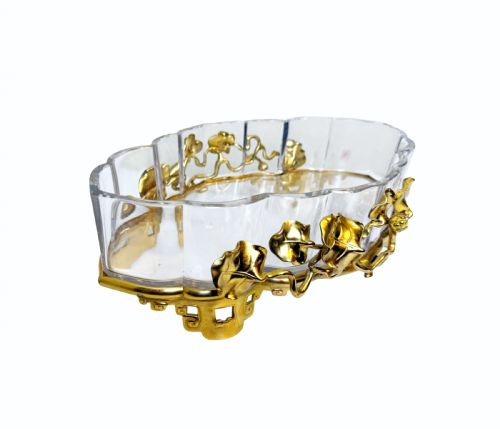
A cut glass centerpiece bowl combines heavy vessel work with metal mounts in forms ranging from pedestal comports to low fruit dishes and basket shapes. These pieces emerge across the nineteenth and early twentieth centuries, spanning Georgian, Victorian, Edwardian, and Art Deco periods.
The most common versions on this page are Victorian and Edwardian heavy cut glass or lead crystal bowls, often mounted in silver plate, ormolu, or gilt bronze. Alongside these stand French Empire and continental pieces, plus distinct Georgian Irish standing bowls.
Materials and technique
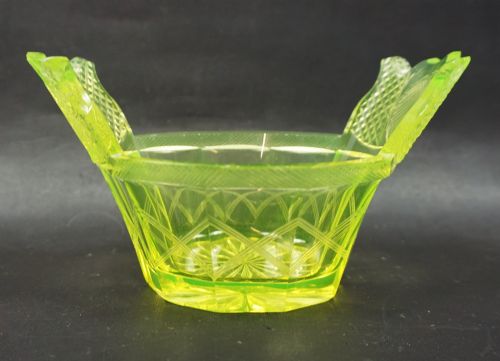
Makers combine hand-blown or lead crystal glass with cast metal frames in silver, silver plate, ormolu, and gilt bronze. Glass vessels receive deep wheel-cut decoration, diamond point, or hobnail patterns across clear, cobalt, ruby red, or uranium matrices.
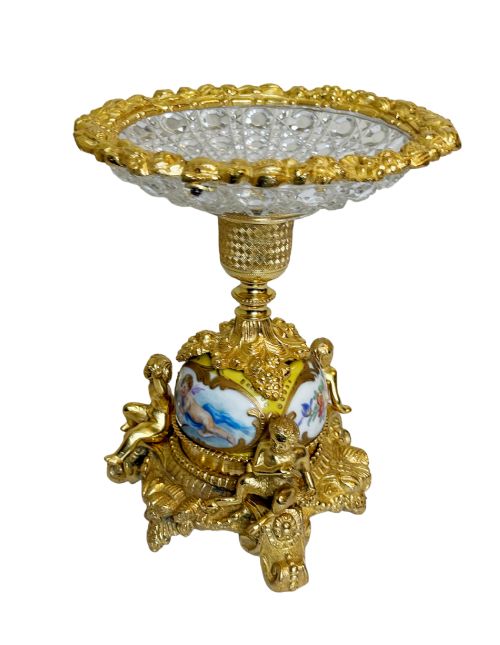
Metal mounts incorporate structural stands, cherubs, handles, and collars fitted tightly to the glass insert. Overlay techniques layer coloured glass over clear crystal before cutting back to reveal contrasting depths.
One listed piece comes with a warning that it has no ultraviolet reaction, proving even glassware needs an honest alibi.
Judging the work
Quality rests in the crispness of the glass cutting, the weight of the lead crystal, and the crisp definition of the cast bronze or silver mounts. Superior pieces display deep, sharp facets that refract light cleanly without softness in the wheel marks.
The integration between the glass bowl and its metal frame dictates overall distinction, where heavy gilding, cast figural detailing, and thick, resonant metal elevate the object above standard production items.
Tiffany and Co·Val St Lambert·Joseph Simon·W M F·Elkington and Co
The Cut Glass Centerpiece Bowl Glossary
- Ormolu
- Gilded bronze used for decorative mounts on nineteenth-century pieces. It provides a warm, golden contrast to clear or coloured glass.
- Hobnail
- A prominent faceted glass pattern resembling the hobnails on stout boots. This dense cutting creates exceptional light refraction across the body.
- Comport
- A large standing dish or bowl elevated on a stem and foot. These pieces function as central table ornaments for fruit or sweetmeats.
- Epergne
- A large multi-tiered centrepiece featuring a central bowl surrounded by smaller hanging baskets or dishes. They dominate formal dining tables with branching glass work.
- Traforato
- Pierced or openwork decoration applied to glass or metal objects. This technique creates delicate lace-like patterns around the rim or body.
Cut Glass Centerpiece Bowl: Frequently Asked Questions
What is a cut glass centerpiece bowl used for?
These large bowls serve as focal points on dining tables or sideboards, historically holding fruit, flowers, or sweetmeats during formal meals.
Today they function as decorative objects that catch natural light in a room, requiring no contents to command attention.
How do I date a cut glass bowl?
Dating relies on the style of the glass cutting, the weight of the metal mounts, and the specific composition of the crystal or glass body.
Georgian and early nineteenth-century pieces often feature thick, hand-blown lead crystal with deep wedge cuts, whereas later Victorian and Edwardian examples incorporate machine-ground precision and elaborate silver-plated or ormolu frames.
Are these bowls always heavy?
Genuine nineteenth-century pieces made with lead crystal or thick potash glass possess substantial weight compared to modern pressed glassware.
When combined with cast bronze, ormolu, or silver-plated frames, the total object becomes quite heavy and requires a sturdy surface for display.