

Cut Glass and Silver
Cut glass and silver pieces combine heavy faceted vessels with precious metal mounts, offering practical service on the dining table and elegance on the dressing table.
Cut Glass and Silver
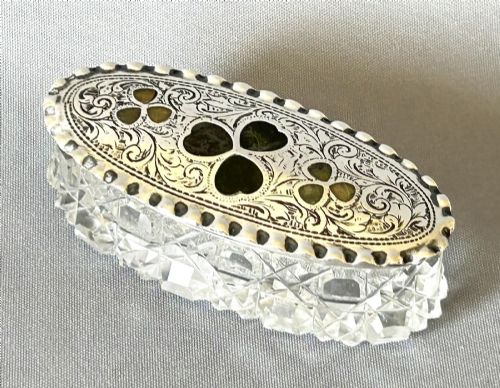
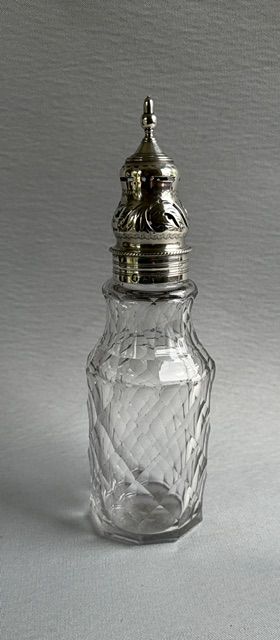
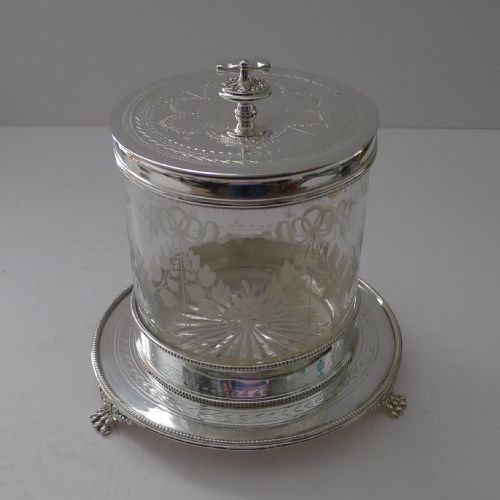
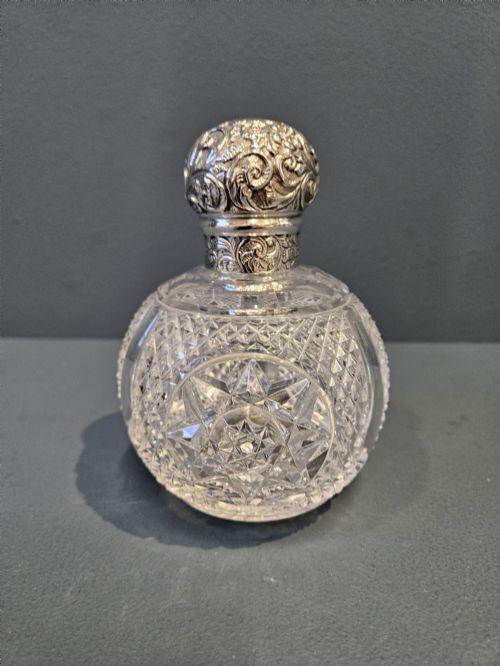
When searching for cut glass and silver, a buyer meets items designed for domestic utility and display across the Victorian, Edwardian, and Art Deco periods. These objects range from scent bottles and vanity jars to biscuit barrels, claret jugs, salt cellars, and inkstands.
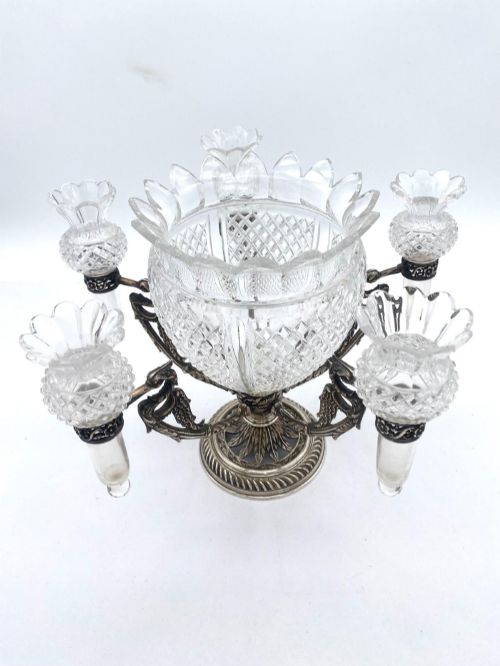
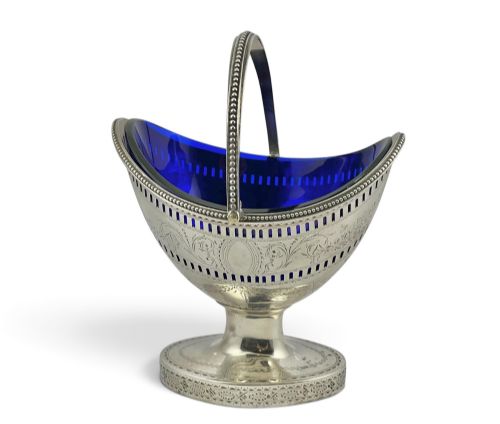
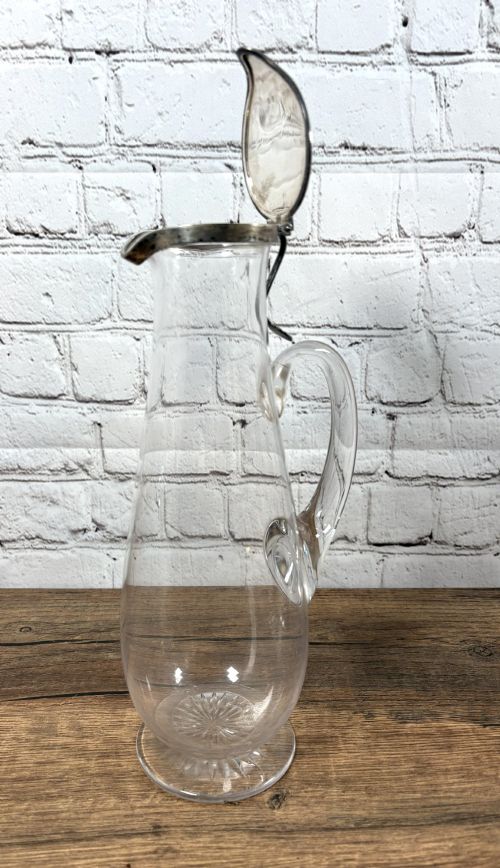
The most common vessels on this page pair clear glass bodies with sterling silver or silver plate mounts. Formats span from modest desk accessories to large decanters, tantalus sets, and table centrepieces.
Origins stretch from English workshops to French makers, incorporating materials like oak, tortoiseshell, and enamel. Each surviving example reflects the social rituals of nineteenth and twentieth-century dining and grooming.
How they were made
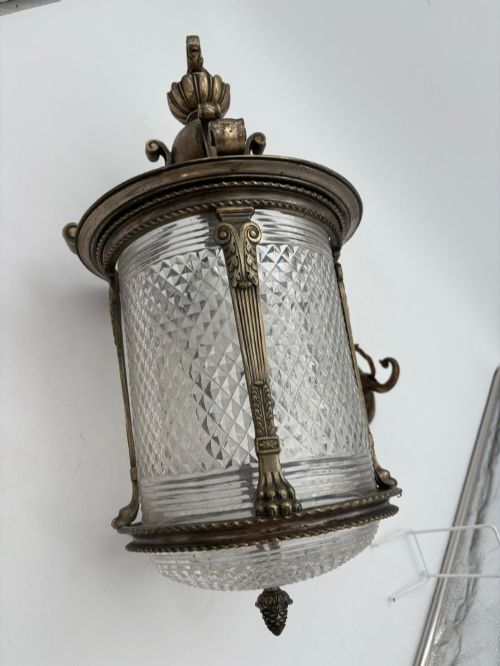
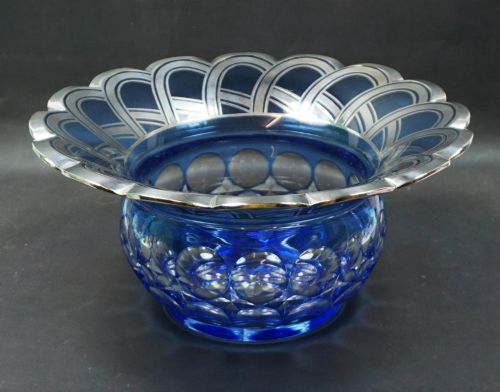
Glass bodies are shaped by blowing or moulding before artisans apply deep geometric facets, hobnail patterns, or hand-cut designs to the surface. This heavy crystal or glass catches the light to contrast against the polished metal elements.
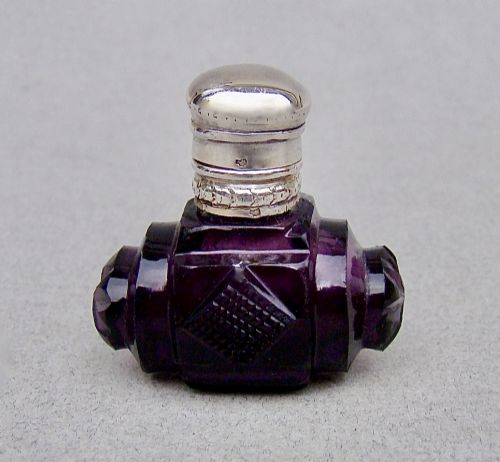
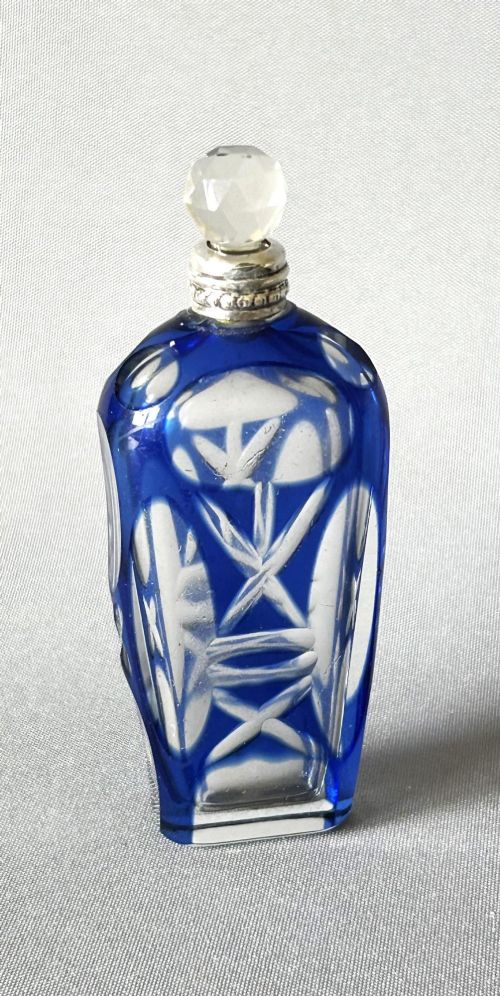
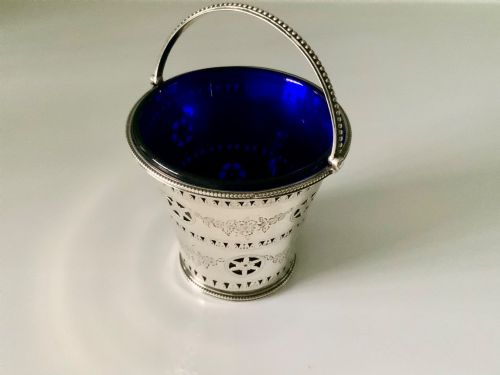
Mounts, collars, and lids utilise sterling silver or silver plate, frequently bearing hallmarks that record the assay office and year of production. Craftsmen secure these metal mounts directly onto the glass necks and rims with specialised adhesives or tight mechanical friction.
Cut Glass and Silver Retail Price Guide 2026
Typical asking prices for cut glass and silver among the pieces listed under this phrase on Sellingantiques today, from the lower quarter to the upper quarter. They describe what is for sale here now, not the wider market.
Several crystal swans on this page come equipped with movable wings, serving salt with unexpected avian enthusiasm.
What varies in quality
Quality rests in the crispness of the glass cutting and the weight of the metal mount. Deeper, sharper facets on the crystal and thicker gauges of sterling silver elevate a piece above standard domestic ware.
Design flourishes separate standard production from finer output. Hand-painted porcelain plaques, guilloché enamel lids, and complex mechanical mounts like movable swan wings or secure locking tantalus frames indicate higher manufacturing ambition.
William Comyns·Henry Clifford Davis·Elkington·Walker and Hall
The Cut Glass and Silver Glossary
- Cut glass
- Glassware shaped and decorated by abrasive wheels that grind facets and patterns into the surface. This technique produces sharp edges that refract light intensely.
- Sterling silver
- An alloy containing ninety-two point five percent silver by mass, with the remainder usually copper. It provides the durable metal used for mounts, lids, and hallmarks.
- Tantalus
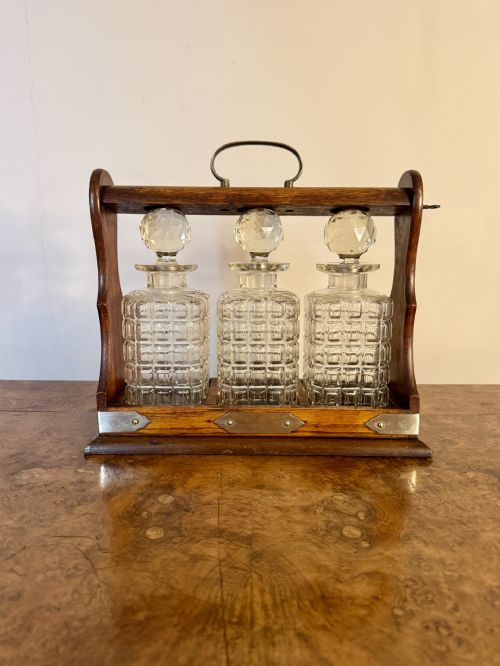
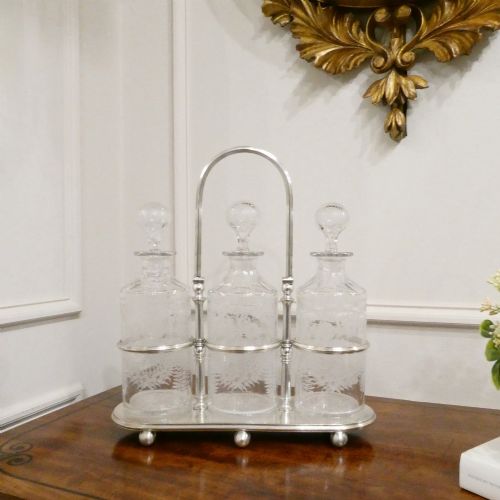
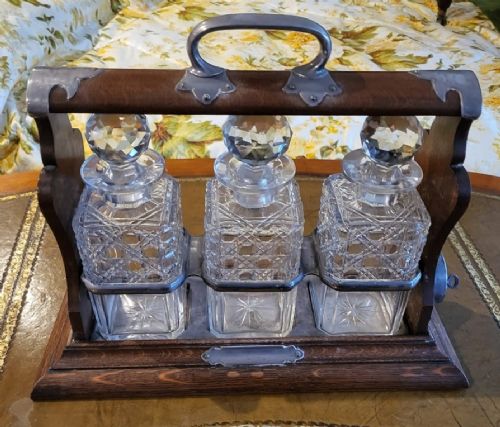
- A locked wooden frame holding decanters visible to guests but inaccessible without a key. Oak frames house the glass bottles securely within a metal security bar.
- Guilloché enamel
- A decorative technique where intricate geometric patterns are mechanically engraved into metal beneath a translucent layer of coloured enamel. It frequently appears on vanity jars and trinket pots.
- Hobnail cut
- A dense, protruding pattern of diamond-shaped facets resembling the hobnails on heavy boots. It creates a tactile, highly reflective surface texture on heavy crystal bodies.
Cut Glass and Silver: Frequently Asked Questions
How do I clean cut glass and silver?
Wash the glass component in warm soapy water using a soft brush to clear dust from deep facets. Keep moisture away from any wooden frames or glued silver mounts to prevent tarnishing and separation.
Polish the silver elements gently with a dedicated microfibre cloth and a mild silver cleaner. Avoid chemical dips that strip the natural patina and damage delicate enamel or porcelain inserts.
Are these pieces safe for daily use?
Most vanity jars, decanters, and inkstands remain entirely functional for holding liquids or small items. Care is required with antique glass to avoid thermal shock from very hot water.
Pieces featuring fragile enamel, glued mounts, or locked mechanisms require careful handling. Regular use should account for the age of the adhesives and hinges securing the metal to the glass.
How can I date my piece?
Examine the sterling silver mounts for engraved hallmarks that reveal the assay office, standard mark, and date letter. British silver standards and date codes follow specific alphabetic cycles set by regional assay offices.
Stylistic indicators such as Edwardian neoclassical swags, Victorian oak framing, or Art Deco geometric enamel provide secondary dating evidence when hallmarks are absent or worn away.
What is a tantalus used for?
A tantalus serves as a secure liquor cabinet designed to prevent servants or guests from helping themselves to spirits. The locking metal bar restrains the glass decanters inside an oak stand.
Unlocking the mechanism allows the side or top bar to lift so the bottles can be removed for pouring. These locking stands became popular in wealthy nineteenth-century households for entertaining.