
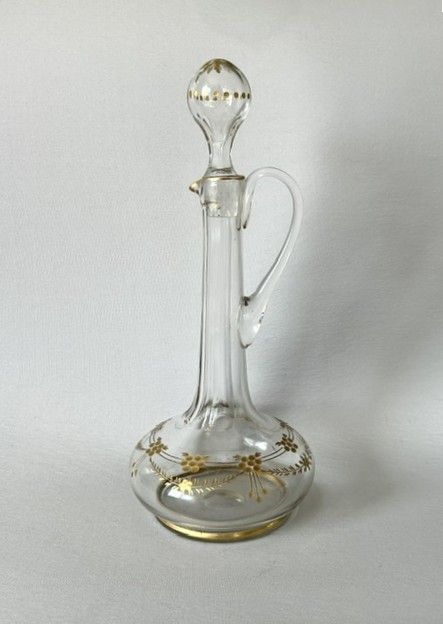
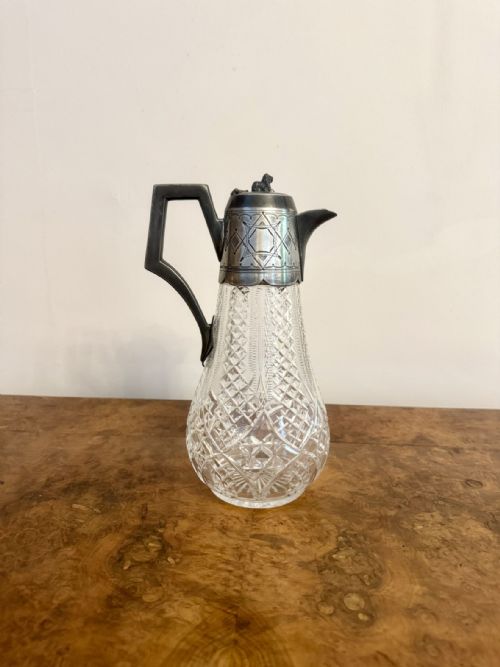
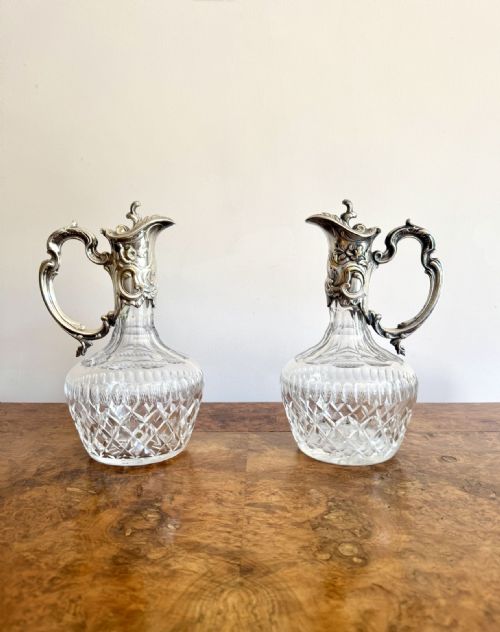


Cut Crystal Wine Pitcher
A cut crystal wine pitcher brings weight and brilliance to the table, combining heavy cut glass with gleaming metal mounts.
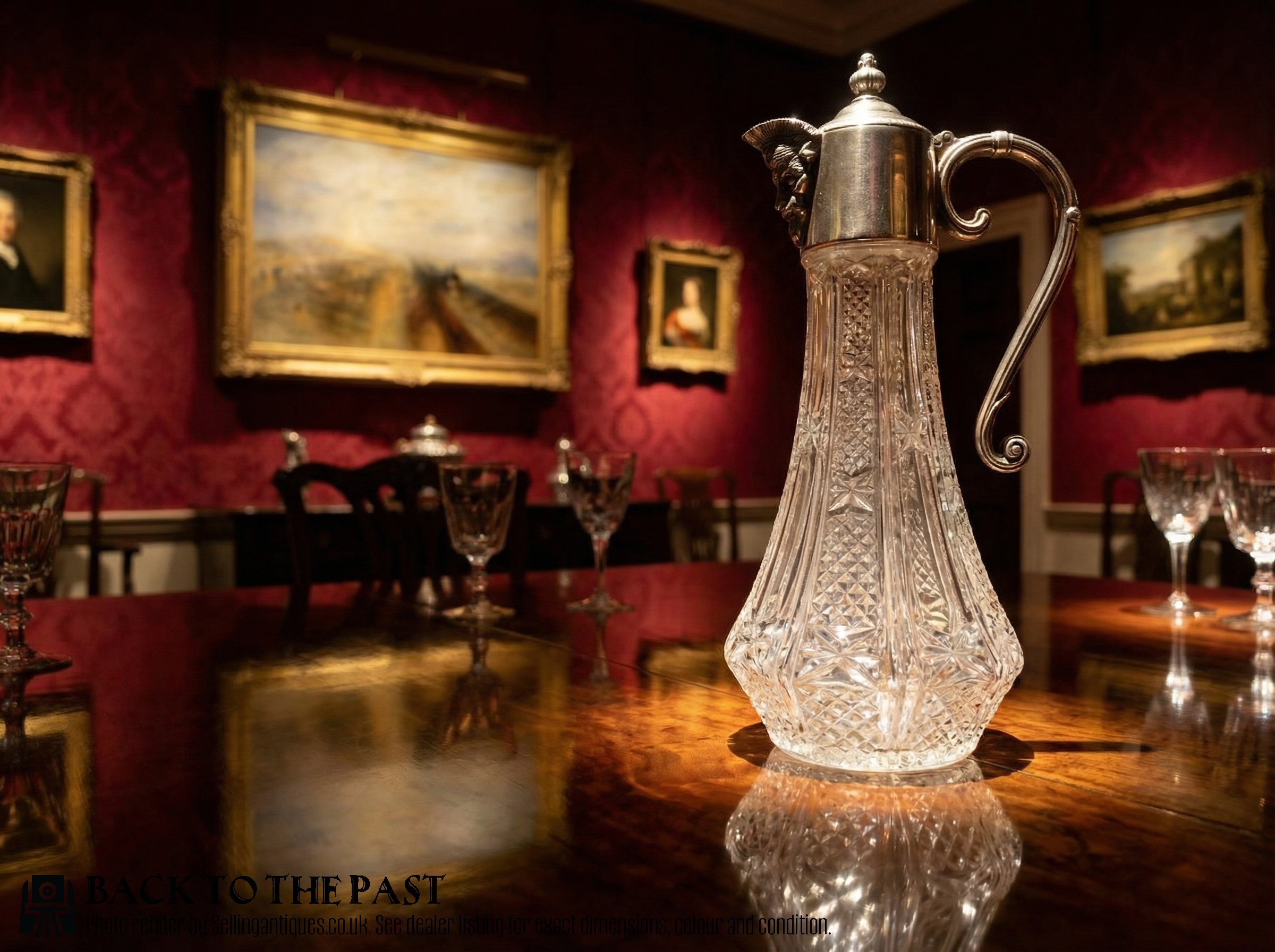
Cut Crystal Wine Pitcher
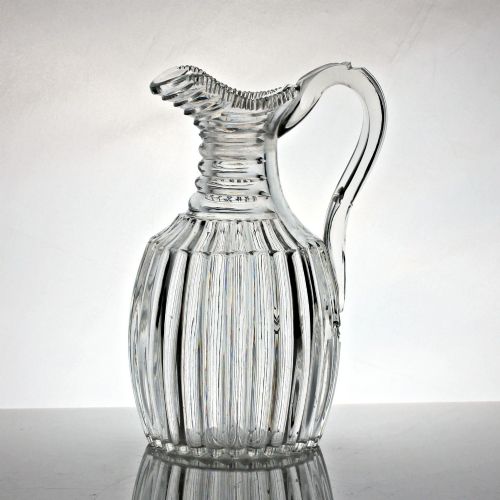
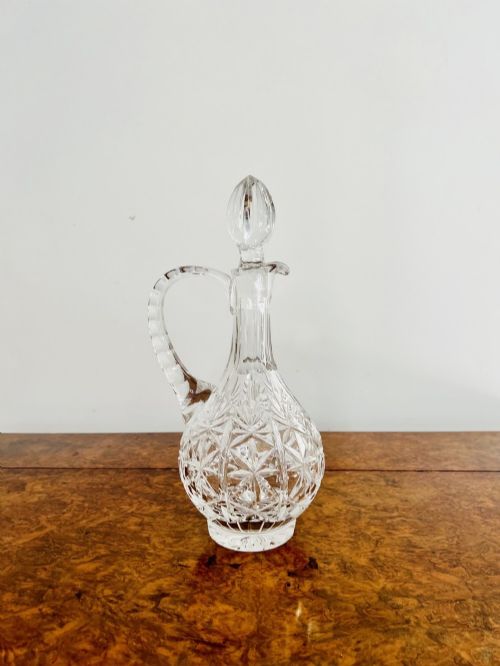
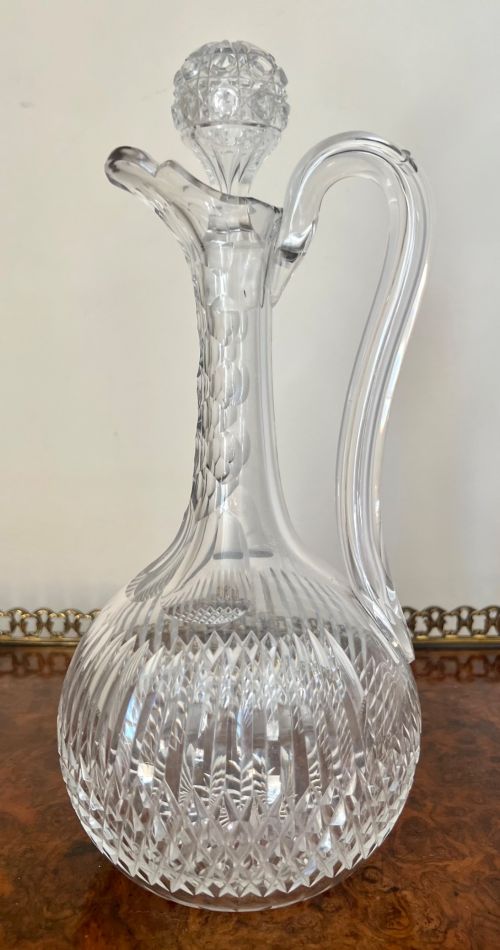
A cut crystal wine pitcher is a serving vessel designed for the dining table, encompassing claret jugs, ewers, and water jugs from the nineteenth and twentieth centuries. These pieces appear frequently in Victorian and Edwardian forms, balancing substantial glass bodies with functional handles and spouts.
Makers fashioned these vessels primarily to serve wine, claret, or water during formal meals and gatherings. The surviving examples on this page reflect the aesthetic preferences of the Victorian era, the Edwardian period, and later modernist movements.
How they were made
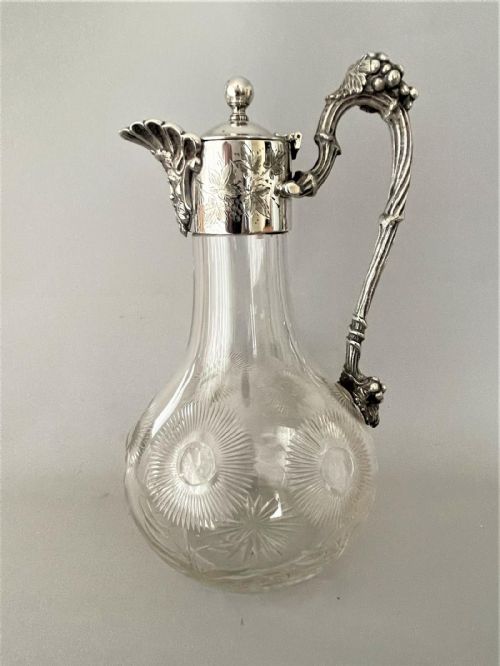
Craftsmen shaped lead crystal and cut glass through heavy wheel-cutting and hobnail patterns, creating deep facets that catch the light. This glass body was then married to mounts formed from silver plate, sterling silver, or gilded details.
Mounters secured hinged lids and handles directly to the glass neck, often incorporating hallmarks or intricate chased decoration into the metalwork.
One exceptional Victorian iteration takes the form of a novelty duck, complete with a silver head serving as the lid.
What varies in quality
Quality rests in the crispness of the glass cutting and the structural integration of the metal mounts. Pieces with deep, sharp facets and heavy sterling silver or robust silver-plate mounts display superior craftsmanship.
The sophistication of the form also dictates standing, with novelty shapes or unusual spouts demonstrating a higher level of design ambition than standard serving jugs.
Webb Corbett·Hukin & Heath
The Cut Crystal Wine Pitcher Glossary
- Claret jug
- A specialised wine pitcher specifically intended for serving claret or red wine. These vessels usually feature a handle and a hinged metal lid.
- Hobnail cut
- A pattern of sharp, pyramid-like facets cut into the surface of glass. It creates high tactile texture and intense light refraction.
- Silver plate
- A layer of silver fused to a base metal core such as copper or Britannia metal. It provided the appearance of solid silver at a more accessible cost.
- Ewer
- A large jug with a wide-spouted mouth and a curved handle. This form descends from historical water ewers adapted for modern dining.
- Sterling silver
- An alloy consisting of silver and other metals, standardised for purity. It carries hallmarks indicating the assay office and year of testing.
Cut Crystal Wine Pitcher: Frequently Asked Questions
What is a cut crystal wine pitcher used for?
These vessels served to decant and present wine at the dining table, particularly claret or dessert wine. They allowed hosts to aerate the wine and pour it cleanly.
In daily use, they functioned as both practical tableware and decorative centerpieces during formal meals.
How do I clean an antique glass pitcher?
Wash the glass gently in warm water using mild soap, avoiding sudden temperature changes that can crack old crystal. Use a soft bottle brush for the interior if necessary.
Polish the metal mounts separately with a suitable cloth, keeping moisture away from any historic cement or glued joints.
How can I tell a Victorian pitcher from an Edwardian one?
Victorian pieces often display heavier, more ornate cutting and robust silver-plated mounts with intricate chased motifs. They date from the mid to late nineteenth century.
Edwardian examples tend toward lighter, more refined proportions and brighter glass clarity, reflecting changing tastes around the turn of the twentieth century.
Can I still use these pitchers for serving wine today?
Many collectors continue to use these pieces for serving wine, water, or cordials at dinner parties. The sturdy construction of lead crystal and metal mounts makes them fully functional.
Care should be taken with older silver-plated mounts to ensure they are cleaned properly after use.