



Cut Crystal Tantalus Decanters
Cut crystal tantalus decanters combine secure locking bars with heavy glass vessels to keep spirits safe from unauthorised guests.
Cut Crystal Tantalus Decanters
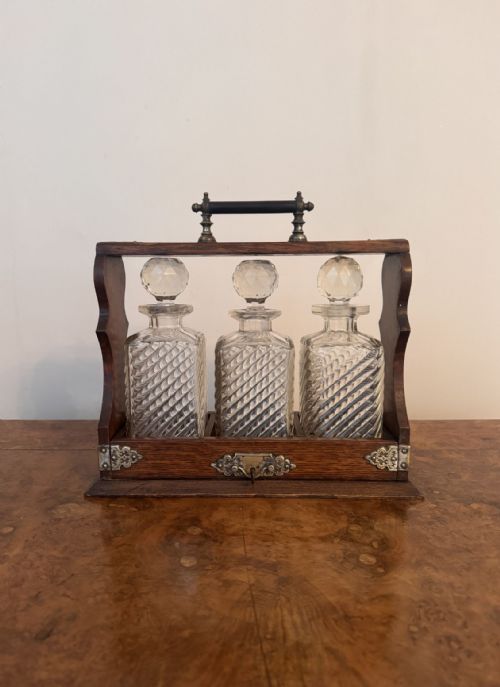
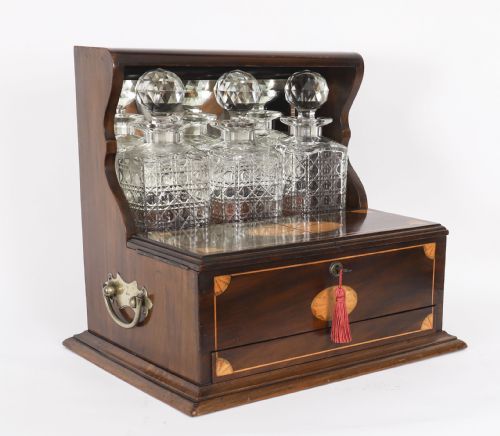
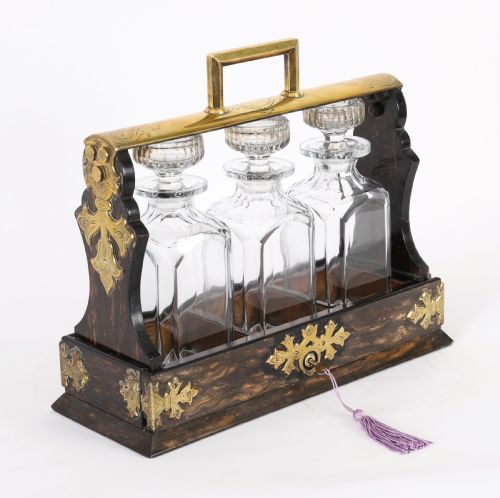
Cut crystal tantalus decanters are drinking sets housed in lockable frames designed to restrict access to spirits in Victorian and Edwardian dining rooms. The mechanism uses a metal bar passing over the stoppers, secured by a lock that prevents the decanters from being lifted out while still displaying the heavy glass bottles.
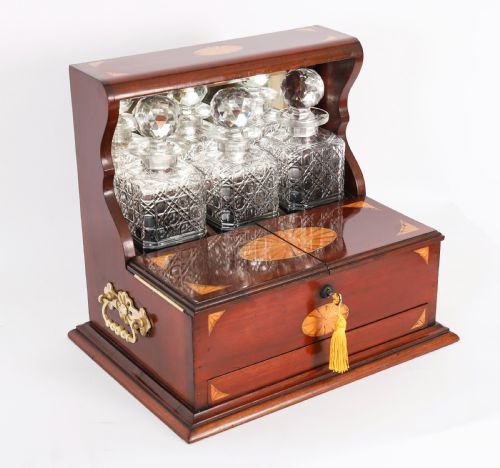
Most examples found here date from the nineteenth century into the early twentieth century, spanning Victorian, Edwardian, and Art Deco periods. The forms range from simple single bottle frames to elaborate three bottle setups combined with games compendiums and humidors in fitted wooden boxes.
The wooden frames utilise materials such as oak, pollard oak, walnut, coromandel, satinwood, and mahogany, often mounted with brass or silver plate. Alongside standalone stands, French cave à liqueur sets house cut glass and crystal bottles within ornamental or leather-covered cases.
How they were made
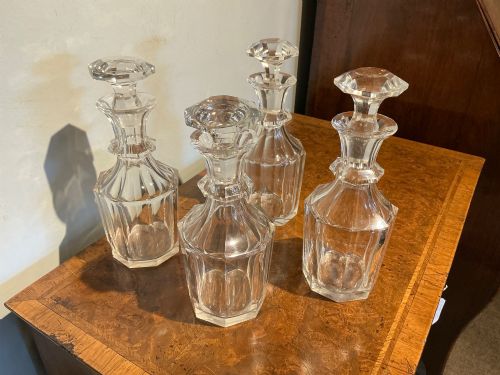
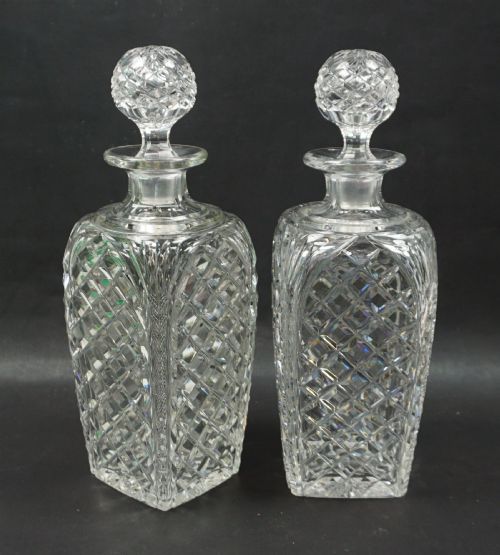
The glass vessels are formed from cut crystal or cut glass, shaped into square section tapered profiles, oval bodies, or round decanters with matching stoppers. Artisans cut geometric patterns into the thick glass blanks by hand, producing deep facets that refract light through the liquor inside.
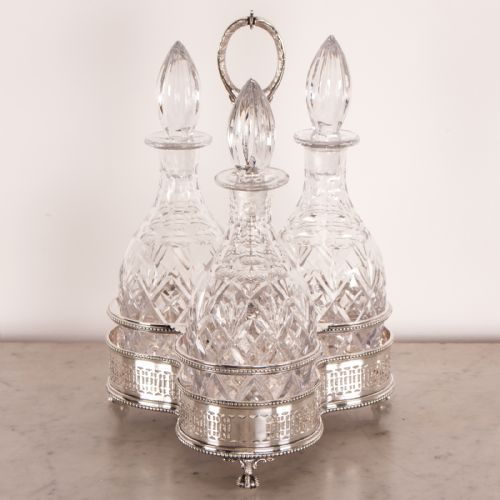
Wooden chassis are constructed from solid or veneered hardwoods like oak and exotic coromandel, frequently inlaid with contrasting stringing or fitted with brass handles and escutcheons. Metal components include cast brass mounts and silver-plated or sterling silver locking mechanisms that secure the retaining arms over the bottle necks.
These locking liquor cabinets were cleverly named after a Greek mythological king who was forced to suffer eternal thirst within reach of water.
What varies in quality
The standard of a cut crystal tantalus decanter depends heavily on the crispness of the glass cutting and the weight of the metal mountings. Superior decanters feature deep, sharp wheel-cut facets with heavy, clear metal in the glass, whereas lesser examples show softer edges or mould seams.
The engineering of the locking mechanism marks the difference between basic utility and high craftsmanship. Robust silver-plated or sterling silver frames with smoothly operating locks by known makers reflect a higher grade of manufacture than plain brass or thin plated fittings on soft wood.
Walker and Hall·Elkington·Betjemann Brothers·The Goldsmith Co·Hukin and Heath·Philip Ashberry
The Cut Crystal Tantalus Decanters Glossary
- Tantalus
- A locking frame that restrains decanter stoppers so the bottles cannot be removed without a key. Named after the mythological figure Tantalus, who was condemned to stand in water that receded when he tried to drink.
- Cave a liqueur
- A French compartmentalised liquor box or stand, often featuring ormolu mounts and individual glass decanters or liqueur glasses. These portable drinking cabinets were popular during the nineteenth century.
- Cut crystal
- High clarity glass containing lead oxide, shaped with hand-cut decorative facets. The lead content increases the refractive index and weight of the vessel.
- Silver plate
- A layer of silver fused to a base metal such as copper or Britannia metal. This technique provided the appearance of solid silver for hardware and frames at a lower cost.
- Compendium
- A fitted box containing multiple pastimes or items, such as a tantalus combined with playing card storage, games boards, or smoking accessories.
Cut Crystal Tantalus Decanters: Frequently Asked Questions
How do you open a tantalus?
A key turns the lock on the side or top of the metal frame to release the retaining bar. Once unlocked, the bar pivots or lifts upward to clear the bottle stoppers so individual decanters can be lifted out.
Older locks can be delicate after decades of disuse, so turning the key requires gentle pressure. Forcing a stuck mechanism risks damaging the internal springs or the surrounding woodwork.
What were tantalus decanters used for?
Victorian households used them in dining rooms, libraries, and drawing rooms to serve after-dinner spirits like whisky, brandy, and liqueurs. The lock prevented domestic staff or unauthorised guests from helping themselves to expensive alcohol.
Despite the security feature, the cut glass bottles displayed the host's wealth and taste. Many versions also incorporated games boxes or humidors to provide multiple forms of hospitality in one cabinet.
How do I date an antique tantalus?
Dating relies on a combination of wood types, metal hallmarks, and design styles across the Victorian and Edwardian periods. Coromandel and pollard oak cases are typical of the mid to late nineteenth century, while lighter oak frames often point to the Edwardian era.
Maker's marks stamped onto the silver-plated or sterling silver mounts provide precise attribution. Patent numbers on locking mechanisms also help narrow down the manufacturing decade.