
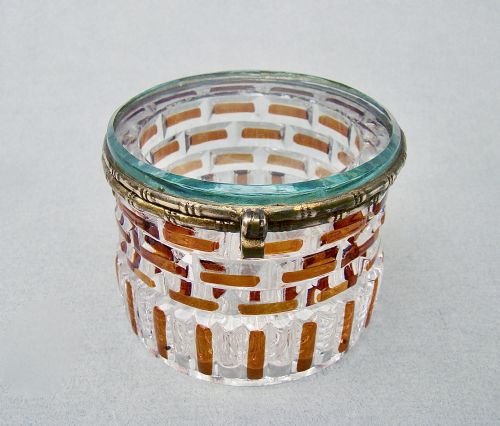


Cut Crystal Jewellery Box
These cut crystal jewellery box examples combine heavy faceted glass with precious mounts, offering a brilliant home for small treasures.
Cut Crystal Jewellery Box
A cut crystal jewellery box brings together heavy glass and metal mounts to create a sturdy container for trinkets and rings. You will regularly encounter Victorian, Edwardian, and nineteenth-century French pieces that utilise cut glass, cut crystal, and lead crystal bodies.
The forms vary from simple hinged trinket boxes and heart-shaped boxes to larger vanity cases fitted with internal bottles and trays. These containers serve both decorative and practical roles on a dressing table.
How they were made
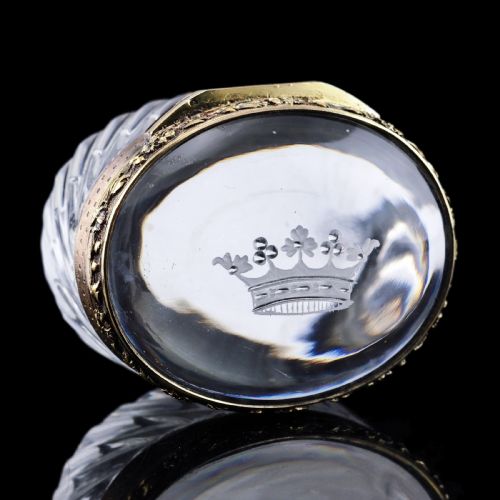
Hinges and rims were meticulously secured to the glass edges, sometimes incorporating detailed cast motifs such as coronets, eagles, or doves into the metalwork.
Materials recorded across the inventory include cut crystal, lead crystal, silver, sterling silver, gilt bronze, brass, and coromandel.
What varies in quality
The depth and crispness of the glass cutting dictate the visual weight and brilliance of the piece, separating standard work from finer examples. Heavier mountings in sterling silver or gilt bronze provide a more substantial feel than simpler brass fittings.
The precision with which the metal frame meets the glass edges marks the standard of the workshop, alongside the complexity of cast decorative elements like coronets or figural lids.
Posen of Frankfurt and Berlin·Asprey·Baccarat
The Cut Crystal Jewellery Box Glossary
- Cut crystal
- Glass containing lead oxide, which increases weight and refractive index, shaped by abrasive wheels. This process creates sharp, light-catching facets across the surface of the box.
- Gilt bronze
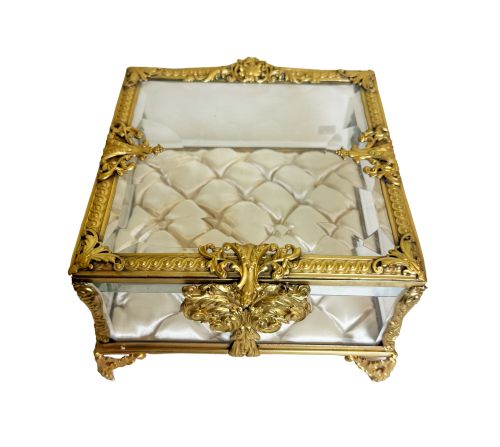
- Bronze coated with a thin layer of gold, often utilised for the decorative frames and mounts of nineteenth-century French caskets. It provides a warm metallic sheen without tarnishing easily.
- Sterling silver
- An alloy of silver containing ninety-two point five percent silver by mass, frequently employed for the hinged lids and rims of Edwardian boxes. It offers a bright, polished finish.
- Trinket box
- A small container designed for holding rings, pins, and other small personal items on a dressing table. These pieces often feature hinged lids and velvet or silk interiors.
- Ormolu
- A nineteenth-century English term for applied gold-coloured brass or bronze gilding on ornamental metalware. It is frequently seen on French Belle Epoque and Empire Revival mounts.
Cut Crystal Jewellery Box: Frequently Asked Questions
What fits inside a cut crystal jewellery box?
These boxes suit smaller items such as rings, brooches, earrings, and delicate chains. Some larger vanity cases also contain dedicated slots for crystal perfume bottles and small trays.
Their sturdy glass walls and lined interiors keep such valuables secure and organised on a dressing table.
How do I clean a cut crystal jewellery box?
Use a soft, lint-free cloth and lukewarm water with a mild soap to wipe the glass and metal surfaces gently. Avoid soaking pieces that have fitted silk or velvet interiors to prevent moisture damage.
Dry the metal mounts thoroughly immediately after cleaning to maintain the finish of the silver or gilt bronze.
Are French and English boxes different?
French boxes from the nineteenth century frequently employ heavy gilt bronze, ormolu, and figural mounts with ornate Neoclassical or Empire Revival styling. English pieces from the Edwardian era often lean towards sterling silver mounts paired with crisp cut crystal.
Both traditions focus on heavy faceted glass bodies, but the character of the metalwork usually points to the country of origin.
How do I date an antique box?
Examine the style of the metal mounts, hallmarks on the silver, and the sharpness of the glass cutting. Pieces from the Edwardian period often feature bright sterling silver hallmarks, while nineteenth-century French examples display cast bronze frames.
Comparing the weight of the lead crystal and the intricacy of the hinge construction also helps place the piece within the Victorian or Edwardian eras.