
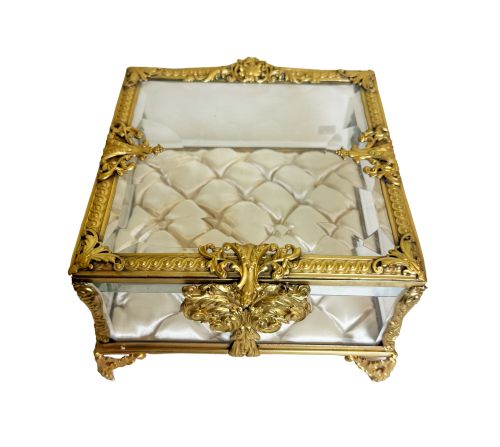


French Glass Casket
When you search for a french glass casket, you find nineteenth-century decorative containers crafted for jewellery, trinkets and scent bottles that bring nineteenth-century elegance to a dressing table.
French Glass Casket
A french glass casket is a container designed for holding personal treasures, trinkets, or perfume bottles, typically originating from nineteenth-century France. The pieces span styles from Napoleon III and Palais Royal to Art Nouveau, encompassing utilitarian luxury items made for the dressing table.
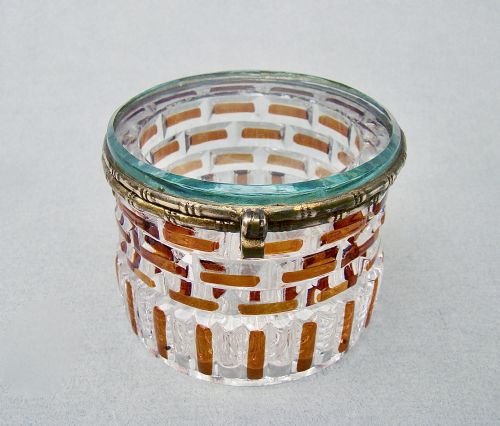
The most common forms on this page include bevelled glass jewellery boxes held together by metal frames, opaline glass egg-shaped caskets, and scent bottle boxes fitted with crystal decanters. These objects served as decorative accessories for affluent nineteenth-century homes and tourist souvenirs from Parisian boutiques.
How they were made
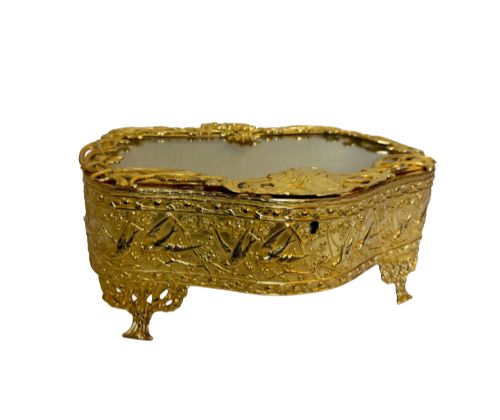
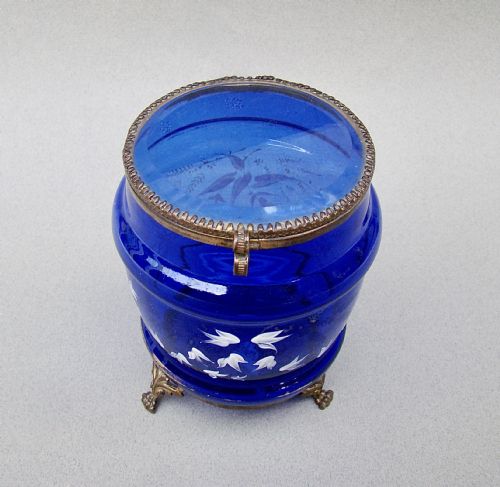
These caskets combine heavy glass panels or moulded vessels with cast metal mounts in ormolu, gilt bronze, brass, or silver gilt. The glass elements range from clear cut crystal and amber baccarat glass to coloured opaline and Bristol blue, secured mechanically within metal frames.
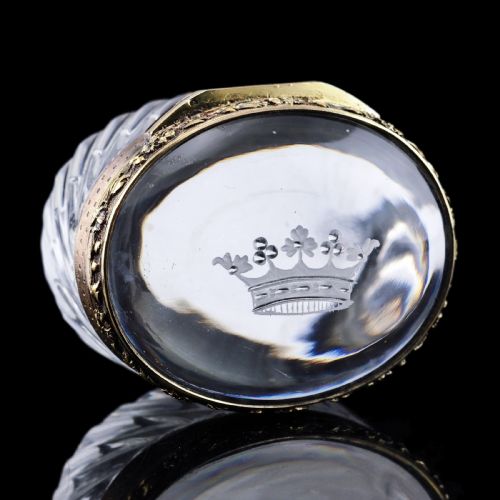
Many examples incorporate interior linings of silk alongside hinged lids, delicate feet, and cast decorative motifs such as coronets or eagles. The metal components demonstrate skilled foundry work, while the glass involves specialised blowing, moulding, and bevelling techniques.
What varies in quality
The distinction between tiers rests upon the weight and clarity of the glass, the crispness of the cast ormolu or gilt bronze mounts, and the complexity of the form. Elaborate Palais Royal novelty shapes and pieces housing original matched scent bottles stand apart from simpler rectangular boxes.
Superior examples display precise glass bevelling, substantial metal frames that maintain structural integrity without looseness, and refined hand-finishing on decorative elements like cast foliage or figural mounts.
Baccarat
The French Glass Casket Glossary
- Ormolu
- A gilded brass or bronze finish applied to decorative metal mounts using a mercury amalgamation technique or electroplating during the nineteenth century. It provides a bright golden surface that frames the glass panels.
- Opaline glass
- An opaque or translucent art glass popular in nineteenth-century France, appearing in shades of pink, blue, cranberry, and green. It is frequently moulded into egg shapes for decorative caskets.
- Baccarat
- A renowned French crystal manufacturer known for producing high-clarity glass vessels and perfume bottles. Baccarat pieces incorporated into caskets represent the upper echelon of nineteenth-century glassmaking.
- Palais Royal
- A historic shopping district in Paris associated with luxury novelties, souvenir caskets, and vanity items during the nineteenth century. Items from this origin often feature distinctive opaline glass or miniature carriage designs.
- Bevelled glass
- Glass panes featuring an angled edge ground down along the perimeter to catch and refract light. This technique is characteristic of nineteenth-century jewellery caskets and vitrine boxes.
French Glass Casket: Frequently Asked Questions
What were french glass caskets used for?
These caskets served primarily as luxury containers for storing jewellery, watches, trinkets, and small personal valuables on a dressing table. Many versions were also specifically constructed to house sets of glass perfume or scent bottles.
Wealthy nineteenth-century owners displayed them in domestic interiors as ornamental objects that reflected refined taste. They also functioned as souvenirs purchased during tours of Paris and international expositions.
How do I distinguish Palais Royal pieces?
Palais Royal caskets often feature distinctive opaline glass, frequently moulded into egg shapes or mounted on elaborate ormolu stands. They tend to incorporate novelty elements like miniature carriages or fitted interiors for scent bottles.
These items originated from the fashionable Parisian shopping galleries that catered to affluent travellers in the mid-nineteenth century. Their playful yet luxurious designs separate them from standard domestic jewellery boxes.
What is the difference between ormolu and gilt bronze?
Ormolu refers specifically to a high-quality gold-wash applied to a brass or bronze base, historically using a mercury-gilding process that produced a warm, distinctive lustre. Gilt bronze describes bronze objects that have received a gold coating through various methods.
Both materials were utilised interchangeably by nineteenth-century French makers to provide durable, golden frames for glass caskets. The terminology often reflects the specific trade vocabulary of the period rather than a fundamental difference in utility.
How should I clean a glass and ormolu casket?
Maintenance requires dry or slightly damp dusting using a soft brush to protect delicate metal mounts and silk interiors. Moisture should be kept away from gilded surfaces and fabric linings to prevent tarnishing and deterioration.
Glass panels can be wiped gently with a soft cloth and mild glass cleaner applied directly to the cloth rather than the box. Preserving the original nineteenth-century materials involves avoiding harsh chemical solvents and abrasive polishes.