
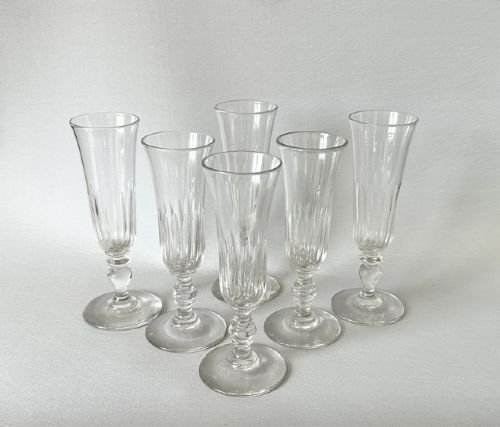
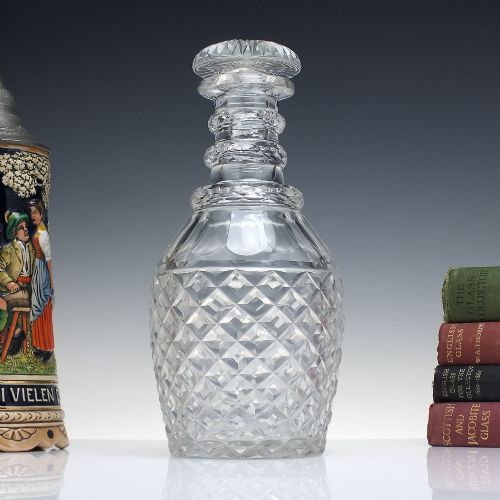
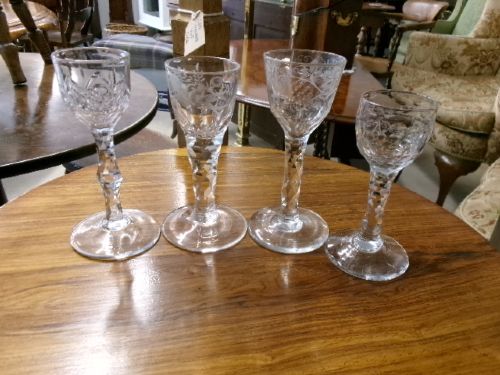
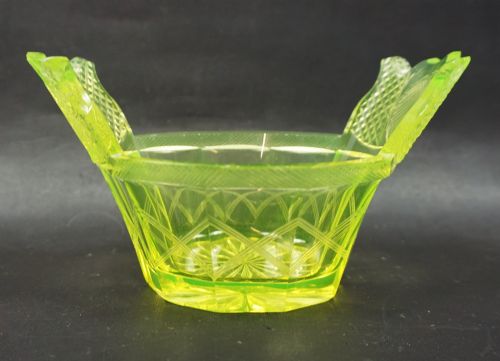
Cut Crystal Glassware
Cut crystal glassware brings weight and brilliance to the table, spanning Georgian decanters, Victorian rummers and Art Deco drinking services.
Cut Crystal Glassware
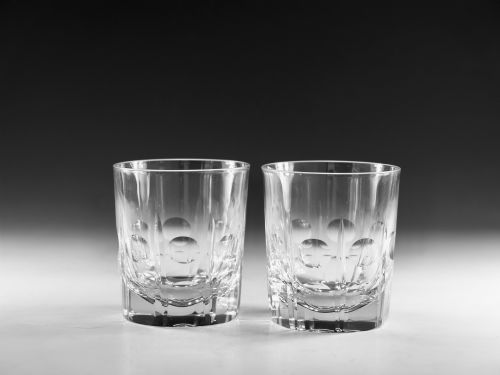
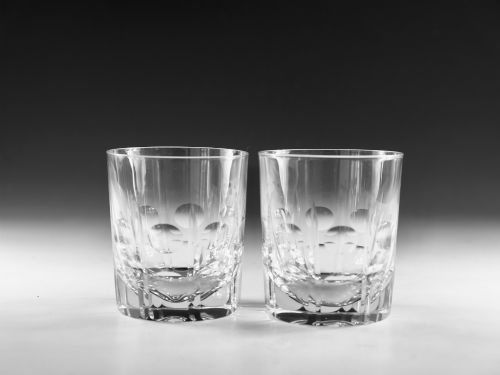
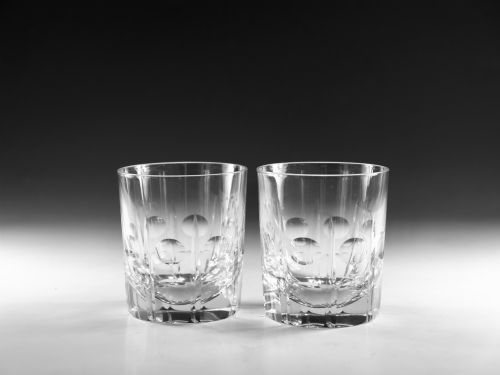
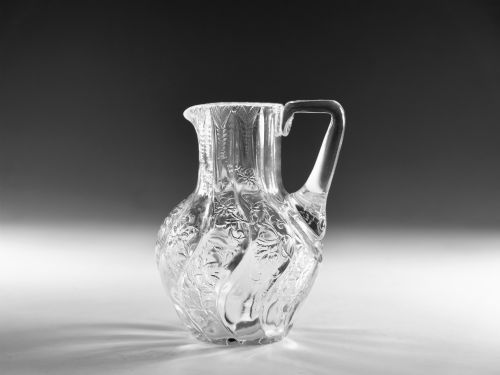
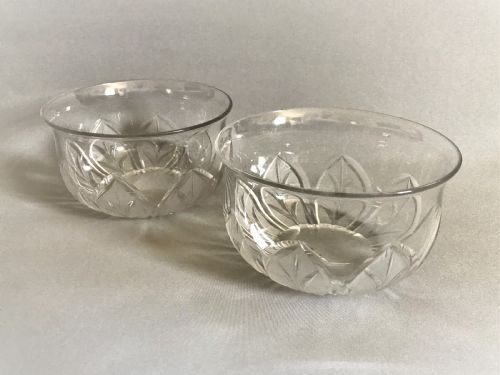
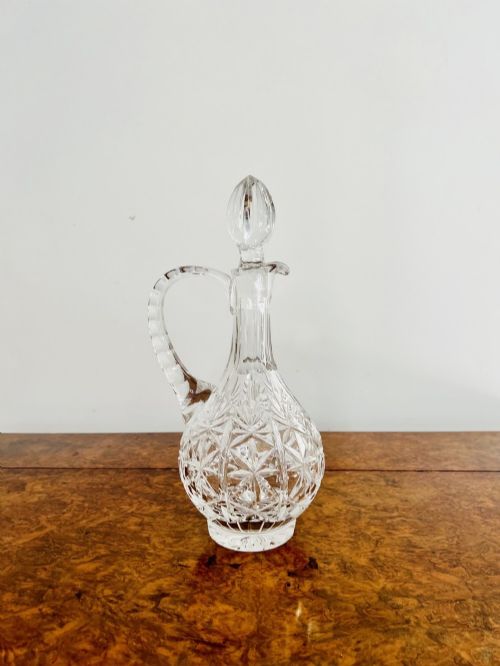
Cut crystal glassware encompasses drinking vessels, decanters, jugs, carafes, vases and bowls produced across the Georgian, Victorian, Edwardian and Art Deco periods. Buyers seek these items for their light-refracting facets, tactile weight and historical table service utility.
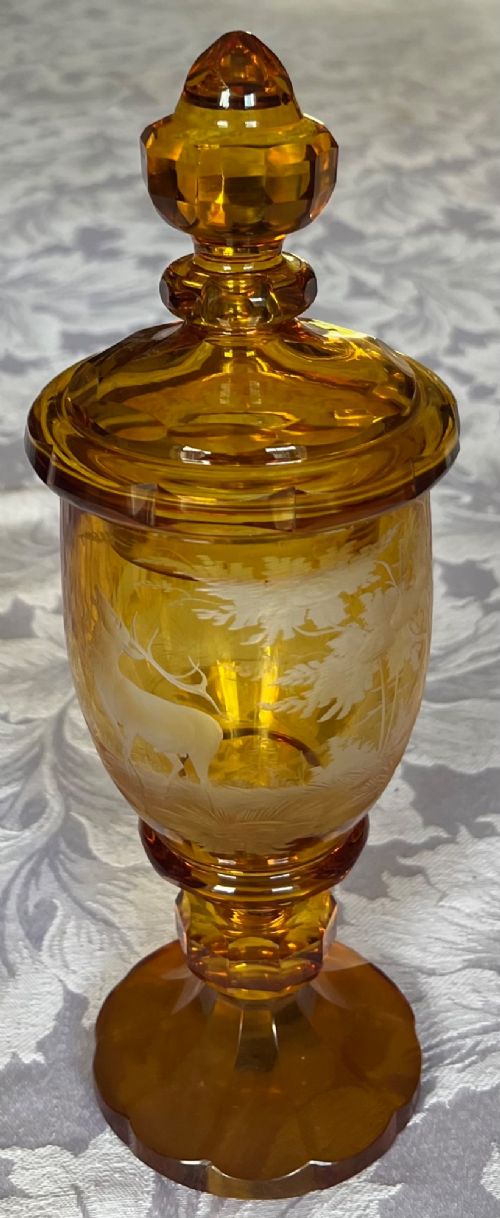
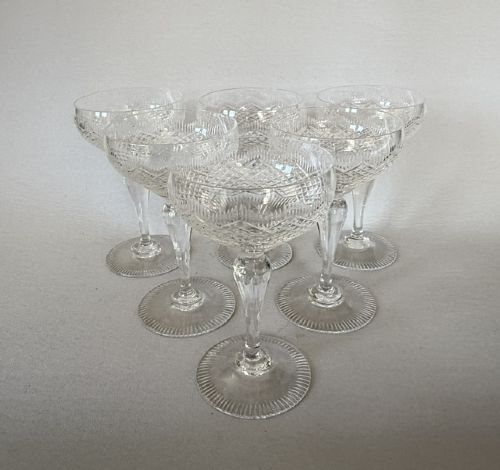
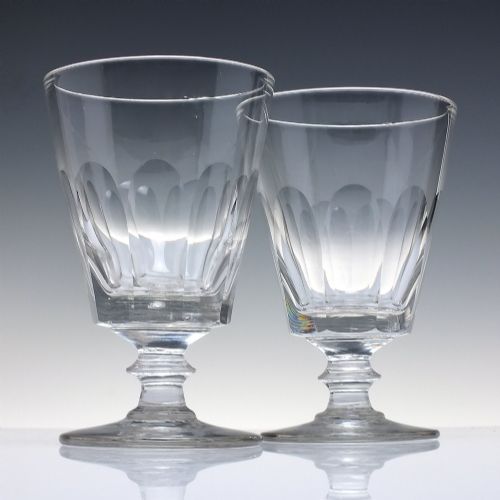
The selection ranges from robust Regency hobnail cut bucket rummers and heavy Victorian whisky tumblers to delicate Edwardian wine glasses and French Art Deco drinking sets. Coloured overlay pieces from Bohemia and Belgium sit alongside clear lead crystal forms from English makers.
How they were made
Craftsmen shaped these objects using lead crystal, clear glass and coloured overlay glass, employing hot-forming techniques followed by cold-working methods. Artisans ground geometric patterns, flutes and facets into the hardened material using rotating wheels.
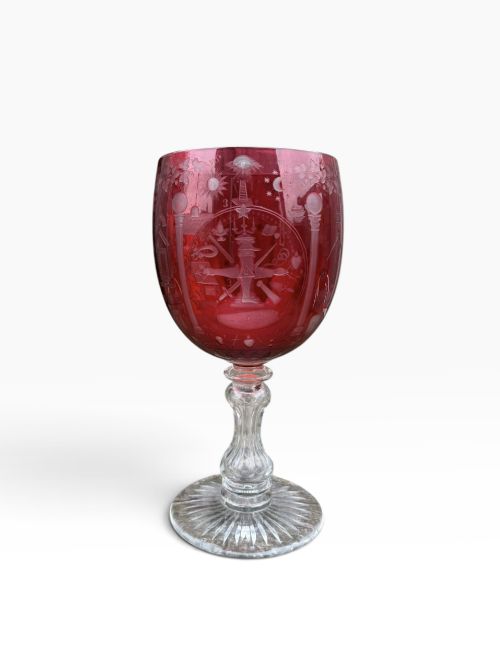
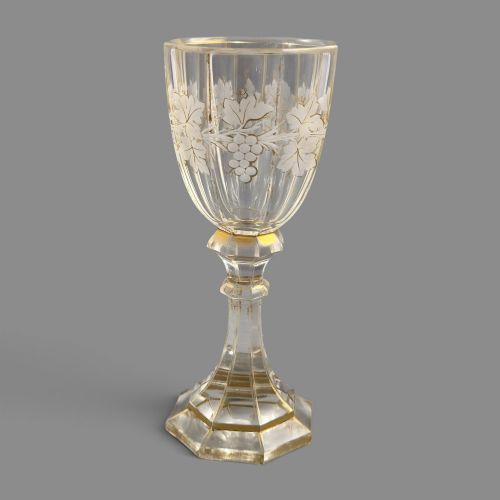
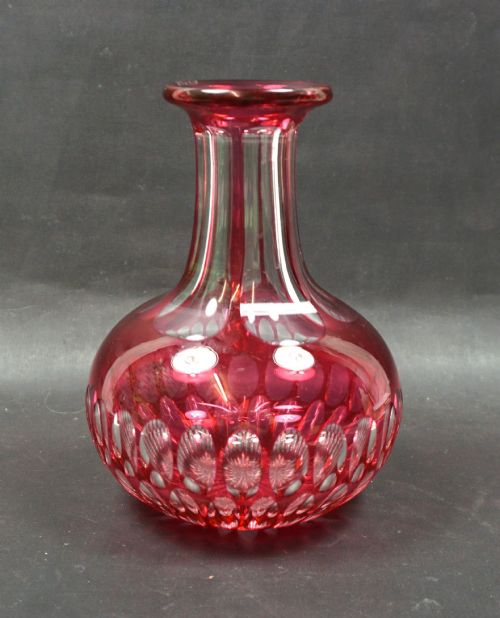
Surface ornamentation often combined deep wheel-cutting with intaglio engraving, acid etching and gilding. Coloured glass items utilised layered cased techniques where a clear crystal body received a coloured outer casing that was partially cut away.
Early nineteenth-century glassmakers occasionally included hidden uranium content to make their green table dishes glow softly under daylight.
What varies in quality
Excellence in cut crystal glassware rests upon the crispness of the facet edges and the clarity of the metal. Superior pieces display deep, sharp wheel-cutting that catches the light cleanly without softness in the angles.
Proportion and weight dictate the standing of a vessel, alongside the sophistication of the engraved or etched motifs. Matched sets and large suites maintain greater consistency across each individual glass than assembled harlequin groups.
Stevens and Williams·Moser·Webb Corbett·James Giles·Val St. Lambert
The Cut Crystal Glassware Glossary
- Rummer
- A large, sturdy drinking glass popular in the eighteenth and nineteenth centuries, typically used for ale or wine. These heavy vessels often feature faceted stems and bucket bowls.
- Intaglio
- A technique where designs are sunk below the surface of the glass rather than raised in relief. It creates a subtle, cameo-like effect when viewed across the bowl.
- Cased glass
- Glass composed of two or more distinct layers of different colours, such as cranberry or green over clear crystal. Cutting through the outer layer reveals the contrasting colour beneath.
- Hobnail cut
- A raised, faceted pattern resembling the heads of traditional hobnails on boots. This dense geometric cutting produces exceptional light refraction.
- Römer
- A traditional Germanic or Bohemian wine goblet featuring a wide foot and a cylindrical or raspberry-prunt bowl. They frequently appear in richly coloured or engraved crystal.
Cut Crystal Glassware: Frequently Asked Questions
How do I clean antique cut crystal?
Wash pieces by hand in warm water using a mild detergent, placing a towel in the bottom of the sink to cushion the heavy base. Avoid sudden temperature changes that can crack old lead glass.
Dry immediately with a lint-free cloth to maintain the brilliance of the facets and prevent water spots from forming on the polished surfaces.
Are these glasses safe for daily use?
Most antique drinking vessels remain entirely usable for dining and entertaining today. Their durable lead crystal and thick walls were built for regular service.
Hand-washing is mandatory for all pieces, and dishwasher cycles must be avoided to protect the clarity and delicate cut details.
How can I tell Georgian glass from Victorian?
Georgian drinking glasses often display pontil marks on the underside and feature softer, hand-polished facet cuts on lighter metal. Their forms tend toward bucket bowls and kicked-up feet.
Victorian and later pieces generally exhibit heavier lead crystal, sharper machine-assisted wheel-cutting, and more varied colour applications such as cranberry or cobalt overlays.
What is cased glass?
Cased glass involves fusing a layer of coloured glass over a clear crystal core during the blowing process. The maker then cuts through the outer colour to expose the clear layer underneath.
This technique creates striking two-tone decorative effects found on nineteenth-century carafes, vases and bowls from Bohemia and Europe.