


Cut Crystal Centrepiece Bowl
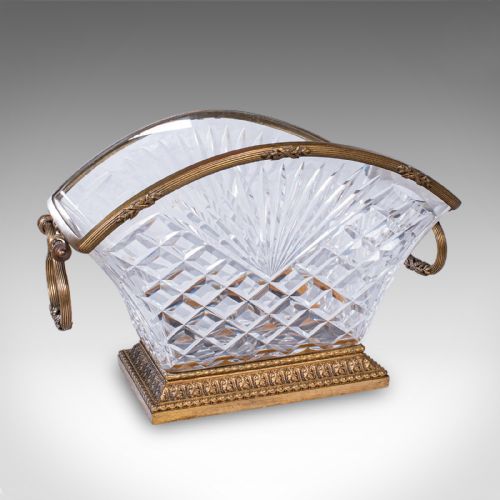
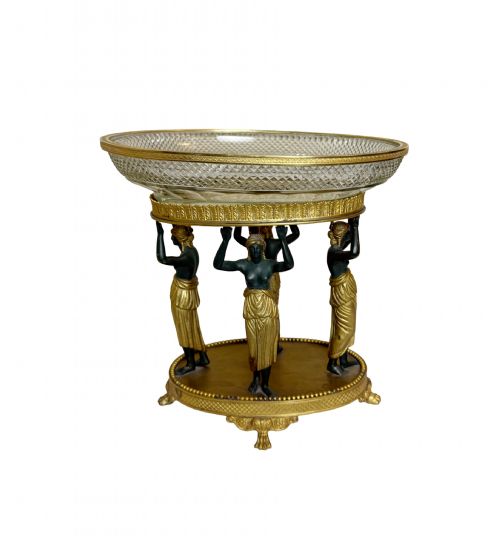
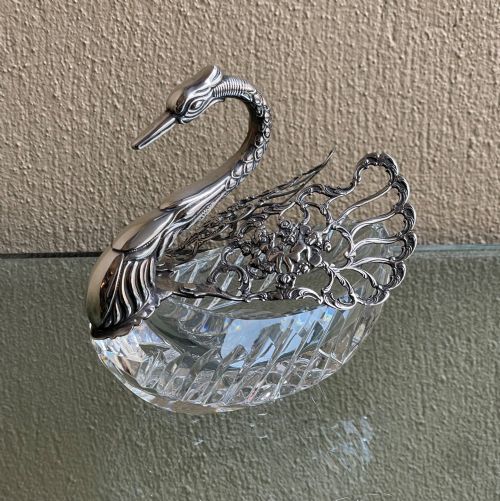
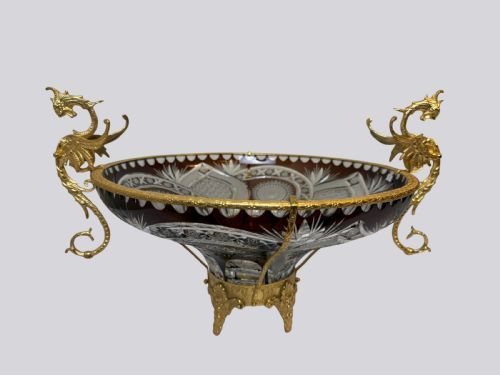
A cut crystal centrepiece bowl sits low and heavy on a dining table, catching candlelight through deep facets and held in mounts of gilt bronze or silver plate.
Cut Crystal Centrepiece Bowl
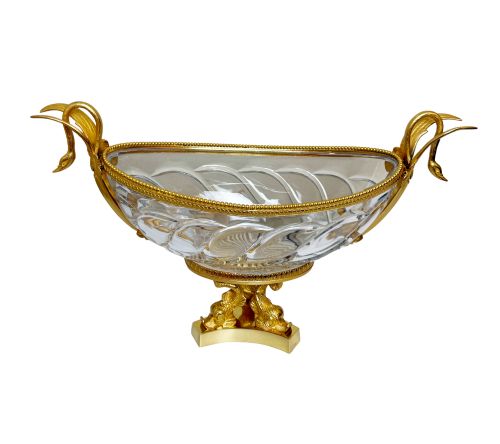
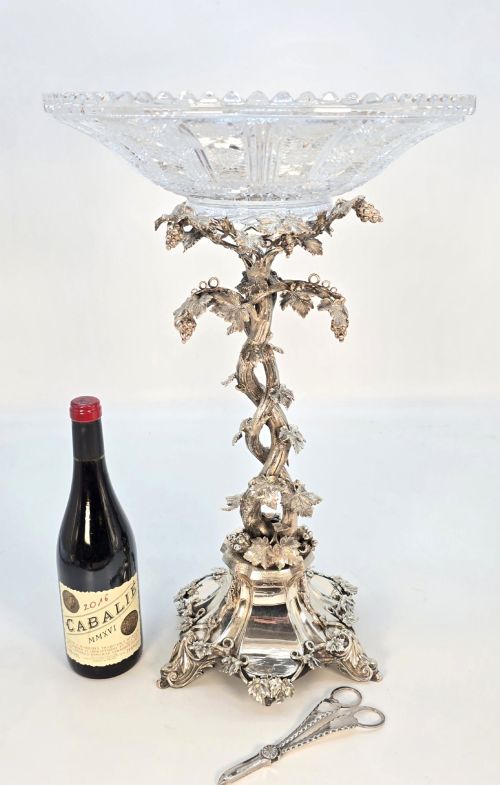
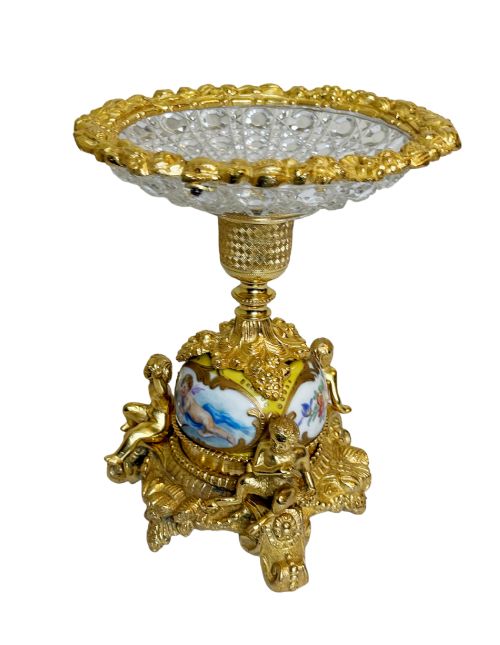
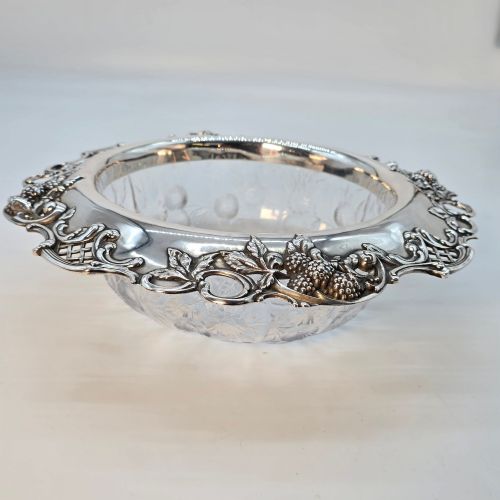
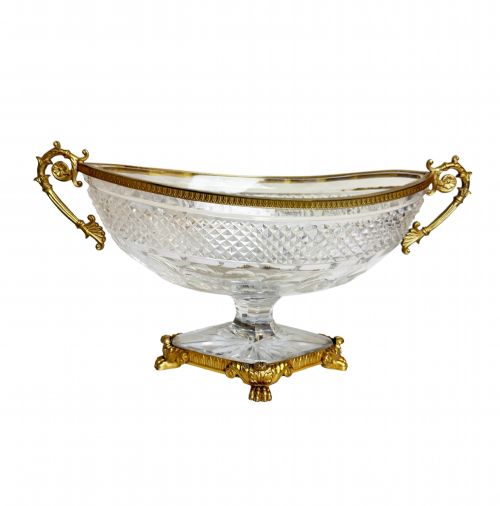
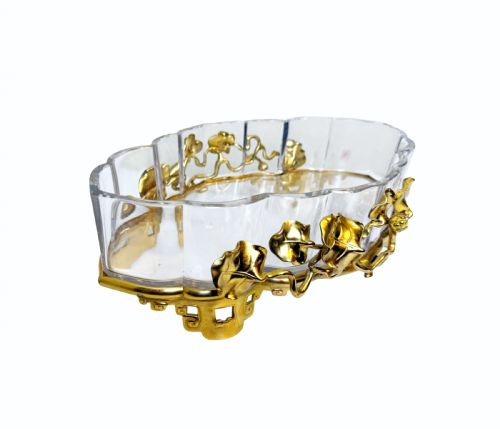
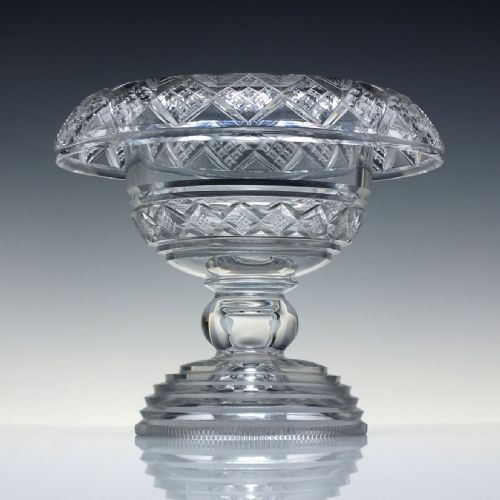
A cut crystal centrepiece bowl is a large table vessel designed to hold fruit or flowers, combining heavy glass with metal mounts. These items appear in forms ranging from plain pedestal comports to elaborate dishes flanked by cherubs or set in French Empire and Victorian frames.
The majority of pieces encountered here date from the nineteenth and early twentieth centuries, spanning Georgian, Victorian, Edwardian, and Art Deco periods. Makers and workshops from England, France, Bohemia, and Belgium created these vessels in styles including Regency, French Empire, and Art Nouveau.
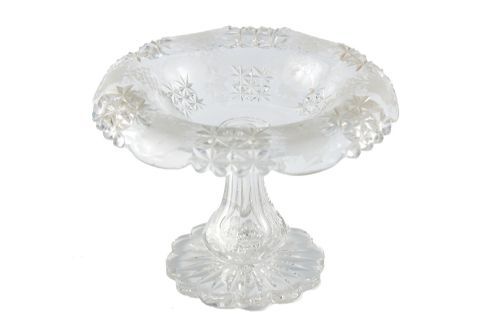
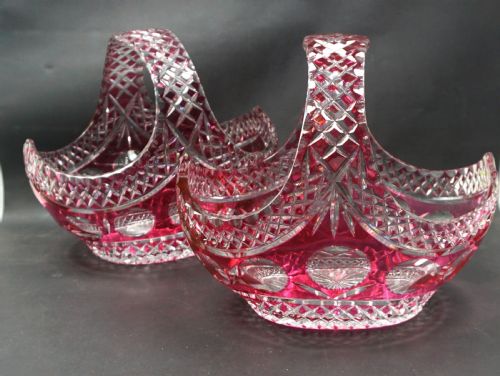
Vessels take the shape of open bowls, baskets, jardiniere containers, and pedestal stands. They serve as the focal point of a dining arrangement, drawing the eye through sheer mass and deep optical cutting.
How they were made
Makers shaped the glass bodies by hand blowing molten lead crystal into moulds or free-forming them before cooling. Artisans then applied wheel-cutting techniques to carve deep geometric patterns, flutes, and hobnail designs into the clear surface.
Metal components relied on casting bronze, brass, or white metal, which workers then gilded, silver plated, or finished as ormolu. Workshops joined the heavy glass bowls to these metal bases using threaded rods, pins, or secure collars.
Listings span over a century of production, featuring materials from simple pressed glass to heavy lead crystal paired with solid silver and gilt bronze.
What varies in quality
Quality rests on the crispness of the glass cutting and the weight of the metal mountings. Superior pieces show sharp, clean facets without softening at the edges, paired with cast bronze or silver mounts that fit the glass contour precisely.
The purity of the metal and the depth of the lead crystal create a heavier feel and a clearer ring. Simpler moulded pieces without hand-cutting sit at the lower end of the range, while works featuring signed makers or combined silver and gilt bronze represent the finer end.
Tiffany and Co·Val St Lambert·Christofle et Cie·Joseph Simon·Waterford
The Cut Crystal Centrepiece Bowl Glossary
- Hobnail pattern
- A raised diamond-cut glass texture resembling the hobnails on heavy boots. It scatters light intensely across the body of the bowl.
- Ormolu
- Gilded bronze used for mounts and decorative frames. The technique gives a rich gold finish to the metalwork supporting the glass.
- Comport
- A raised pedestal bowl used for serving fruit or sweets. It lifts the vessel above the table surface.
- Epergne
- A large table centrepiece featuring a central bowl surrounded by smaller hanging baskets or dishes. It creates a tiered arrangement for food or flowers.
- Over crystal
- A glass-making technique where a layer of coloured glass is cased over a clear crystal base. The cutter then cuts through the outer layer to reveal the clear glass beneath.
Cut Crystal Centrepiece Bowl: Frequently Asked Questions
How do I clean an antique crystal bowl safely?
Wash the glass by hand in lukewarm water using a mild liquid detergent. Line the sink with a thick towel to prevent chipping the heavy rim against porcelain.
Keep metal mounts dry and away from prolonged soaking. Polish silver plate and gilt bronze separately with a soft, dry cloth rather than liquid cleaners.
Can I use these bowls for serving fruit?
These vessels were originally made for dining tables, making them suitable for displaying citrus, apples, or grapes. The thick lead crystal handles the weight of fruit without issue.
Avoid leaving highly acidic foods or liquids sitting in the glass for extended periods. Wash the bowl promptly after use to protect older metal fittings from moisture.
How do I tell a Victorian bowl from a Georgian one?
Georgian and early nineteenth-century pieces often feature heavier metal casting, hand-blown irregularities, and simpler, broader cutting styles. Waterford and Irish examples from this era show deep, sharp facets and a slightly greyish tint in the metal.
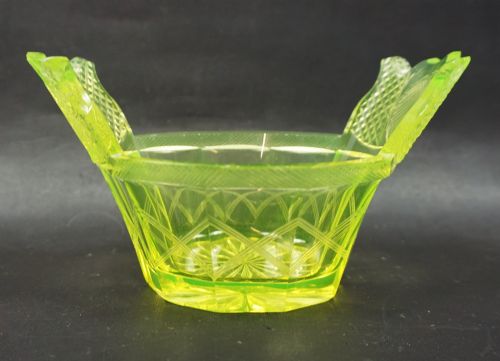
Victorian and Edwardian bowls lean towards more complex machine cutting, hobnail patterns, and combinations with silver plate or ormolu mounts. Makers during the later periods also experimented with coloured glass overlays and uranium tints.
What is the difference between crystal and glass?
Lead crystal contains a high proportion of lead oxide, which adds weight, brilliance, and a resonant ring when struck. Standard glass lacks this metallic content and feels lighter.
Cut crystal holds a sharper edge when wheel-cut, allowing the deep facets to catch light more effectively than pressed or moulded glass.