
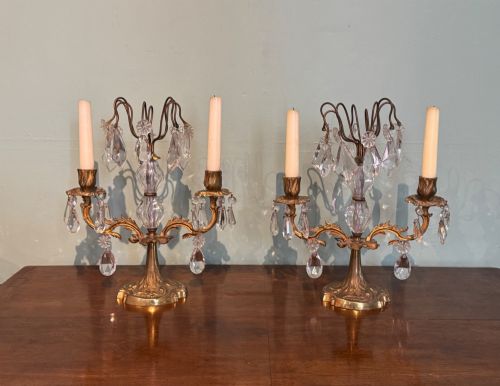


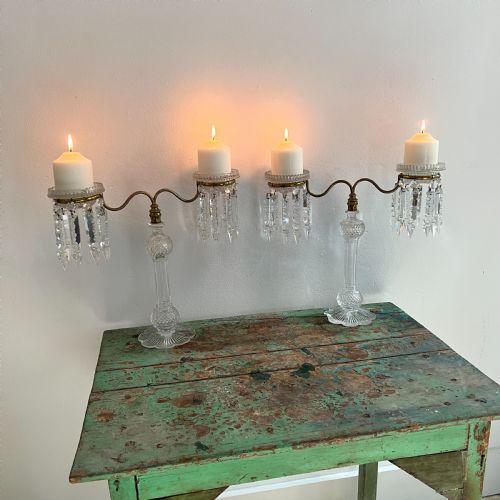
Cut Crystal Candle Holders
Cut crystal candle holders bring light and sparkle through faceted glass and crystal, offering a brilliant addition to any table.
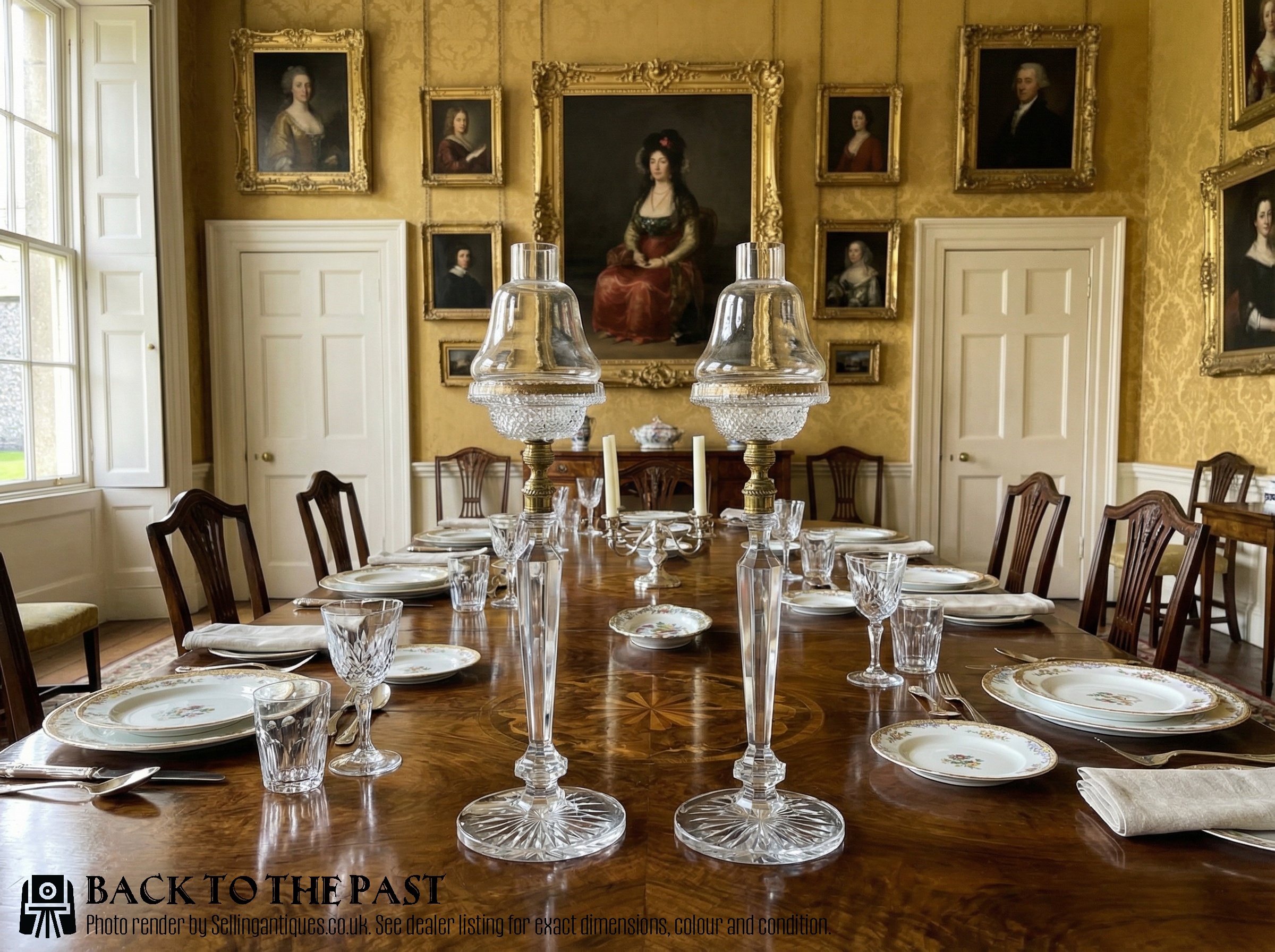
Cut Crystal Candle Holders
Cut crystal candle holders encompass a range of lighting forms designed to hold candles while refracting light through faceted surfaces. Buyers seeking cut crystal candle holders will encounter items spanning the eighteenth century through the early twentieth century, including candlesticks, candelabra, and lustres.
The selection includes pairs and sets featuring various forms such as table lustres with hanging glass drops, multi-armed candelabra, and simpler single candlesticks. Materials extend beyond pure crystal to incorporate coloured glass, brass, gilt bronze, and enamel mounts.
Victorian and nineteenth-century examples dominate the offerings, alongside Regency and Edwardian pieces. Continental and English workshops both contribute to the styles available on this page, ranging from Rococo Revival to Louis XVI and French Empire influences.
What Varies in Quality
Quality rests in the crispness and depth of the glass cutting, where sharper facets and higher clarity distinguish finer pieces from simpler moulded alternatives. The weight and purity of the crystal or glass body also indicate the standard of manufacture.
The integration of metal mounts, such as cast brass or gilt bronze, affects the overall calibre of the object. Complete sets of matching hanging drops and the presence of specialised patents or distinct maker associations elevate the execution.
Some Victorian pieces include patent fairy-light shades known as storm shades, designed to keep flickering candlelight safe from errant drafts.
Clarkes
The Cut Crystal Candle Holders Glossary
- Lustre
- A ornamental candlestick or candelabrum featuring hanging glass pendants designed to refract candlelight. These pendants amplify the visual brightness of the flame.
- Candelabra
- A branched candlestick holding multiple candles on separate arms. They often feature central columns adorned with cut glass or crystal.
- Flash glass
- Glass formed by fusing a thin layer of coloured glass over a clear glass base before cutting through the coloured layer. This technique reveals the clear glass underneath in striking patterns.
- Ormolu
- Finely ground high-carat gold applied to a bronze base using a mercury amalgamation technique. It provides a rich golden finish on metal mounts.
- Prism
- A cut glass pendant suspended from the rim of a lustre or candelabrum. Prisms swing and catch the light as air currents move.
Cut Crystal Candle Holders: Frequently Asked Questions
What are cut crystal candle holders?
Cut crystal candle holders are decorative lighting pieces made from glass or crystal featuring hand-cut facets designed to reflect and multiply candlelight. They include simple candlesticks, elaborate multi-armed candelabra, and lustres hung with glass drops.
These items were produced across various periods from the eighteenth century to the early twentieth century. Their forms often reflect stylistic influences such as Regency, Victorian, and Louis XVI aesthetics.
How do you clean cut crystal candle holders?
Cleaning requires lukewarm water and a mild detergent, washing glass components by hand to protect delicate facets and hanging drops. Metal mounts such as brass or gilt bronze should be kept dry to prevent tarnishing or corrosion.
Detachable hanging drops can be removed carefully for separate cleaning if necessary. Extreme temperature changes in the water must be avoided to prevent thermal shock to older glass.
What is a lustre?
A lustre is a specific type of candle holder featuring a bowl or stem hung with cut glass pendants known as prisms. The hanging pendants catch and scatter the light from the candle flame.
Lustres often incorporate coloured glass such as ruby red, green, or flash glass overlays. They served as ornamental centrepieces on tables and mantelpieces during the nineteenth century.
How can you tell the period?
Dating relies on stylistic clues, glass colour preferences, and manufacturing techniques evident in the piece. Regency items often display clear cut-glass with classical bronze mounts, while Victorian examples frequently showcase vibrant colours like ruby or green glass alongside ornate lustre drops.
Patent markings or specific maker associations, such as Cricklite designs, provide further chronological markers. Metal components and fastening methods also help determine the era of production.