


Cut Crystal Caddy
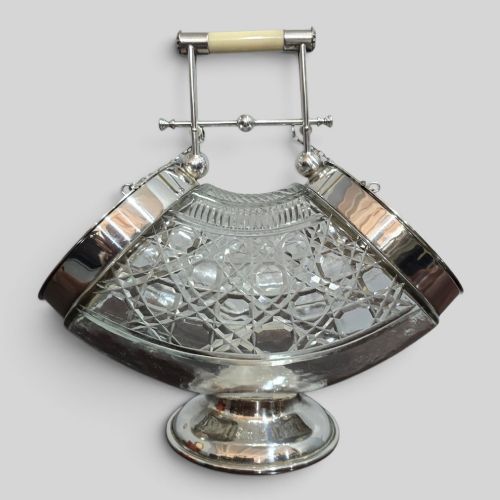
A cut crystal caddy brings heavy glass and polished metal together on the table, holding tea or spirits with solid Victorian and Edwardian weight.
Cut Crystal Caddy
A cut crystal caddy combines heavy moulded or wheel-cut glass vessels with frames of silver plate, brass, or timber, appearing primarily across Victorian, Edwardian, and Georgian periods. These pieces serve diverse functions, spanning from tea storage and biscuit barrels to liquor trolleys and condiment frames.
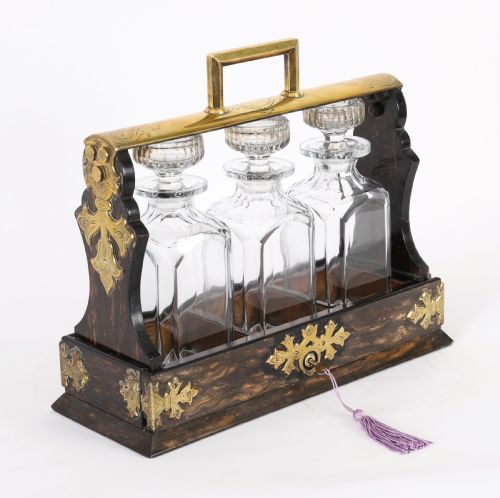
The most common forms on this page include tantalus frames holding multiple decanters, lidded biscuit boxes, and tea caddies equipped with cut glass mixing bowls or inner canisters. They originate from British workshops as well as French makers producing liquor caves and perfume caskets.
Makers utilised exotic timbers like coromandel and walnut alongside sturdy oak for the frames, pairing them with sterling silver or plated mounts to secure the glass securely.
What varies in quality
Quality rests in the crispness of the glass cutting and the structural integrity of the frame. Superior pieces display sharp, clean wheel-cut facets without minor ripples in the glass body, while finer wooden frames feature precise joinery and intact locking mechanisms.
The gauge of the silver plate or brass mounts also dictates the grade of the piece, with heavier metal frames offering greater durability and better retention of their original polish over decades of use.
Some Victorian biscuit boxes featured automated mechanisms that popped the lid open when pressed, proving that grand households loved a clever party trick.
William Rudkins London·Benetfink London
The Cut Crystal Caddy Glossary
- Tantalus
- A locking frame that secures decanters by their stoppers so the bottles cannot be removed without a key. This device kept household spirits secure from unauthorised staff.
- Hobnail cut
- A pattern of raised square points carved into the glass surface resembling the hobnails on sturdy boots. It provides a tactile texture and intense light refraction.
- Coromandel wood
- A dense, dark brown timber with contrasting black grain imported from Asia and used for luxury Victorian boxes. Cabinetmakers valued it for its striking natural figure.
- Cave a liqueur
- A French fitted liquor cabinet containing matching decanters and glasses within a portable wooden case. These sets often feature ormolu mounts and intricate internal framing.
- Silver plate
- A layer of silver fused to a base metal core such as copper or brass. It gave domestic wares the appearance of solid silver at a lower cost.
Cut Crystal Caddy: Frequently Asked Questions
How do you open a tantalus?
A tantalus operates via a hinged metal top bar that drops down over the glass stoppers to lock them in place. Turning a small key releases the catch, allowing the bar to swing upright so the decanters lift clear.
Most surviving pieces retain their locks, though older mechanisms occasionally require professional attention if the original key is absent.
What is a cave a liqueur?
A cave a liqueur is a French portable drinks cabinet lined with velvet or mirror glass to display small decanters and cordial glasses. These sets were designed for formal entertaining in the nineteenth century.
They typically appear in exotic woods like walnut or coromandel, often accented with brass inlay or gilt bronze mounts.
How do I clean cut crystal?
Cleaning cut crystal requires warm water and mild detergent, avoiding harsh abrasives that can scratch the polished facets. Rinsing thoroughly and drying with a lint-free cloth restores the original brilliance.
Metal frames should be wiped with a soft cloth separately to prevent moisture from damaging wooden bases or silver plating.
How do I date an oak tantalus?
Dating an oak tantalus depends on the hardware style, timber thickness, and locking mechanism type. Pieces from the Victorian era often feature heavier cast brass handles and robust quarter-sawn oak.
Edwardian and later examples tend toward simpler silver-plated mounts and cleaner lines, reflecting changing domestic tastes around the turn of the twentieth century.