


Antique Glass Tea Box
An antique glass tea box is a secure storage vessel for precious loose leaves, usually combining timber frames with fitted internal mixing bowls.
Antique Glass Tea Box
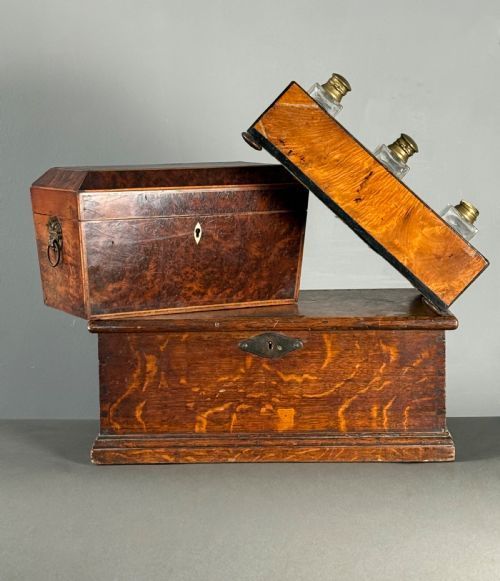
When searching for an antique glass tea box, buyers encounter Georgian, Regency, and Victorian specimens designed to preserve precious leaves under lock and key. These pieces frequently manifest as mahogany, rosewood, or satinwood caddies containing internal glass mixing bowls and canisters.
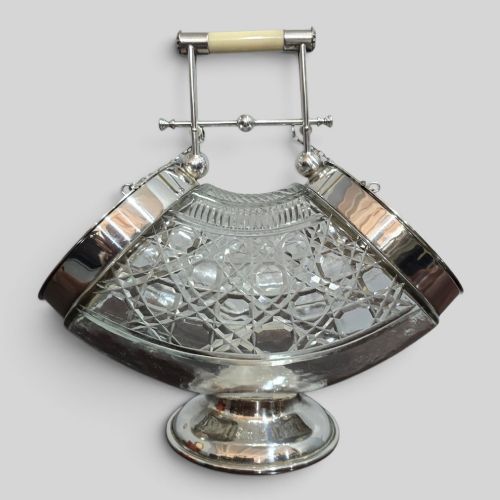
The most common iterations on this page include Regency sarcophagus forms and Georgian rectangular caddies equipped with their original cut glass bowls. Alongside traditional tea caddies, the selection extends to related glass and metal biscuit barrels and display cabinets from the Victorian and Edwardian eras.
How they were made
Cabinetmakers constructed the wooden structures using dense timbers such as mahogany, laburnum, burr maple, and satinwood, often applying delicate parquetry, penwork, or mother of pearl and bone details. Many incorporate brass carrying handles, escutcheons, and feet to reinforce the corners and lid edges.
Internal glass components were produced using heavy cutting techniques, such as hobnail cutting, to create sparkling mixing bowls and cylindrical liners that sat alongside timber canisters. Silver plated mounts and pierced metal galleries were frequently added during the Victorian and Edwardian periods to secure and elevate the glass inserts.
A few cunning tea boxes hide secret compartments beneath their mixing bowls, demanding a delicate press of a hidden spring to reveal them.
What varies in quality
The distinction between standard examples and the finest pieces lies in the integration of original internal fittings, such as matching glass mixing bowls, mixing sticks, and intact loose leaf canisters. Superior items retain their original working locks and keys alongside sophisticated exterior veneers like figured mahogany or elaborate satinwood inlay.
Craftsmanship in the glasswork also dictates worth, with deep, crisp hobnail cutting and heavy, clear metal distinguishing high-end caddies from simpler commercial vessels. The precision of the joinery and the survival of delicate materials like shagreen or penwork determine the upper tier of the range.
William Rudkins London·Walker & Hall
The Antique Glass Tea Box Glossary
- Sarcophagus form
- A distinct coffin-like shape with a domed or sloping lid popular during the Regency period. This architectural profile allowed makers to showcase symmetrical wood veneers on prominent curved surfaces.
- Mixing glass
- A bowl placed inside the caddy used for blending different teas before brewing. These vessels are frequently cut glass and sit centrally between lidded compartments.
- Shagreen
- Untanned leather with a rough, granulated surface prepared from the skin of sharks or rays. It was used by 18th-century craftsmen to cover luxury boxes.
- Penwork
- A decorative technique utilising fine ink drawings on a light wood background. This meticulous surface decoration creates intricate geometric or floral patterns.
- Teapoy
- A small table designed specifically to hold tea caddies and equipment. They often feature pillar supports and internal compartments for loose leaves.
Antique Glass Tea Box: Frequently Asked Questions
What is an antique glass tea box used for?
These boxes served to store expensive tea leaves securely away from moisture and household pests in wealthy historical households. The central glass bowl allowed owners to blend different leaf varieties together before serving.
Today, collectors utilise them to store small keepsakes or display them as decorative objects on sideboards. Their internal compartments make them practical for organising modern trinkets.
How do I identify a Regency tea caddy?
Regency examples typically feature architectural sarcophagus shapes, heavy brass ring handles, and rich rosewood or mahogany veneers. They often rest on bun feet and display classical decorative motifs.
Inside, you will frequently find fitted glass mixing bowls accompanied by matching wooden canister lids. The overall aesthetic reflects the classical revival tastes of the early 19th century.
Are the glass bowls usually original?
Many surviving pieces retain their original heavy cut glass bowls or mixing glasses, though replacements are common due to the fragile nature of glass over two centuries. Examining the fit and glass wear helps determine originality.
Matching cut glass patterns that align with the era of the box suggest an authentic pairing. Collectors value caddies that retain their complete original interior arrangement.
How should I care for a wood and glass tea box?
Keep the timber conditioned with appropriate wax polish and avoid placing the box in direct sunlight or near heat sources. Glass components can be removed and washed gently in warm soapy water.
Take care when handling old brass locks and hinges, as historical mechanisms can be delicate. Regular dusting prevents debris from accumulating in the fine grain of inlaid veneers.