



Curved Wood Console Table
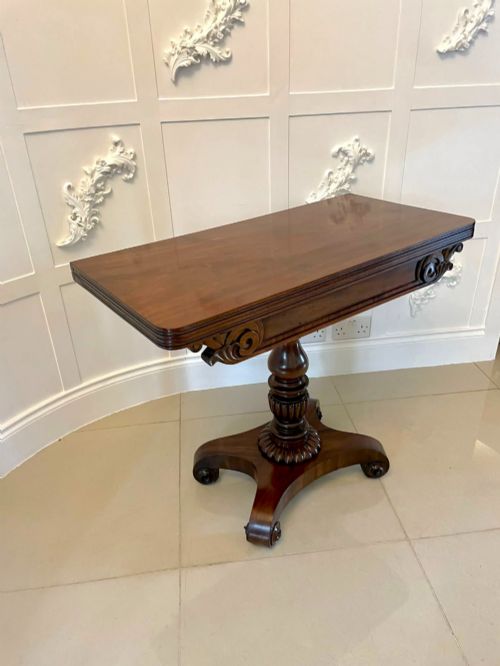
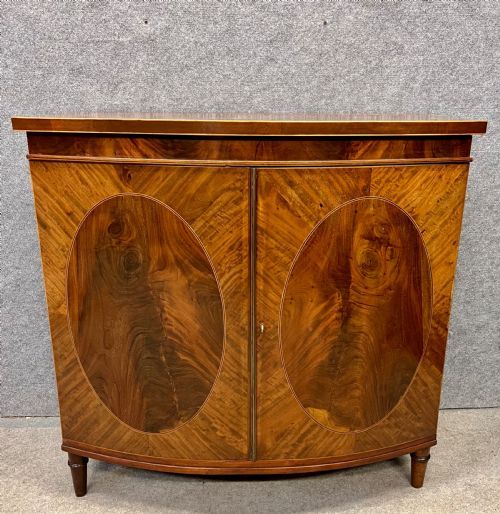
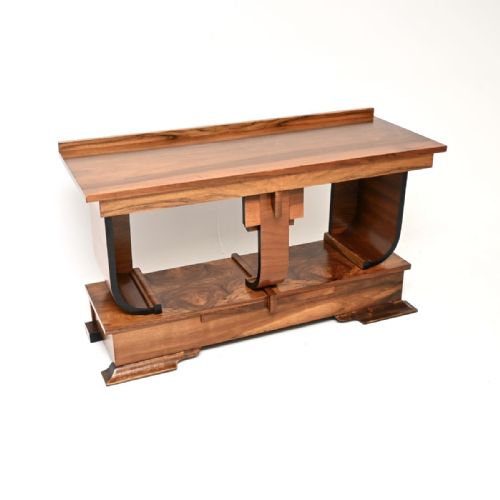
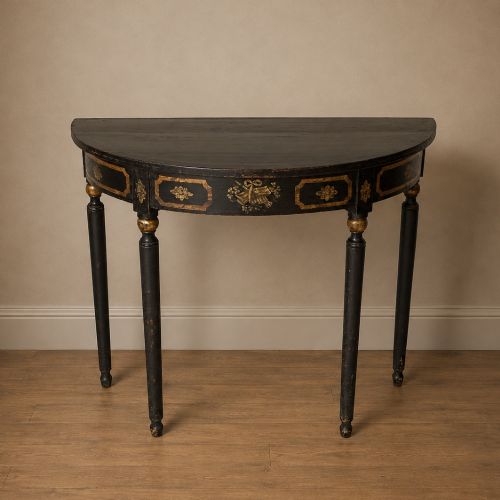
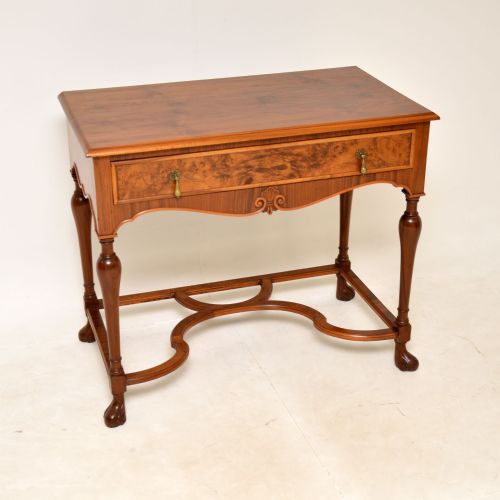
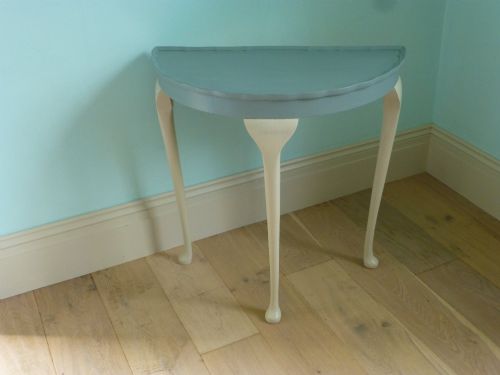
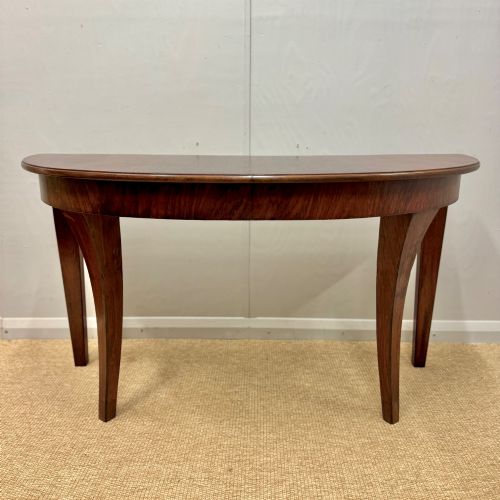
These curved wood console table examples bring fluid lines and architectural presence to a hallway, drawing from Georgian, Regency, and Art Deco traditions.
Curved Wood Console Table
A curved wood console table combines structural utility with sweeping lines designed to sit flush against a wall in hallways and principal rooms. The selection here spans periods from the Georgian era through to the Art Deco movement, capturing diverse interpretations of the form.
Buyers will encounter various shapes within this category, including demi-lune silhouettes, bowfront profiles, and serpentine designs. These variations reflect the changing tastes of makers from the eighteenth century into the twentieth century.
Materials range from figured mahogany and walnut to satinwood and painted finishes, often paired with marble tops or brass details. Such variety ensures that these tables fit traditional interiors as well as twentieth-century decorative schemes.
How they were made
Cabinetmakers utilised solid timbers and selected veneers such as mahogany, walnut, and satinwood, applying them to curved frames to achieve flowing contours. Ebonised details, parcel gilt, and painted decorations frequently finish the surfaces.
Construction techniques include curved joinery for demi-lune and serpentine forms, sometimes supported by brass feet or integrated with tambour fronts and marble slabs. These methods provide the structural integrity required for narrow tables supporting decorative objects.
The listings span from the eighteenth century to the Art Deco period, incorporating mahogany, walnut, marble, and brass.
What varies in quality
The sophistication of the timber figure and the precision of the curved joints distinguish finer examples from standard production. Grain selection across a demi-lune top demands considerable skill from the maker.
The integrity of decorative elements, including brass mounts, painted details, and inlaid veneers, determines the overall standard of the piece. Subtle carving and harmonious proportions separate workshop pieces from massed production.
The Curved Wood Console Table Glossary
- Demi-lune
- Half-moon shape, describing tables designed to stand flat against a wall. This silhouette appears frequently in Georgian and Edwardian examples.
- Serpentine
- A gently curving outline featuring a convex centre flanked by concave sides. It adds visual movement to table fronts and sideboard edges.
- Marquetry
- Decorative patterns created by fitting different woods into a veneer layer. This technique decorates surfaces on several pieces from the eighteenth and nineteenth centuries.
- Parcel gilt
- Portions of a wooden or painted surface highlighted with gold leaf. This finish often accentuates carved details on Regency and neoclassical tables.
- Biedermeier
- A Central European style from the early nineteenth century favouring clean lines and clear wood grain. Pieces from this tradition often utilise birch or other pale timbers.
Curved Wood Console Table: Frequently Asked Questions
Where should I place a curved wood console table?
These tables suit narrow entrance halls, corridors, and reception rooms where floor space is limited. Their shallow depth allows them to sit against walls without obstructing pathways.
Pairs of demi-lune tables can also be arranged together or placed in separate rooms to create a cohesive interior scheme.
How do I care for polished wood surfaces?
Dust surfaces regularly with a soft, dry cloth to prevent accumulation. Avoid placing tables in direct sunlight or near heat sources to protect the polish and timber.
Applying a traditional wax polish periodically helps maintain the lustre of mahogany and walnut without building up heavy residues.
What is the difference between a console table and a side table?
Console tables traditionally rely on the wall for some stability or are designed specifically to stand flat against vertical surfaces. Side tables often feature four freestanding legs and can float more easily within a room.
Many antique examples blur these definitions through hybrid forms that function in hallways or reception spaces alike.
How do I identify the period of a curved table?
Examine the timber selection, secondary woods, and construction methods visible beneath the piece. Georgian and Regency pieces often feature distinct leg profiles and proportioning.
Later revivals and Art Deco items display characteristic geometric lines, exotic veneers, or streamlined silhouettes distinct from eighteenth-century work.