


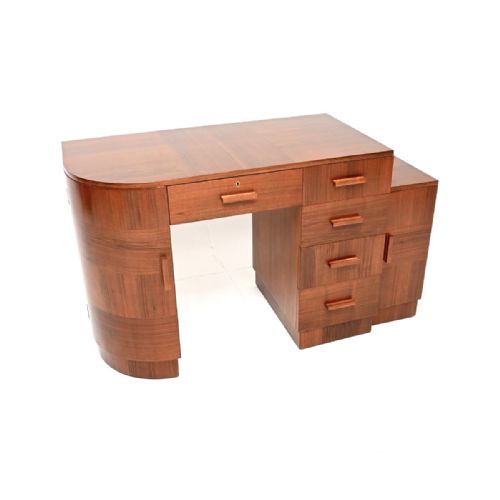


Curved Walnut Vanity
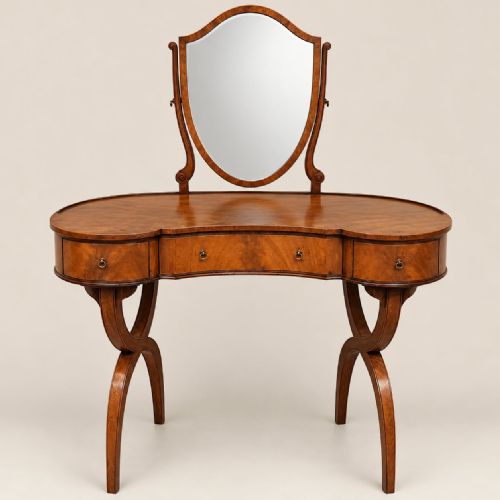
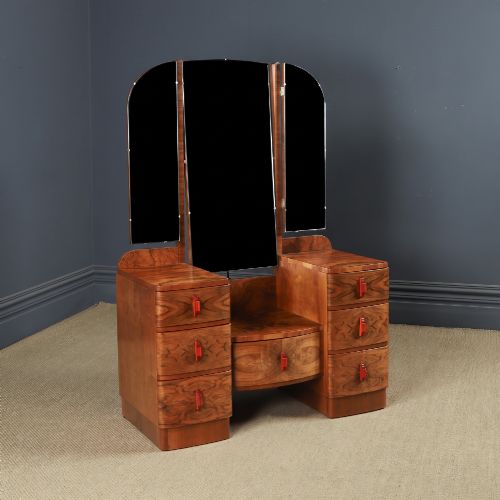
These curved walnut vanity pieces bring striking grain and sweeping lines to a bedroom, combining functional surface space with exceptional decorative presence.
Curved Walnut Vanity
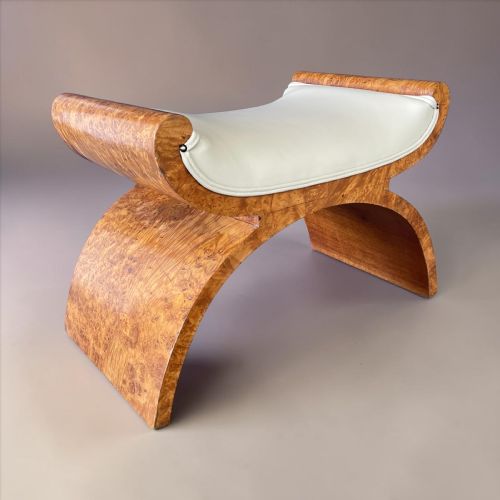
When you search for curved walnut vanity tables, you enter a domain dominated by Art Deco dressing furniture from nineteen thirty, alongside earlier forms spanning the eighteenth century through to Victorian periods. These pieces principally take the form of dressing tables, pedestal vanity tables with mirrors, and matching dressing stools.
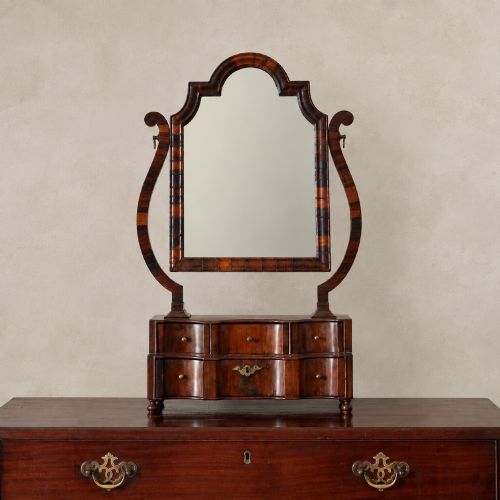
The twentieth-century examples lean heavily into sweeping lines, crescent shapes, and kidney-shaped desks that showcase the natural figuring of the wood. Alongside these, you will find occasional toilet mirrors and chests of drawers that share the material vocabulary of the group.
How they were made
Maker construction relies on carefully selected walnut and burr walnut veneers laid over solid carcases to achieve dramatic, symmetrical grain patterns across sweeping curves. Accents of laburnum and brass hardware complement the rich timber surfaces, while specialist glass and mirror plates complete the functional elements.
Makers shaped the timber to follow bold geometric and serpentine outlines, particularly in the Art Deco pieces and earlier revival styles. The integration of leather inserts on desks and the forming of compound curves demonstrate advanced cabinet-making techniques of their respective periods.
Curved Walnut Vanity Retail Price Guide 2026
Typical asking prices for curved walnut vanity among the pieces listed under this phrase on Sellingantiques today, from the lower quarter to the upper quarter. They describe what is for sale here now, not the wider market.
Several dressing stools manage to look like miniature architectural monuments while remaining surprisingly comfortable for daily powdering routines.
What varies in quality
Quality rests primarily in the choice and matching of the veneer figures, where superior examples display balanced, highly decorative burr patterns across every curved surface. The fluidity of the overall silhouette and the integration of original mirrors or matching stools elevate certain pieces significantly above standard production.
The execution of the joinery along complex radius bends and the retention of original hardware, glass, and leather surfaces dictate the tier of craftsmanship. Pieces bearing attribution to prominent makers like Harry and Lou Epstein or Maurice Adams represent a higher standard of design and construction within the field.
Harry and Lou Epstein·Maurice Adams
The Curved Walnut Vanity Glossary
- Burr walnut
- A prized timber harvested from walnut tree growths, featuring swirling, knotty grain patterns that create highly decorative surfaces on veneer work.
- Art Deco
- A design style dominant in nineteen thirty characterised by sleek lines, geometric shapes, and a modern aesthetic applied to traditional furniture forms.
- Kidney-shaped
- A descriptive term for tables and desks featuring a curved, indented front edge resembling a bean or kidney.
- Toilet mirror
- A smaller tabletop mirror, often mounted on a swing frame with small drawers beneath, dating from earlier centuries.
- Veneer
- A thin layer of superior timber applied over a secondary wood base to provide a decorative exterior without structural instability.
Curved Walnut Vanity: Frequently Asked Questions
How do I date a curved walnut vanity?
Dating relies on stylistic markers such as the geometric symmetry of nineteen thirty Art Deco pieces versus the classical proportions of eighteenth-century or Victorian items. Construction methods, secondary timbers, and the style of incorporated mirrors also provide clear chronological indicators.
Examining the type of veneer work and hardware helps narrow down the decade of manufacture. Earlier pieces show hand-cut joinery and traditional polishes, while twentieth-century examples embrace modern industrial efficiency combined with luxury finishes.
Were these pieces used only for dressing?
While primarily designed as dressing or vanity tables with integrated mirrors, many forms double effectively as decorative writing desks. The kidney and bow-fronted configurations offer ample surface space for practical daily tasks.
Their elegant proportions allow them to function as focal points in reception rooms or bedrooms alike. The accompanying stools and chairs complete the ensemble for dual-purpose seating arrangements.
How do I care for burr walnut surfaces?
Burr walnut requires protection from direct sunlight and excessive moisture to prevent fading and veneer lifting. Regular dusting with a soft, dry cloth maintains the natural lustre of the polished wood.
Application of appropriate waxes feeds the timber without building up heavy residues. Maintaining stable room humidity preserves the integrity of both the solid carcase and the delicate surface veneers.
What defines the Art Deco style here?
The Art Deco pieces in this selection are defined by bold, streamlined curves, waterfall edges, and unadorned surfaces that let the wood grain take centre stage. The emphasis is on dynamic silhouettes rather than carved ornamentation.
Cabinetmakers utilised symmetrical Figured Walnut veneers to create striking visual patterns across the curved drawers and pedestals. This aesthetic represents a distinct departure from earlier revival periods.