





Curved Walnut Occasional Tables
Curved walnut occasional tables bring warmth and fluid twentieth-century movement into a room.
Curved Walnut Occasional Tables
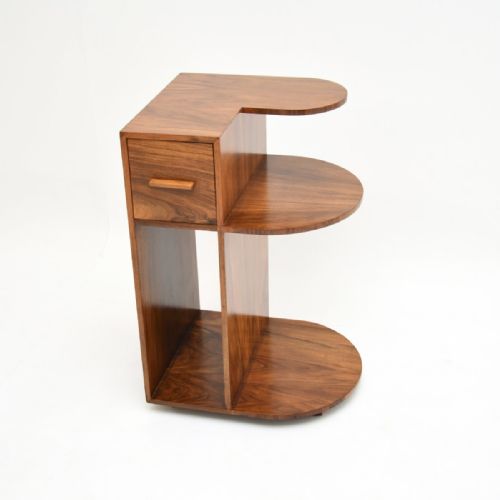
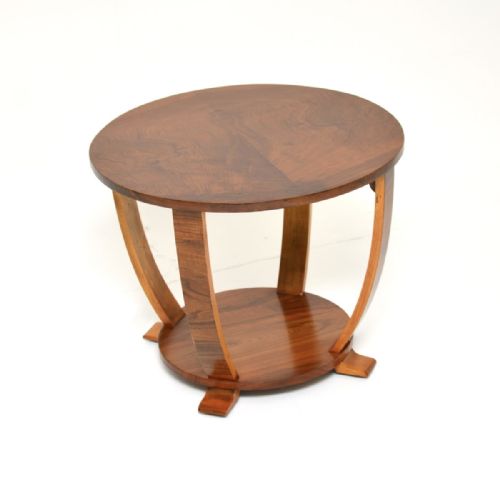
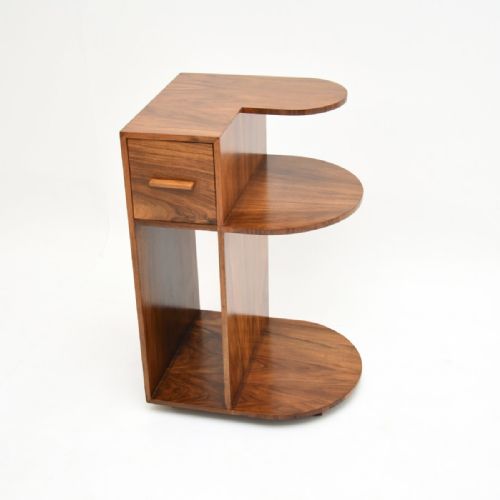
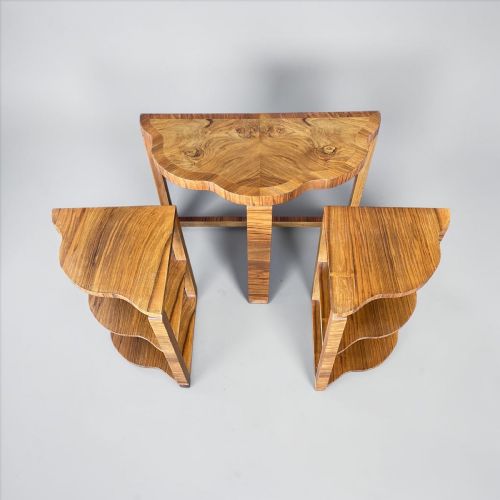
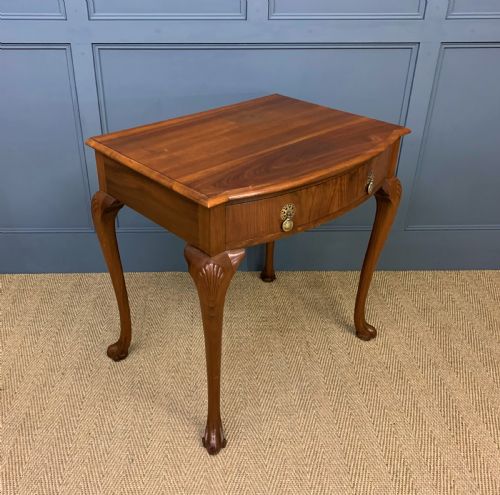
Curved walnut occasional tables include side tables, coffee tables, nests of tables, and lamp tables shaped in styles ranging from Victorian to Art Deco. The majority of these pieces originate from the nineteen-thirties, dominated by Art Deco design with rounded forms and rich wood grain.
Makers and workshops construct these items as versatile surface furniture for the salon or sitting room, utilising walnut, burr walnut, and veneer. Forms vary from octagonal and three-tier occasional tables to nesting sets and sofa tables.
How they were made
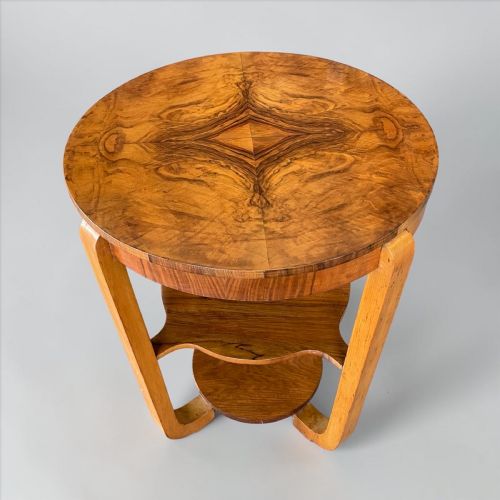
Cabinetmakers constructed these tables using solid timber frames overlaid with walnut and burr walnut veneer to display decorative grain patterns. Artisans shaped the wood into curved outlines, circular tiers, and octagonal tops.
Some Art Deco sofa tables come with illuminated tops, proving that twentieth-century designers enjoyed a touch of theatre with their tea.
What varies in quality
Quality depends upon the selection and matching of the walnut veneer across the curved surfaces, where striking burr figures elevate the visual impact of the piece. The sophistication of the overall silhouette, from simple side tables to multi-tiered or shaped stretcher designs, marks the distinction between standard production and superior craftsmanship.
The integration of secondary materials like brass and glass, alongside the precision of the joinery in bentwood or geometric Art Deco forms, determines the structural refinement of each table.
Harry and Lou Epstein·Thonet
The Curved Walnut Occasional Tables Glossary
- Burr Walnut
- A specialised wood figuring taken from the warted growths of walnut trees. It yields complex, swirling patterns highly prized in decorative furniture.
- Art Deco
- A design movement emerging in the early twentieth century. It emphasises streamlined geometric shapes, curved silhouettes, and modern elegance.
- Occasional Table
- A small, movable table designed for specific, intermittent use in a room. Examples include lamp tables, coffee tables, and side tables.
- Stretcher
- A horizontal wooden brace connecting the legs of a table for added stability. Victorian examples often shape this element for decorative effect.
Curved Walnut Occasional Tables: Frequently Asked Questions
What periods do these tables span?
These pieces date from the Victorian era through the Edwardian period and into the mid-twentieth century. The selection leans heavily toward nineteen-thirties Art Deco production.
Earlier nineteenth-century examples also appear, showing different structural forms like shaped stretchers.
How do I style a nest of tables?
A nest of tables provides flexible surface space that can be stacked together to save room or separated across a seating area.
In an Art Deco interior, they sit neatly beside a sofa to hold lamps or decorative objects.
What is burr walnut?
Burr walnut is a specialised timber veneer derived from tree growths that produce dense, swirling grain patterns. Cabinetmakers use it on table tops to create striking visual focal points.
This material is particularly characteristic of nineteen-thirties Art Deco designs.
Where should I place an occasional table?
Occasional tables function well beside armchairs, sofas, or in corners as lamp tables and side surfaces. Their compact dimensions allow them to move easily around a room as needed.
Curved designs soften the angular corners of modern living spaces.