

Curved Mahogany Desk
A curved mahogany desk brings organic line and timber warmth to a room, offering practical workspace through elegant Victorian and Edwardian forms.
What a curved mahogany desk is
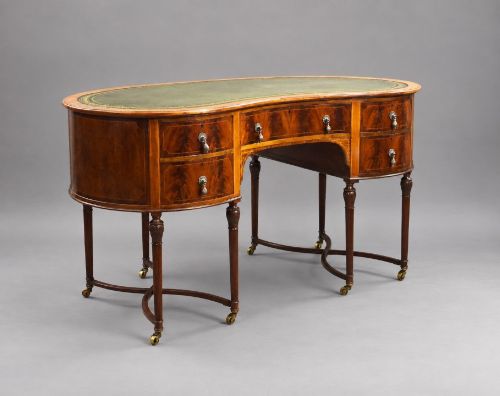
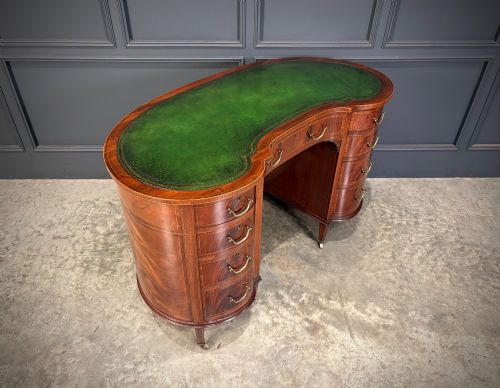
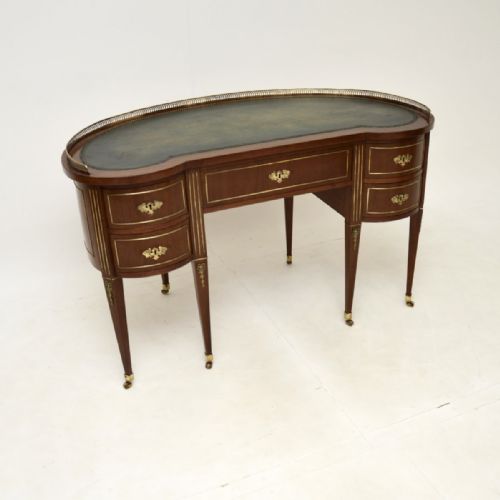
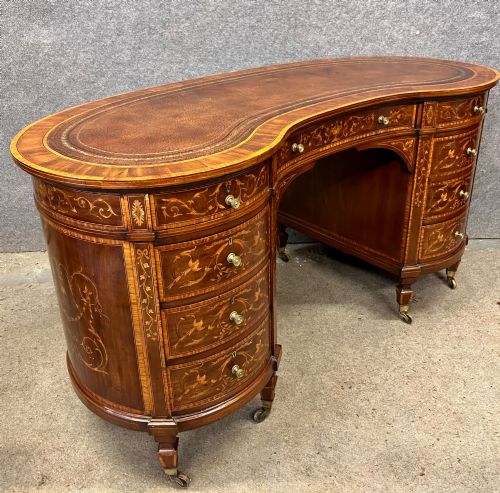
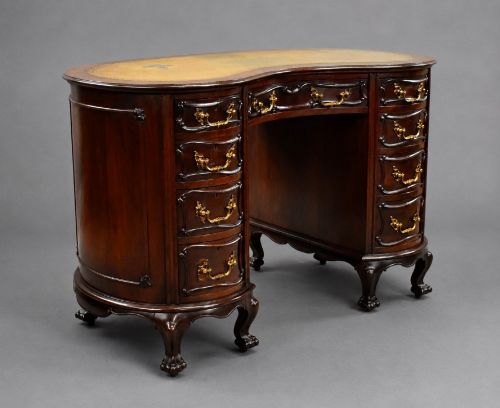
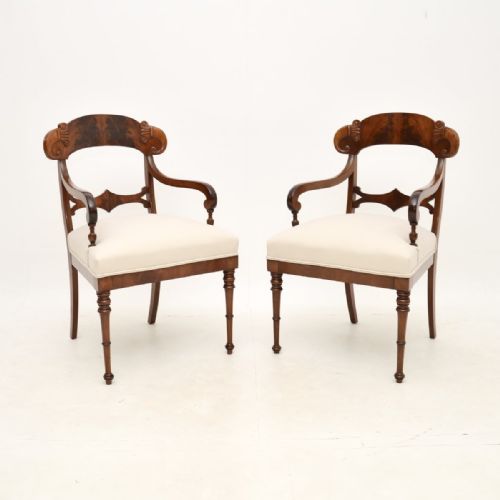
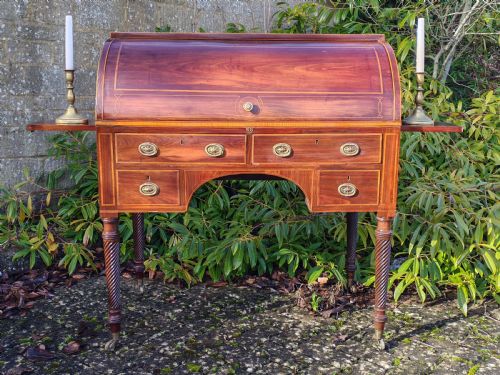
A curved mahogany desk provides a smooth, sweeping workspace designed to follow the contours of the body while remaining a striking centrepiece in a room. These pieces range from the generous proportions of Victorian twin pedestal writing desks to the lighter, refined forms of Edwardian kidney shaped tables.
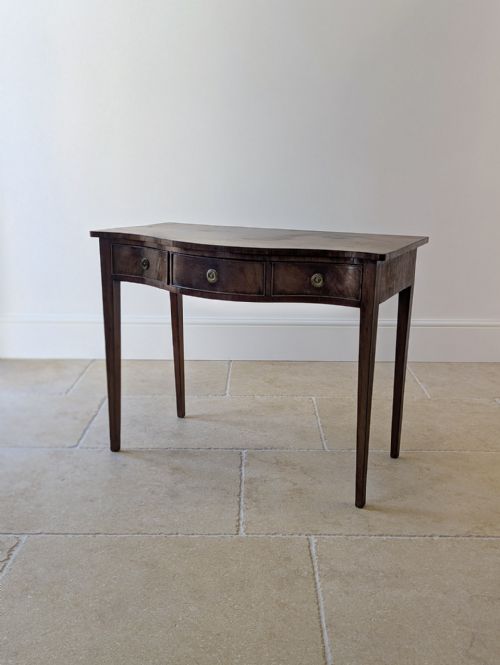
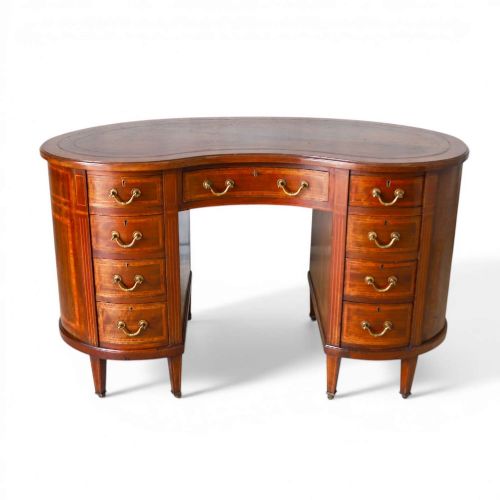
The most common examples encountered on this page are kidney shaped desks and serpentine kneehole variations, often fitted with inset leather writing surfaces. Dating primarily from the nineteenth century into the Edwardian era, these items combine practical storage with sophisticated cabinet work.
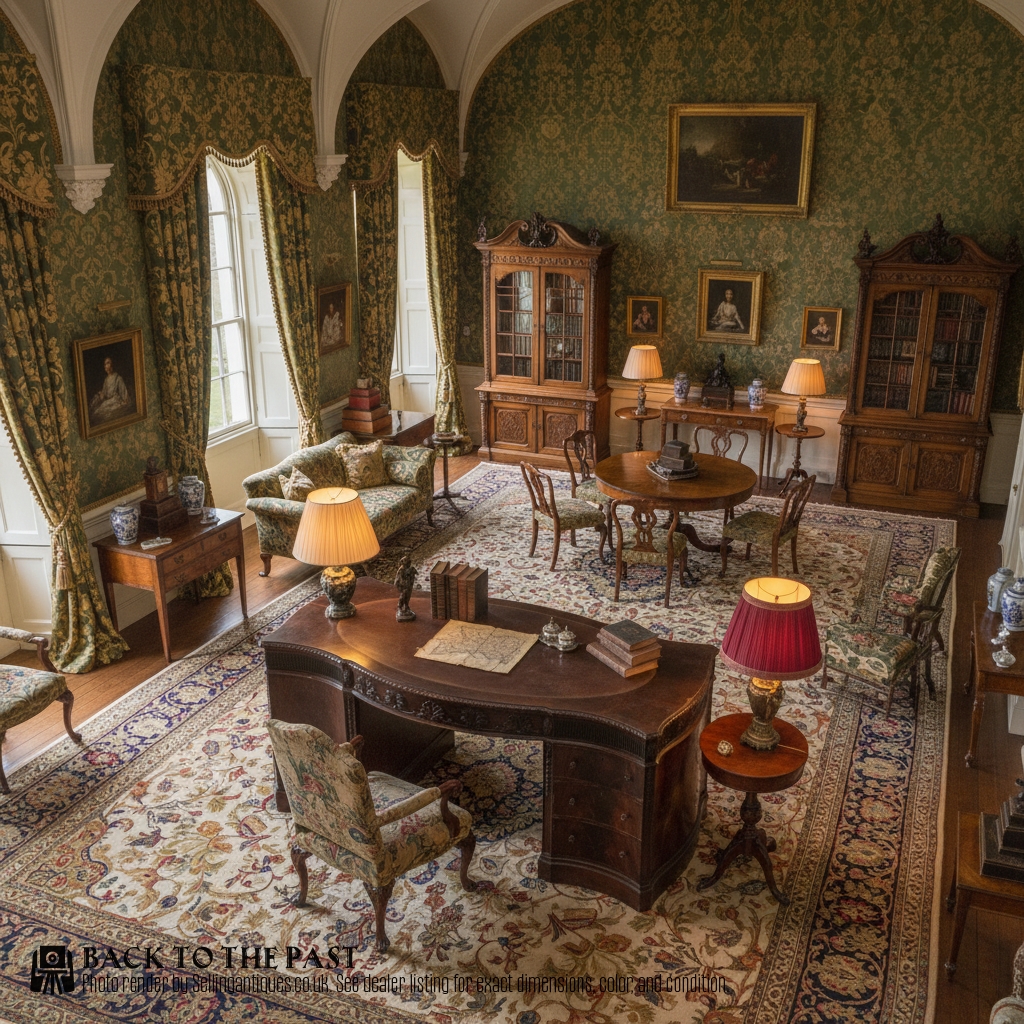
How these desks were made
Construction relies upon solid mahogany and carefully selected mahogany veneers applied to secondary timbers, shaped into sweeping curves and serpentine fronts. Workshops utilised brass hardware, such as handles and castors, alongside contrasting stringing and banding in satinwood and boxwood inlay.
Writing surfaces typically feature hand-tooled leather inserts, often edged with gilt tooling, set flush into the wooden top. Pedestal forms incorporate multiple graduated drawers, constructed with traditional dovetail joints to withstand daily use.
Retail Price Guide 2026
Typical UK retail prices for curved mahogany desk, calculated from the Sellingantiques database of over a million retail prices indexed since 2003. This retail price guide relies exclusively on Sellingantiques data; no external sources or auction records are used, so the figures do not describe the wider market.
A curved desk kindly hugs the writer, proving that nineteenth-century cabinet makers understood ergonomics long before modern offices existed.
What separates the best from the rest
Quality rests in the precision of the curved joinery and the depth of figure in the mahogany timber, where superior pieces exhibit rich grain movement and seamless veneer matching along tight radiuses. The complexity of the carcass design, from simple three-drawer writing tables to elaborate nine-drawer twin pedestal desks, dictates the level of craftsmanship involved.
Refinement in secondary details elevates a piece, such as crisp boxwood and satinwood inlay, well-executed brass mounts, and carefully proportioned kneehole openings. The integrity of the original leather writing surface and the smooth operation of drawer construction further distinguish finer examples.
The Curved Mahogany Desk Glossary
- Kidney shaped
- Describing a desk with a concave front and convex rear, resembling the organ of the same name. This ergonomic curve allows the user to sit closer to the centre.
- Serpentine
- A shape featuring a central convex curve flanked by concave sweeps, or vice versa, creating a wave-like front profile. This technique requires exceptional skill in woodworking.
- Pedestal desk
- A heavy freestanding writing table supported by two vertical columns of drawers flanking a central kneehole. These offer substantial storage capacity.
- Inlay
- The technique of embedding contrasting strips or pieces of wood, such as satinwood and boxwood, flush into the mahogany surface to form decorative patterns.
Frequently Asked Questions
What is a kidney shaped desk?
A kidney shaped desk is a writing table featuring a curved top designed to wrap slightly around the user. It offers a comfortable seating position while presenting a finished back suitable for freestanding placement.
Most examples found here date from the Edwardian period and the late nineteenth century, often decorated with delicate stringing and inlay.
How do I care for the leather top?
The leather writing surface benefits from occasional treatment with appropriate leather balms to maintain flexibility and prevent cracking. Avoid exposure to direct sunlight and excessive moisture to protect the gilt tooling.
Keeping the surface clean ensures the material retains its character alongside the polished mahogany frame.
Where should I place a pedestal desk?
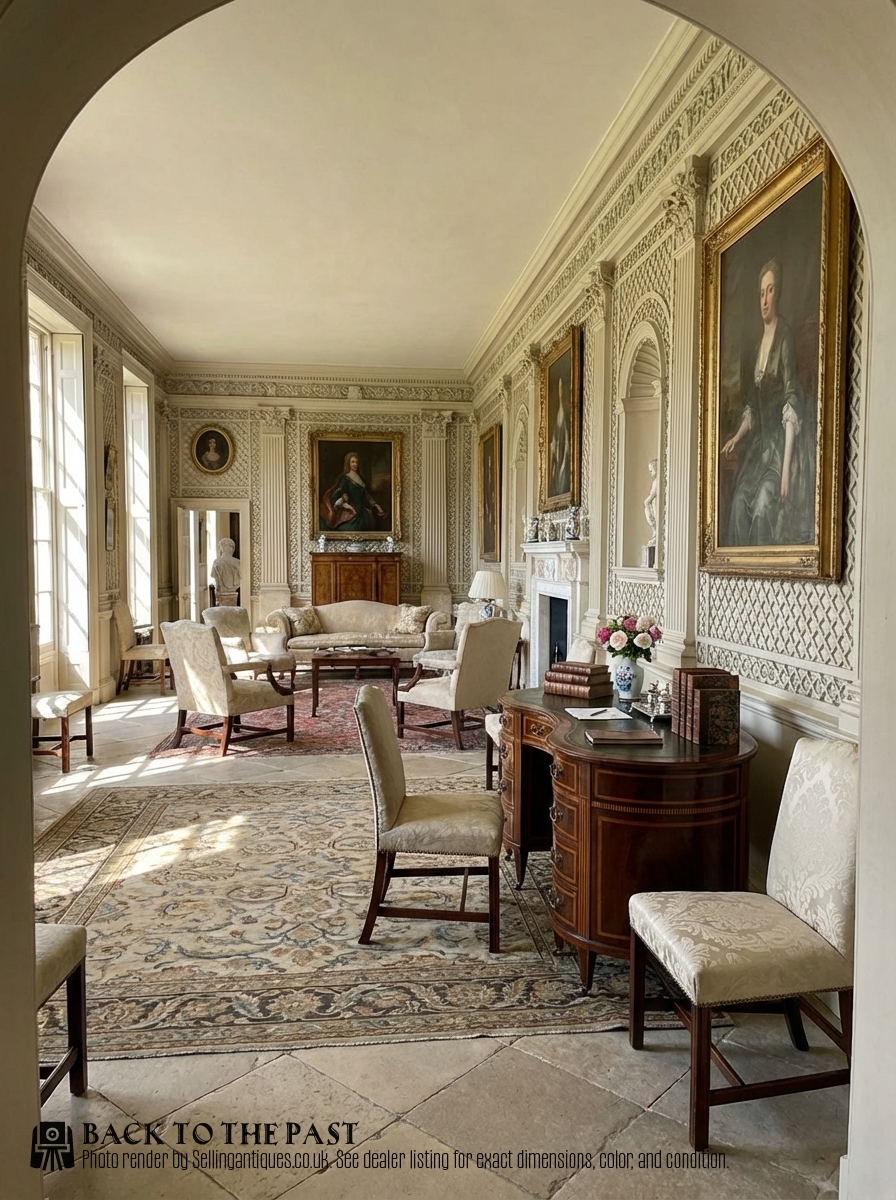
A pedestal desk requires adequate floor space to allow comfortable access to the drawers and seating area. Twin pedestal versions look particularly striking positioned in the middle of a room due to their finished backs.
Ensure the dimensions match the scale of your seating and lighting arrangements.
How do I date a mahogany desk?
Dating relies upon examining construction methods, timber selection, and stylistic cues such as hardware and inlay. Victorian pieces tend to be heavier with twin pedestals, whilst Edwardian examples often feature lighter proportions and satinwood banding.
Archival evidence and period characteristics help distinguish mid-nineteenth-century items from later Edwardian production.