

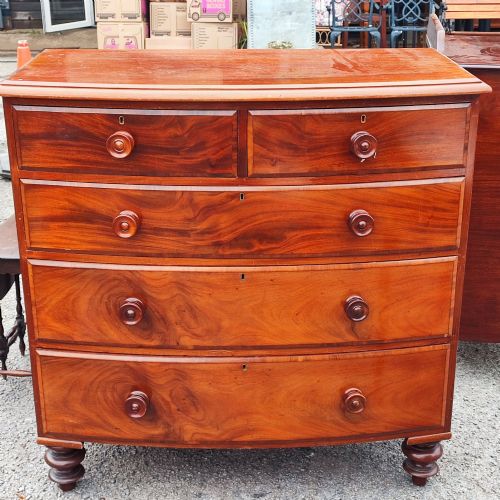
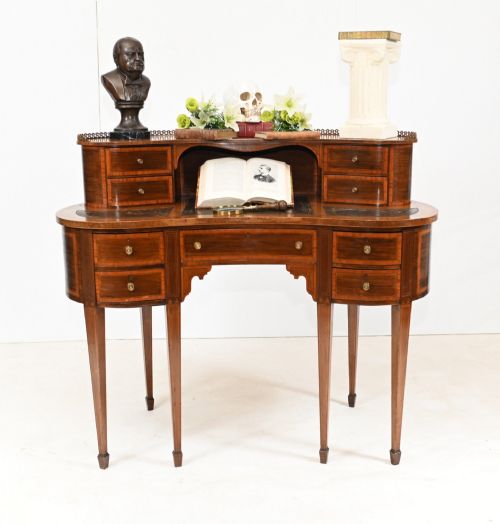
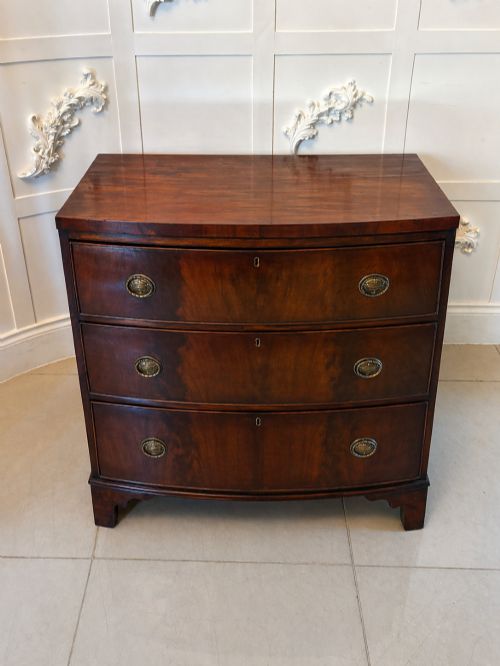
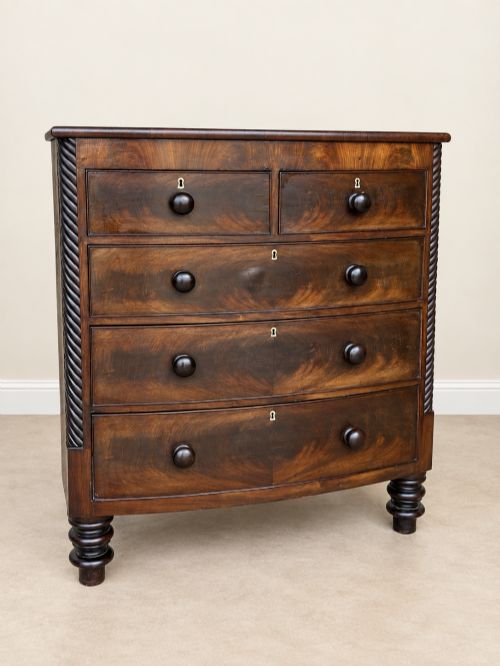

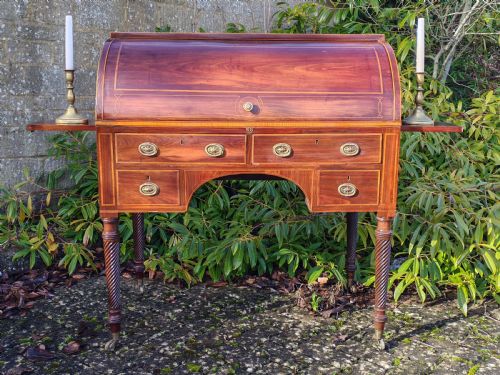
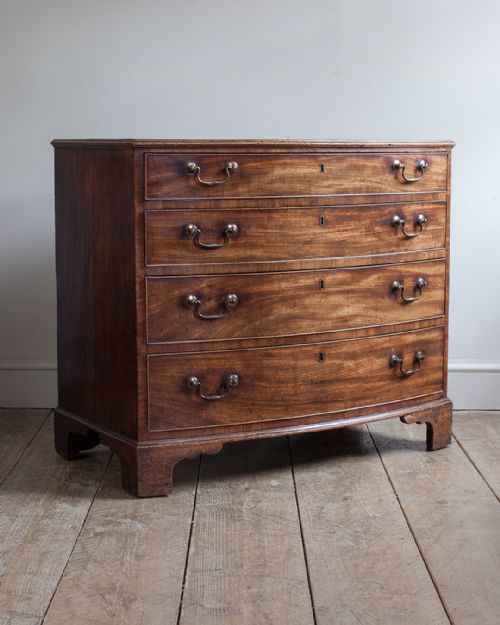


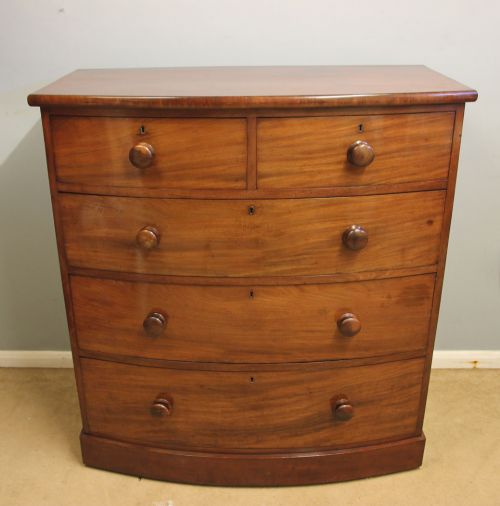


Curved Mahogany Bureau
These curved mahogany bureau pieces and related writing desks combine rich timber grains with graceful rounded fronts, offering practical workspace and period character.
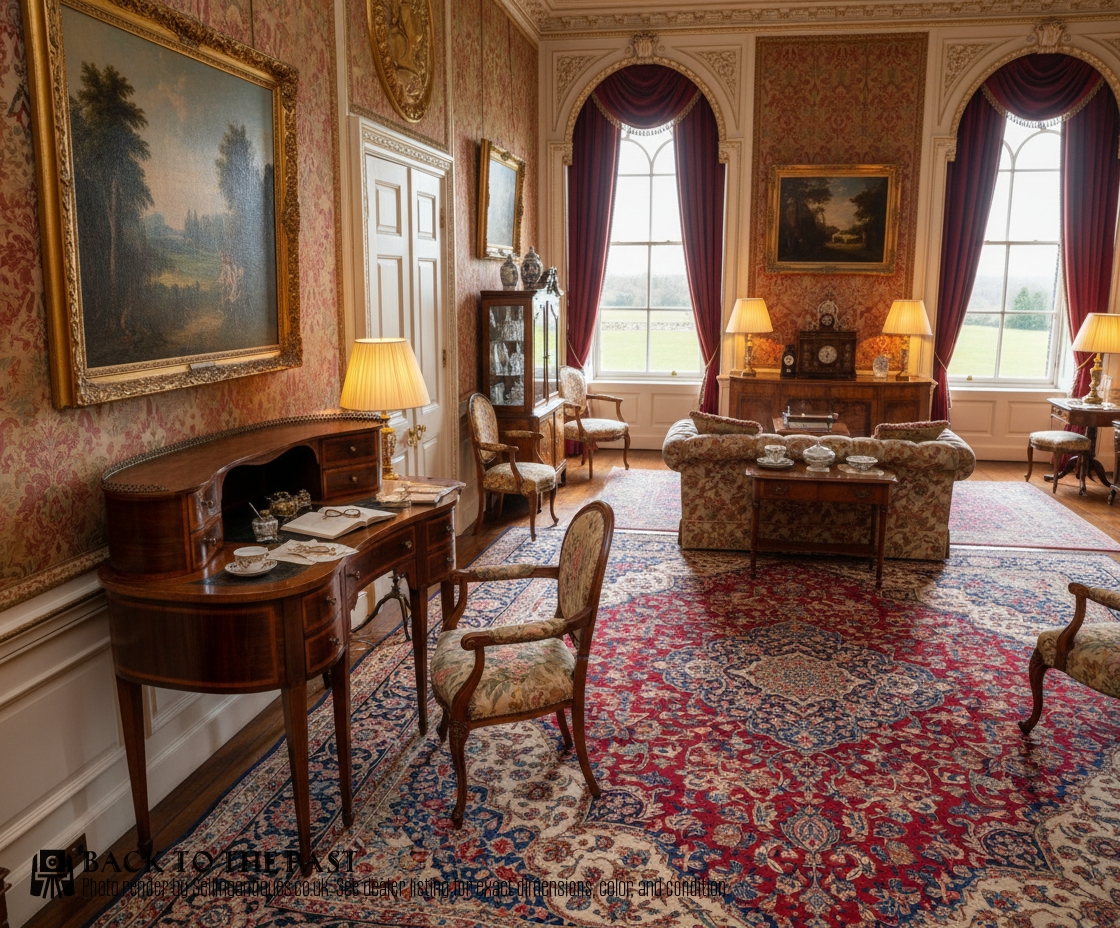
Curved Mahogany Bureau
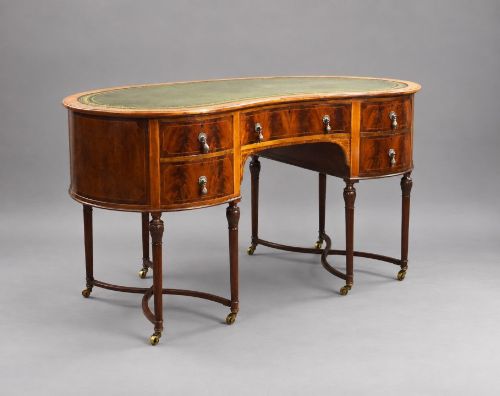
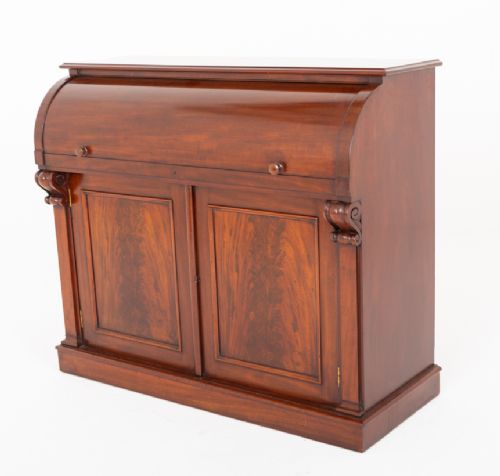
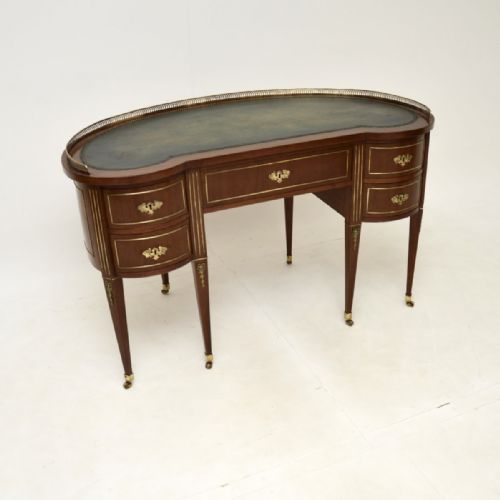
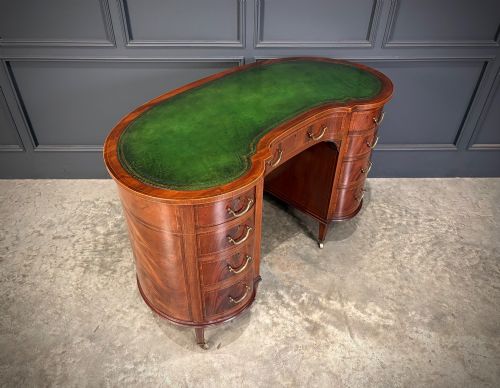
A curved mahogany bureau search covers a variety of writing furniture and storage chests spanning multiple centuries. Buyers encounter Georgian chest forms alongside Edwardian kidney desks and Victorian cylinder top pieces.
Originating largely from British and European workshops, these items utilise rich dark timbers shaped into smooth curves. Each piece bridges utility and display, suiting studies, drawing rooms, and bedrooms alike.
Materials and Construction Methods
Cabinet makers relied primarily on solid mahogany and flame mahogany veneers applied to secondary structural woods. The distinct grain patterns emerge through careful timber selection and polishing.
Contoured surfaces such as bow fronts and serpentine shapes required precise joinery and steam bending or block construction. Inlays of satinwood and boxwood frequently delineate borders and drawers.
Brass handles, escutcheons, and leather writing inserts complete the functional elements of these desks and chests. Every surface receives attention to grain direction and smooth operation.
Curved Mahogany Bureau Retail Price Guide 2026
Typical asking prices for curved mahogany bureau among the pieces listed under this phrase on Sellingantiques today, from the lower quarter to the upper quarter. They describe what is for sale here now, not the wider market.
Listings feature mahogany, satinwood, and boxwood combined with brass hardware and leather writing surfaces across Georgian, Victorian, and Edwardian periods.
Distinguishing Quality in Timber and Form
Superior examples display exceptional figure within the mahogany, particularly in flame veneers or burr oak accents. The depth of the timber grain and the crispness of inlaid stringing signal superior craftsmanship.
The harmony of the curved proportions dictates the visual success of a chest or desk. Subtle transitions along a serpentine or bow front indicate a maker of high skill.
Original hardware, sound drawer construction, and well-preserved leather inserts enhance the integrity of the piece. Minor details like flush joints and smooth drawer movement separate everyday items from the finest surviving examples.
The Curved Mahogany Bureau Glossary
- Bow front
- A convex curved cabinet front that projects outward in a smooth arc. This shape softens the profile of chests of drawers and desks.
- Serpentine
- A front contour characterised by a convex centre flanked by concave curves. It demands advanced woodworking skill to execute properly.
- Cylinder desk
- A writing desk featuring a rolling semi-cylindrical shutter that conceals the pigeonholes and writing surface. When closed, it protects the interior fittings.
- Kidney desk
- A writing table shaped in a curved kidney outline designed to wrap partially around the user. Edwardian makers produced these extensively.
- Satinwood inlay
- Contrasting pale timber inserted into recesses within the darker mahogany surface. It creates decorative geometric or floral borders.
Curved Mahogany Bureau: Frequently Asked Questions
How do I identify a Georgian bureau?
Georgian pieces display hand-cut dovetails, solid secondary timbers like oak or pine, and proportions characteristic of the eighteenth century. The joinery shows individual maker marks and subtle irregularities absent in later factory production.
Surface patination develops deep warmth over decades of polishing. Inspecting the drawer linings and interior reveals the age and traditional construction methods.
Where should I place a kidney desk?
Kidney desks work effectively freestanding in the centre of a room because their curved backs present a finished appearance from all angles. Their compact footprints suit smaller studies or drawing room corners.
Ensure adequate clearance around the curve so the chair moves comfortably. Positioning them away from direct sunlight protects the mahogany polish.
How do I care for mahogany surfaces?
Maintain mahogany furniture by dusting regularly with a soft, dry cloth and applying natural beeswax periodically to nourish the timber. Avoid silicone-based polishes that build up a hazy film over time.
Keep pieces away from radiators and extreme humidity shifts to prevent timber movement. Proper placement preserves the original polish and rich grain depth.