

Curved Glazed Vitrine
A curved glazed vitrine offers a graceful way to display precious objects, combining bent glass with fine timber framing from the nineteenth and twentieth centuries.
Curved Glazed Vitrine
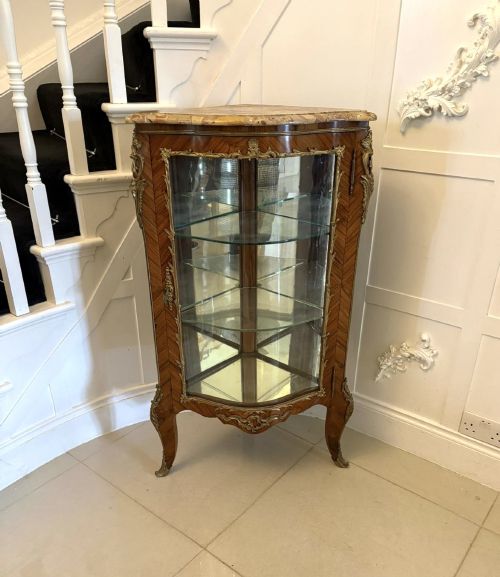
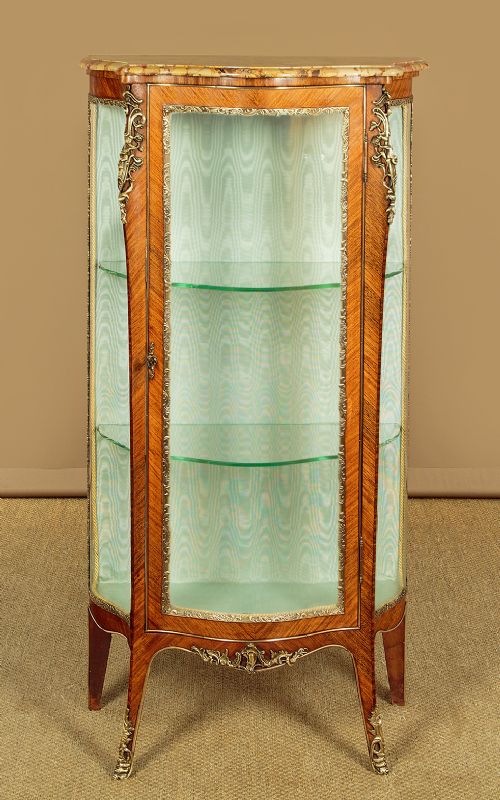
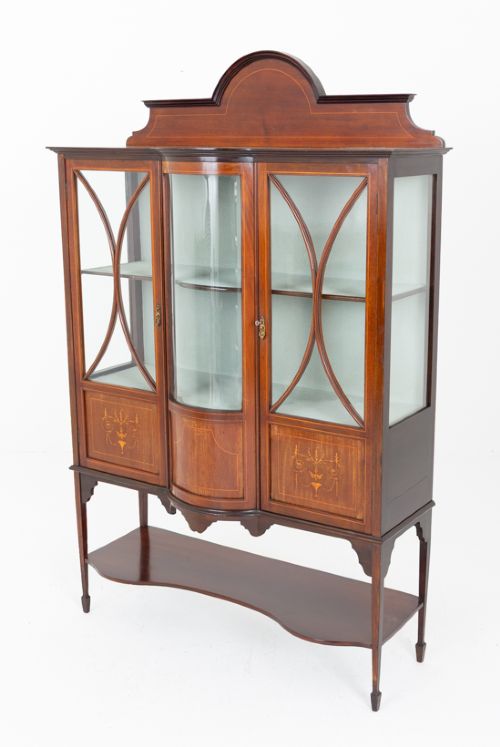
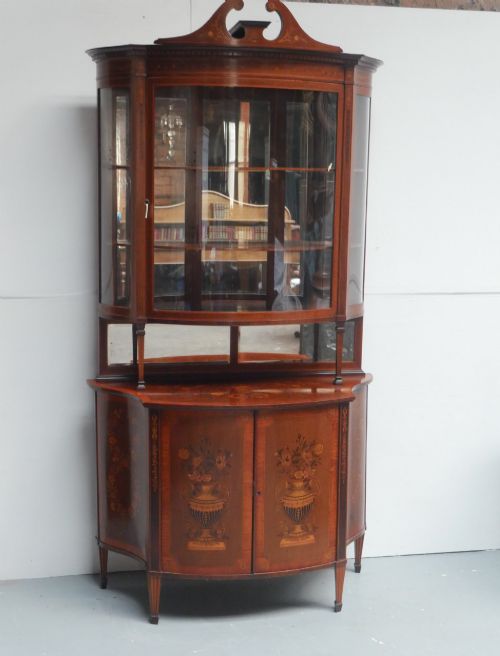
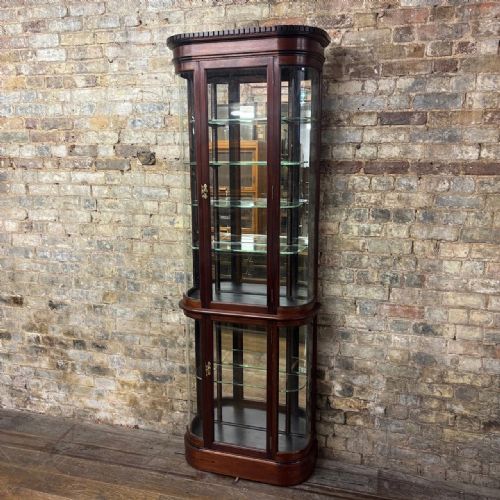
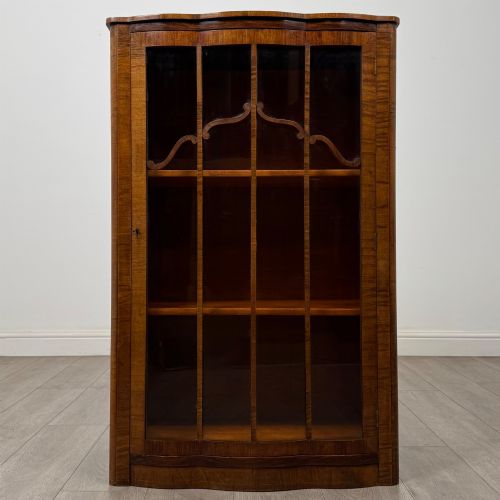
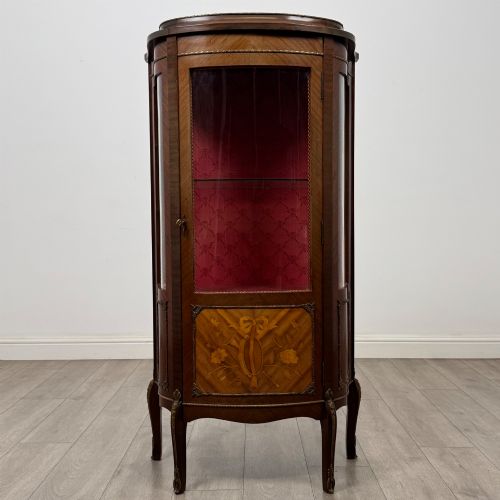
A curved glazed vitrine is a display cabinet designed with bent or bowed glass panels to showcase collections from every angle. When you search for a curved glazed vitrine, you encounter pieces spanning from nineteenth-century French revival models to nineteen-thirties Art Deco designs.
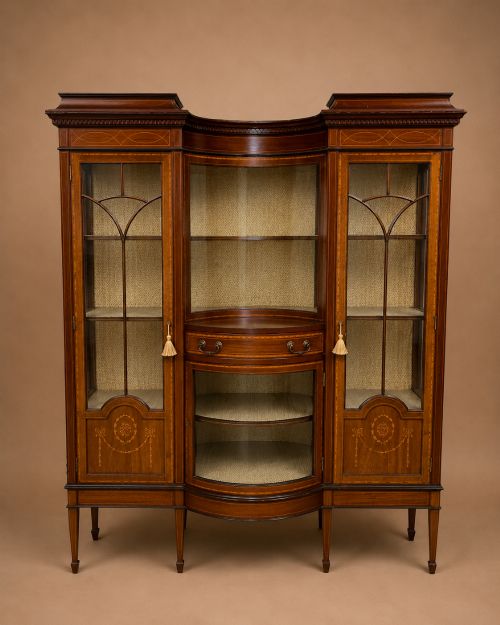
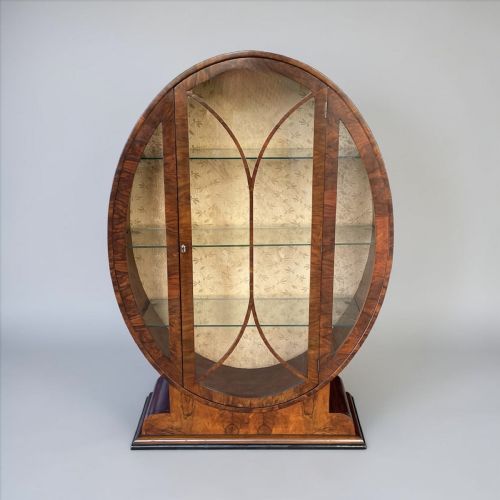
The selections on this page appear in various forms, including corner cabinets, serpentine frontals, oval shapes, and bow-fronted side cabinets. Mahogany, walnut, and kingwood form the primary wooden carcasses that house these curved glass viewing areas.
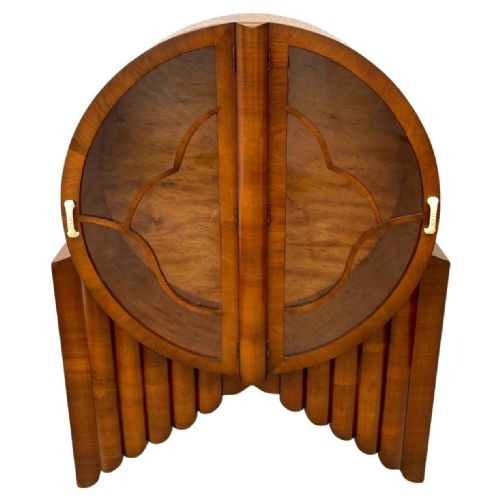
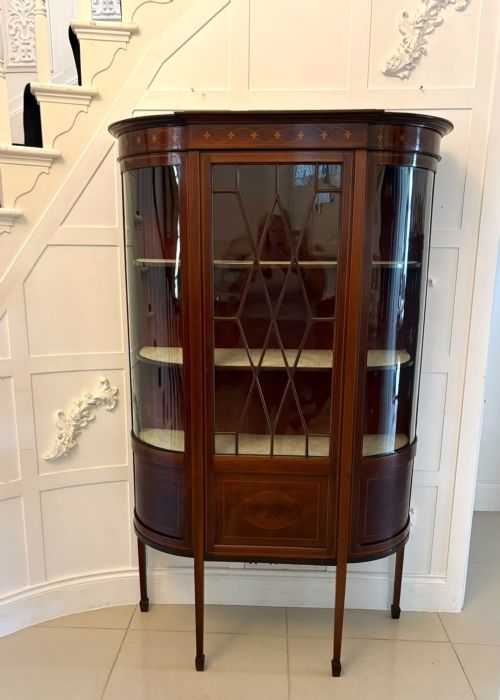
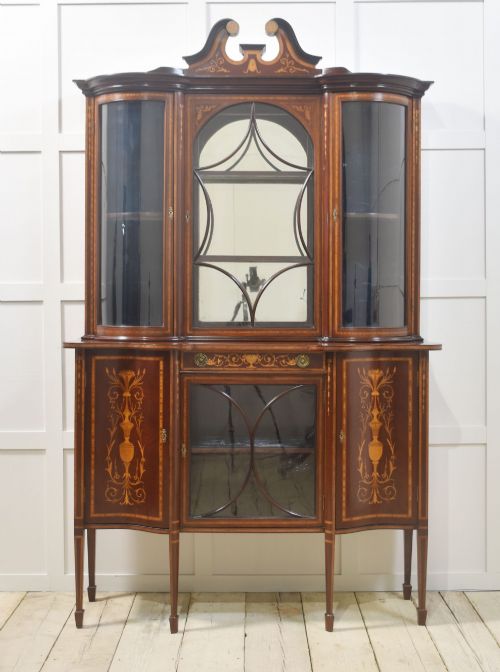
Edwardian and Victorian iterations often lean towards classical revival styles, whilst nineteen-thirty pieces introduce geometric and streamlined silhouettes. Buyers most frequently meet Edwardian mahogany examples and nineteen-thirty walnut cabinets amongst these listings.
Materials and construction techniques
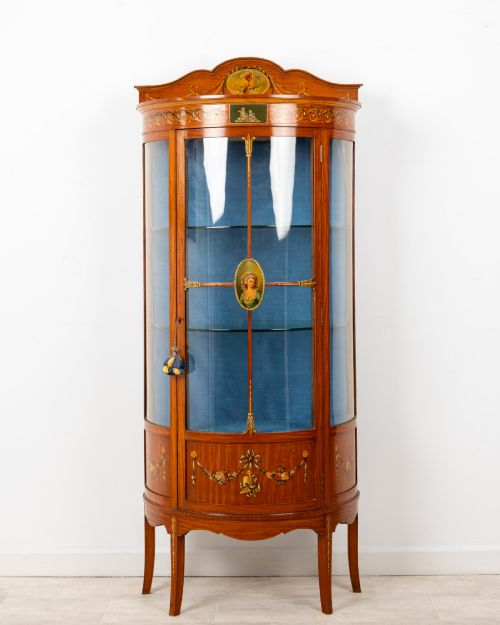
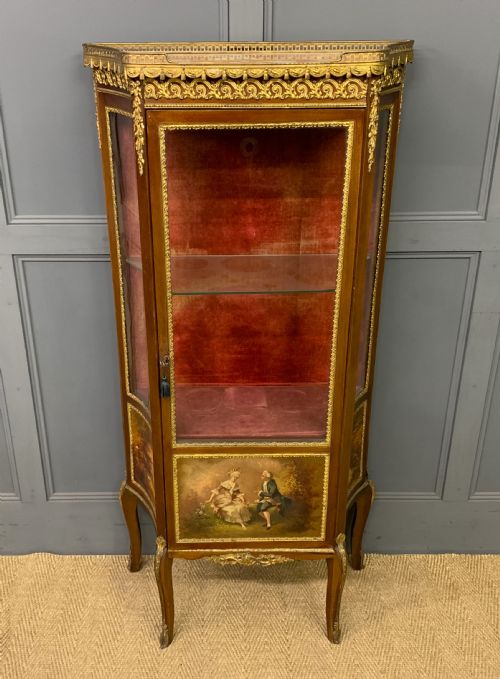
Cabinetmakers constructed these frames using dense hardwoods such as mahogany, walnut, and kingwood, frequently applying satinwood or marquetry inlays for decorative contrast. Ormolu mounts and cast brass details often accent the corners, feet, and cornices of French and English pieces alike.
Bending glass for the curved doors required specialised heating techniques to achieve smooth, distortion-free convex or serpentine panes. Carpenters fitted these delicate glazed sections into rebated wooden frames, sometimes supplementing the structures with mirrored backs and fabric-lined interiors.
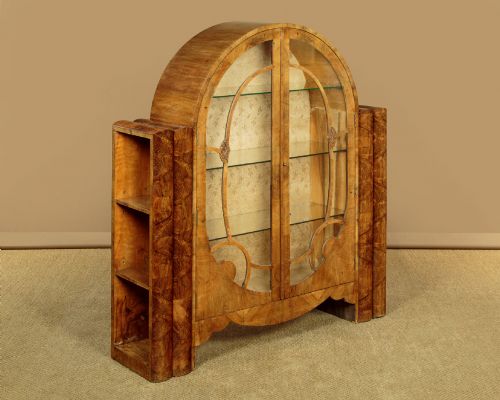
One cabinet in the collection rejoices in the delightful moniker 'Rocket Cabinet', capturing the spirited optimism of nineteen-thirty design.
Distinguishing quality across the range
Quality rests upon the precision of the bent glass and the crispness of the timber joinery. Superior examples display seamless curvature in the glazing without optical distortion, alongside tight, hand-cut dovetail joints in the drawers and carcase.
The elaboration of the decorative elements further separates the standard production from the exceptional. Finely chased ormolu mounts, intricate marquetry patterns, and original painted panels elevate a cabinet's status above simpler veneered carcases.
Edwards & Roberts·James Hicks·François Linke·Paul Sormani·Maurice Adams
The Curved Glazed Vitrine Glossary
- Vitrines
- Glass-fronted display cabinets intended for showing porcelain, silver, and curiosities. They protect delicate objects from dust whilst permitting maximum light penetration.
- Ormolu
- Gilded bronze mounts applied to furniture. This decorative technique became prominent in French cabinetmaking during the eighteenth century and was revived heavily in the nineteenth.
- Marquetry
- Inlaid patterns formed by fitting contrasting veneer pieces into a wood ground. Makers utilised various exotic timbers to create floral or geometric designs across the cabinet doors.
- Serpentine
- A shape featuring a curved line that dips inward centrally and arches outward at the sides. This contour requires skilled carpentry to match the wooden framework with shaped glass panels.
- Vernis Martin
- A European lacquer technique mimicking Asian lacquerwork, developed in France. It produces a glossy, translucent finish often found on decorative panels of nineteenth-century vitrines.
Curved Glazed Vitrine: Frequently Asked Questions
What is a curved glazed vitrine used for?
These cabinets serve primarily to exhibit decorative arts, fine porcelain, glassware, and small collectibles within a drawing room or parlour. The glass panels and internal shelving allow viewers to observe items from multiple lateral angles.
Historically, households utilised them to curate and protect their most prized acquisitions from dust and handling. Today, they fulfil the same decorative function in modern interiors.
How do I distinguish Edwardian pieces from Art Deco examples?
Edwardian vitrines frequently utilise mahogany or satinwood with classical revival motifs, stringing, and painted decoration. They lean on eighteenth-century stylistic revivals like Sheraton or Louis XVI.
Art Deco pieces, dated around nineteen thirty, favour figured walnut, clove shapes, and clean geometric lines with minimal ornamentation. The glass shapes in Deco pieces also tend towards bolder circular or cathedral profiles.
How do I clean and maintain the glass?
Maintenance requires gentle cleaning methods suitable for antique wood and fragile curved glass. Use a soft, lint-free cloth with mild cleaning solutions applied to the cloth rather than sprayed directly onto the glass, preventing moisture seeping into the wooden frames or old putty.
Keep the cabinet away from direct sunlight and fluctuating heat sources to protect the wooden veneers and delicate internal fabrics from fading or drying out.
Are the shelves inside adjustable?
Many cabinets feature adjustable wooden or glass shelving supported by traditional rack systems or metal shelf supports. This adaptability allows collectors to display objects of varying heights.
Not all historical cabinets include adjustable fittings, as some relied on fixed wooden tiers integrated into the structural carcass during manufacture.