
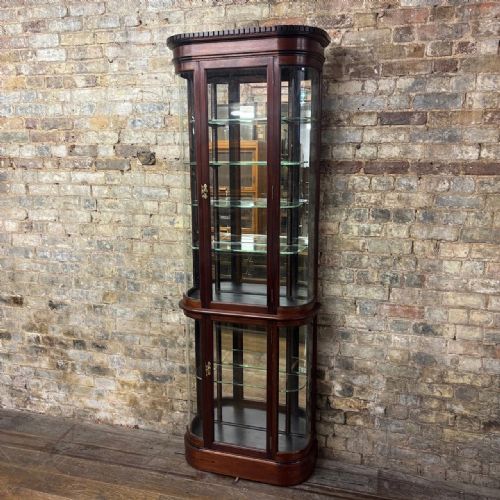
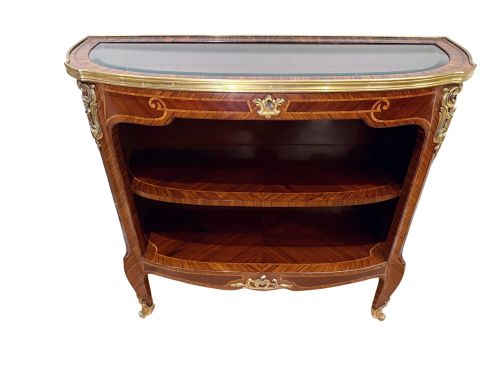
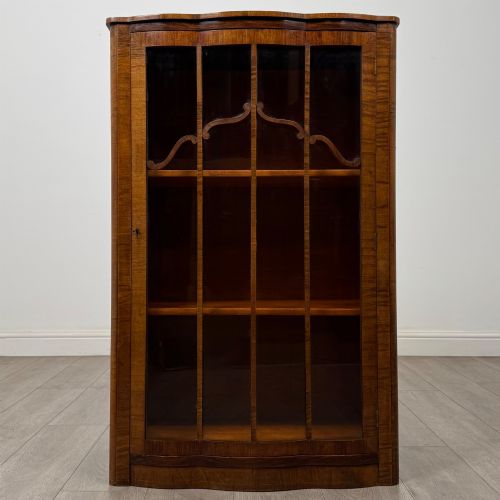
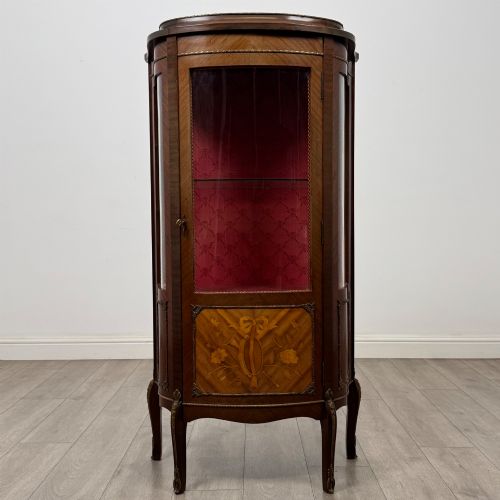


Curved Glass Bookcase
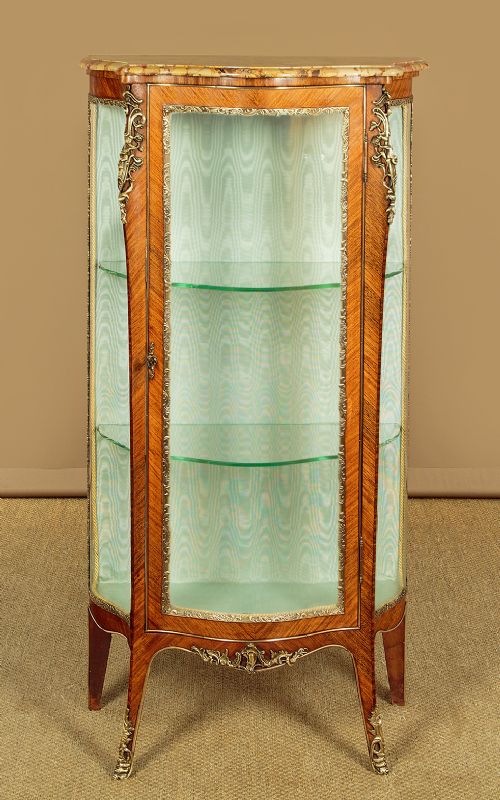
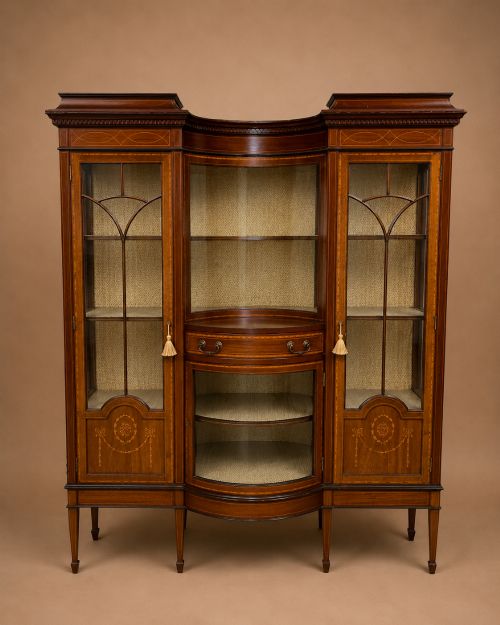
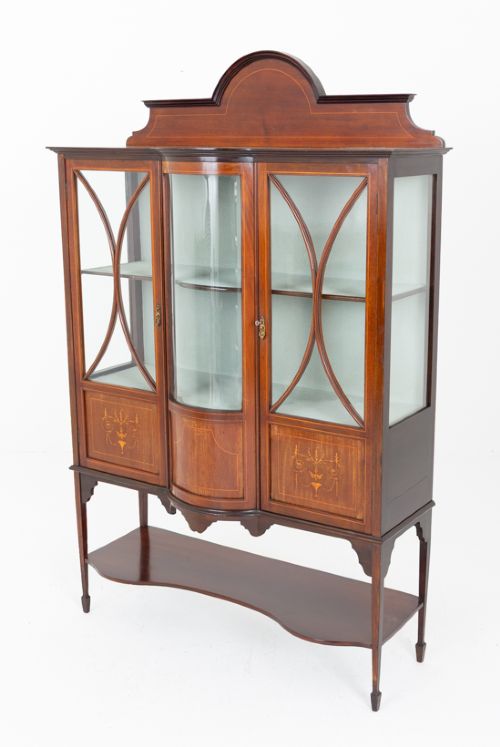
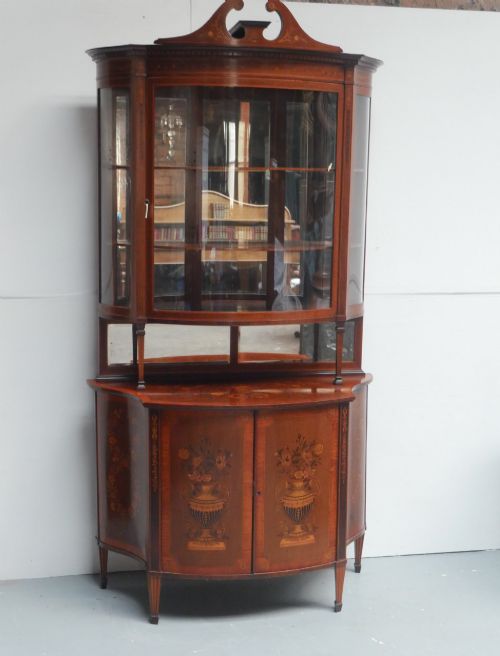
A curved glass bookcase brings fluid lines and refined display space to a room, uniting timber and clear glazing in a single piece.
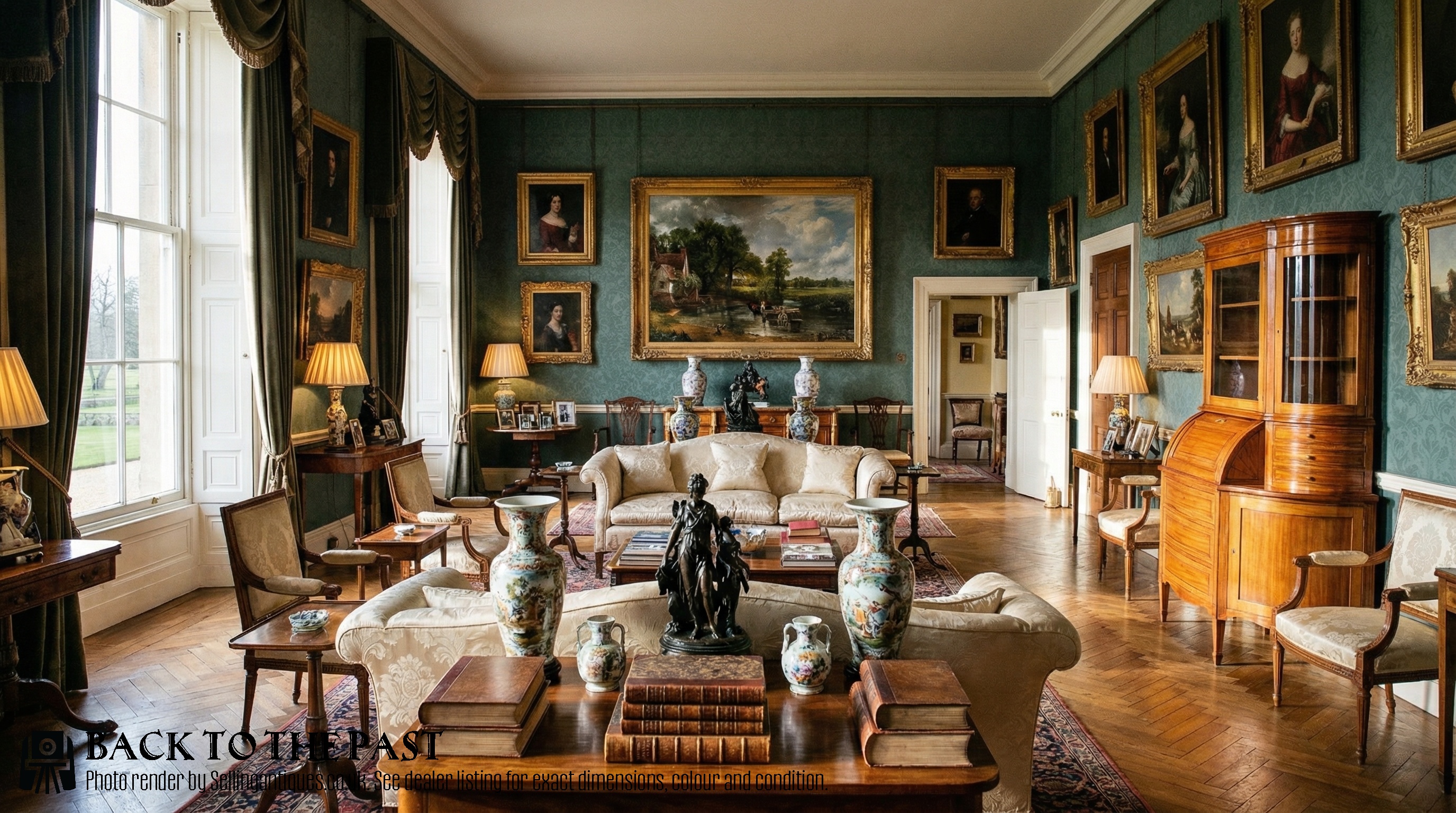
Curved Glass Bookcase
A curved glass bookcase provides functional storage alongside softened architectural profiles, housing books and decorative items behind polished panes. These items appear across several historic periods, combining utility with decorative presence.
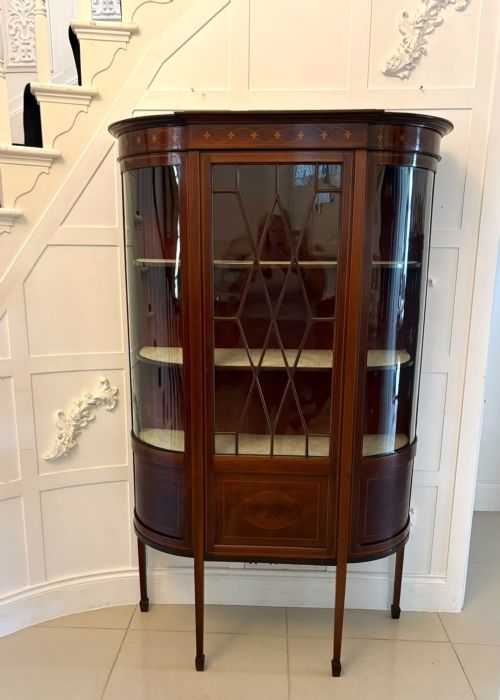
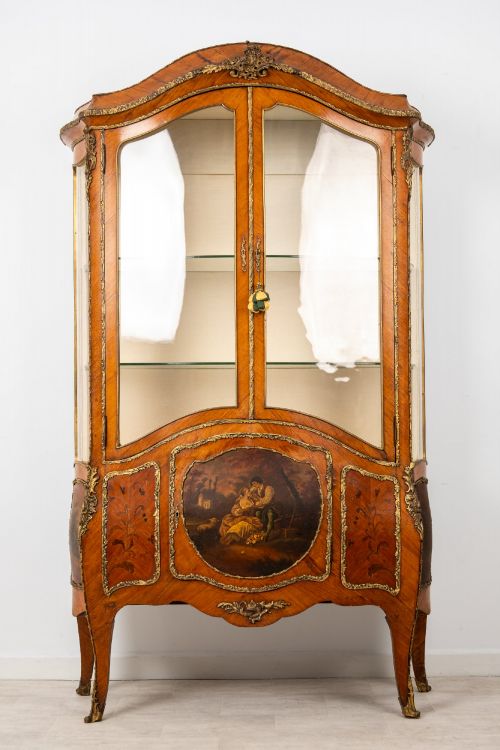
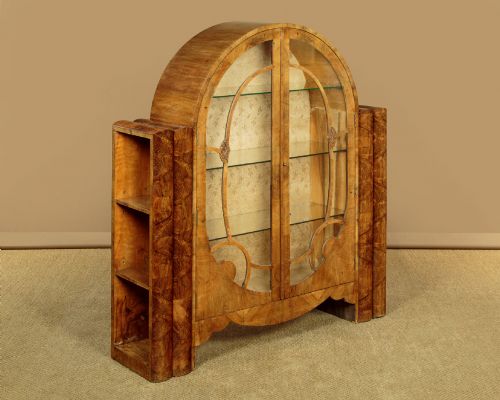
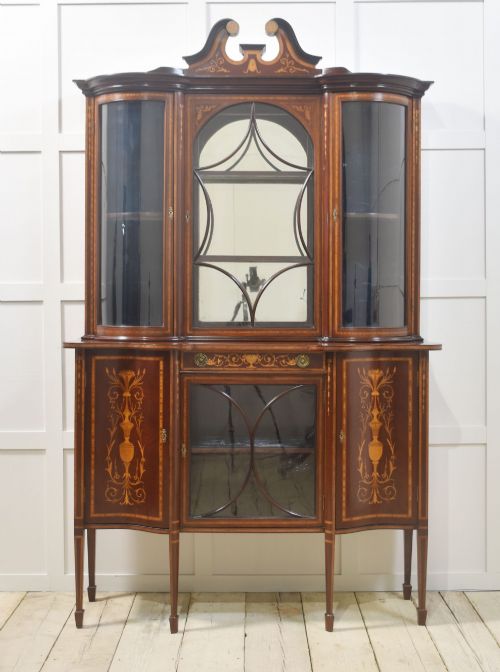
The versions most commonly met on this page span the Victorian, Edwardian, and Art Deco eras, constructed in forms such as bow fronts, circular cabinets, and concave bookcases. Makers applied mahogany, walnut, and satinwood to support the sweeping glazed sections.
Makers often integrated marquetry, brass mounts, and inlaid details to frame the central glass doors. Each example reflects the prevailing taste of its period, from Sheraton Revival elegance to geometric Art Deco lines.
How they were made
Cabinetmakers constructed the primary carcase using timbers such as mahogany, walnut, and satinwood, frequently applying burr veneers for visual depth. Frames received careful joinery to support the tension of curved glass doors and sides.
Glazing required specialist glass-bending techniques to achieve uniform arcs without distortion. Ormolu mounts, brass fittings, and marquetry inlay were then added to complete the decorative surface.
Some cabinets feature curved glass so clear that guests routinely attempt to walk straight through them into the display.
What varies in quality
The refinement of the timber selection and the precision of the veneer matching dictate the initial impression of a piece. Finer examples display continuous grain across curved surfaces and intricate, hand-cut marquetry rather than simpler printed or stamped ornamentation.
The clarity and original integrity of the curved glass pane distinguish a superior item. Smooth operation of the doors and the quality of applied brass or ormolu mounts further separate standard production from masterwork pieces.
Edwards & Roberts·Maurice Adams·Linke·Paul Somani
The Curved Glass Bookcase Glossary
- Bow-ended
- Having a convex, rounded front profile that projects outward. This shape softens the corners of a room and allows extra interior depth.
- Vitrine
- A glass-fronted cabinet designed specifically for displaying objects and porcelain. These pieces often feature glass on the sides as well as the doors to maximise light penetration.
- Marquetry
- Decorative patterns formed by fitting together thin veneers of different woods. Artisans use varied tones and grain directions to create pictorial or geometric designs.
- Ormolu
- Gilded bronze mounts applied to furniture for decorative accent. The technique was widely utilised during the nineteenth century on revival pieces.
- Concave
- Curved inward like the interior of a sphere. This profile allows the furniture to hug a corner or create a recessed visual rhythm along a wall.
Curved Glass Bookcase: Frequently Asked Questions
How do I clean curved glass?
Clean the glass panels using a soft microfiber cloth and a mild, ammonia-free glass cleaner sprayed onto the cloth rather than directly onto the wood. This prevents moisture damage to historic timber frames.
Take care around aged ormolu mounts and delicate veneer edges near the glass frame. Gentle wiping preserves the original surface patination without risking the antique joinery.
Where should I place a curved bookcase?
Position these cabinets away from direct sunlight and heat sources to protect sensitive wood veneers and historic polishes from fading or cracking. Placing them against interior walls maintains stable environmental conditions.
The curved profile allows these pieces to sit comfortably in corners or anchor an open wall section. Their rounded edges also ease circulation in narrower hallways or smaller reception rooms.
How do I identify an Art Deco piece?
Art Deco pieces typically display clean geometric forms, circular silhouettes, and symmetrical walnut or exotic wood veneers without historic revival ornamentation. The focus rests on streamlined silhouettes and the natural grain of the timber.
Hardware is often minimal or integrated directly into the design of the doors. These cabinets reflect the modern aesthetic of the 1930s rather than nineteenth-century revival styles.
Can adjustable shelves be added?
Many Edwardian and later examples utilise internal wooden or glass shelving supported by adjustable brackets or channels. Surviving historic interiors often retain their original glass shelves.
Altering or adding non-original shelves changes the interior configuration of the cabinet. Collectors generally prefer pieces that retain their original supporting mechanisms and shelf materials.