
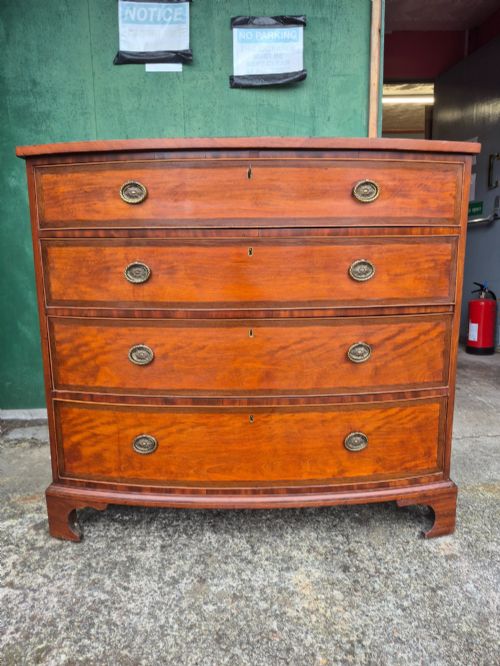
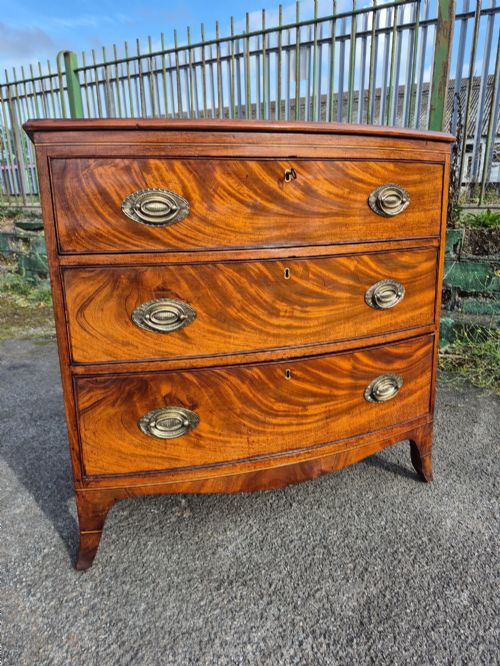
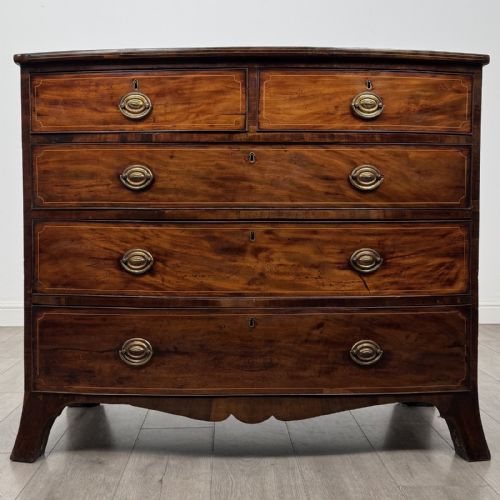
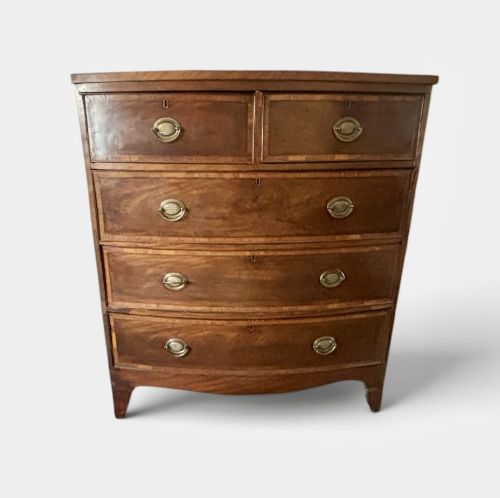
Curved Front Chest of Drawers
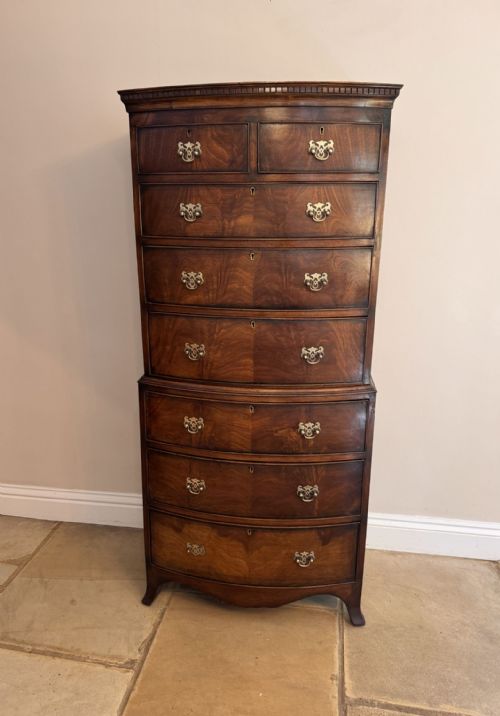
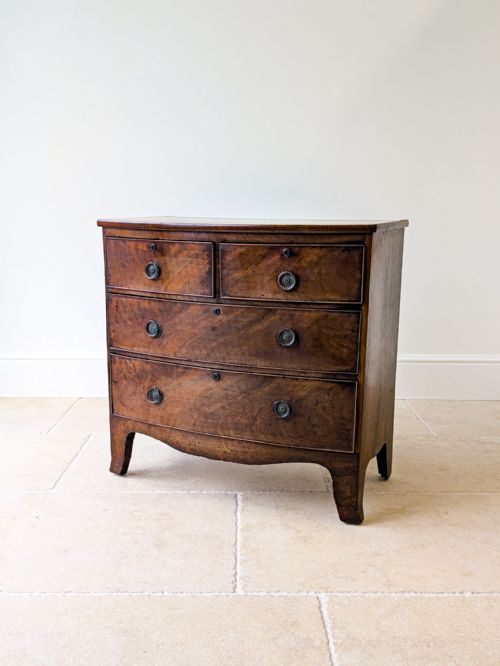
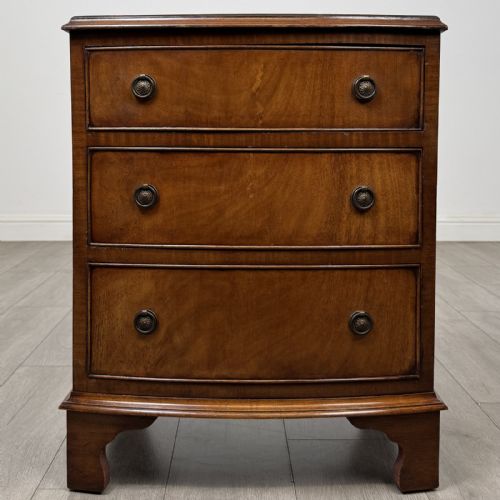
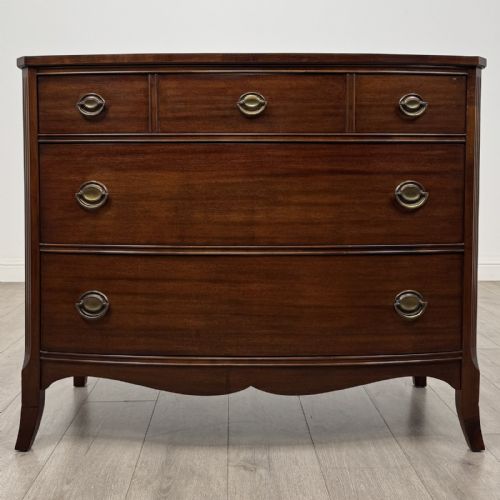
A curved front chest of drawers brings architectural elegance to a room while offering deep storage in mahogany, oak, and walnut.
Curved Front Chest of Drawers
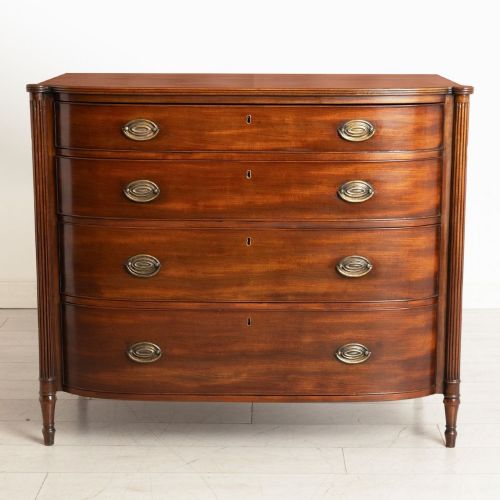
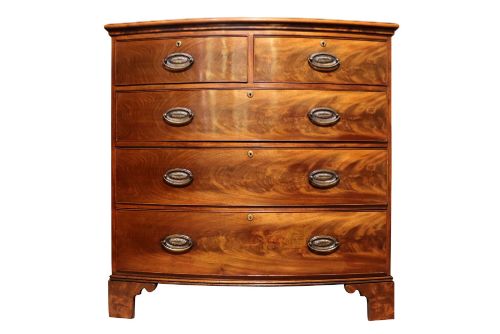
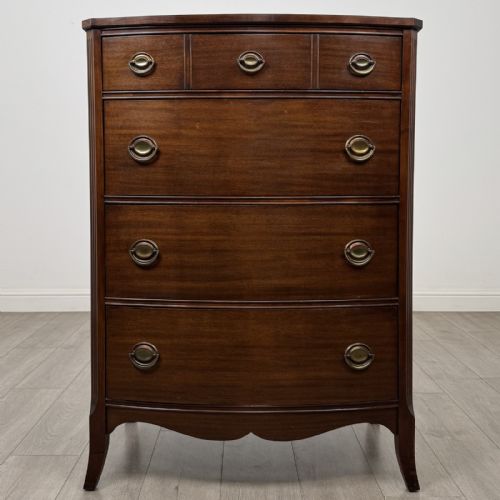
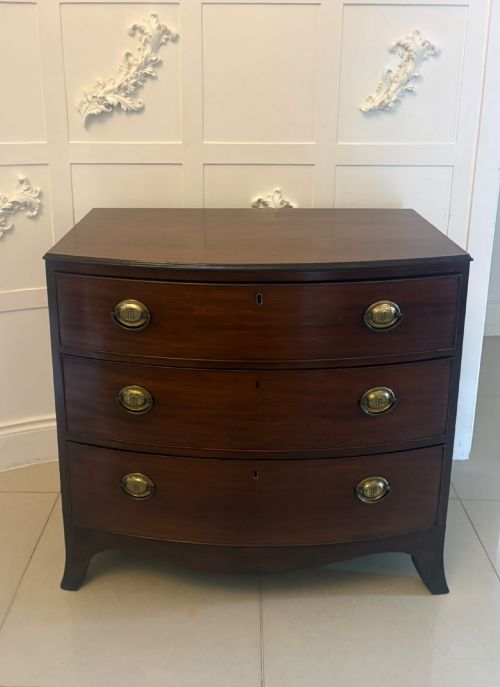
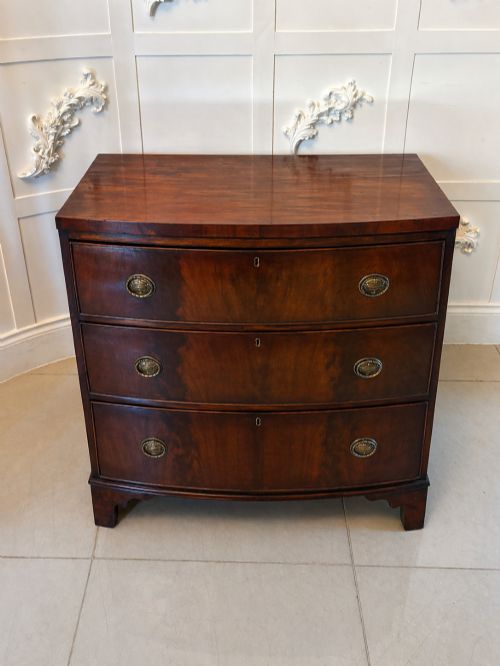
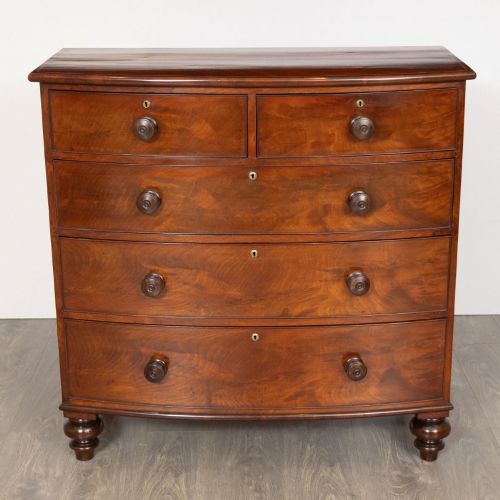
A curved front chest of drawers represents a refined evolution of standard storage furniture, featuring bowed or serpentine silhouettes that soften interior corners. The pieces seen here span multiple eras, from eighteenth-century Georgian designs to Victorian and Edwardian interpretations.
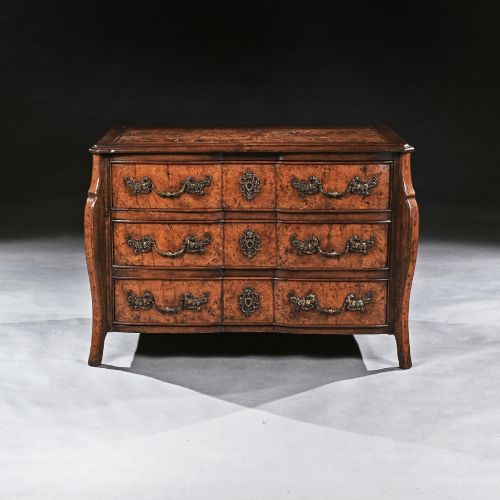
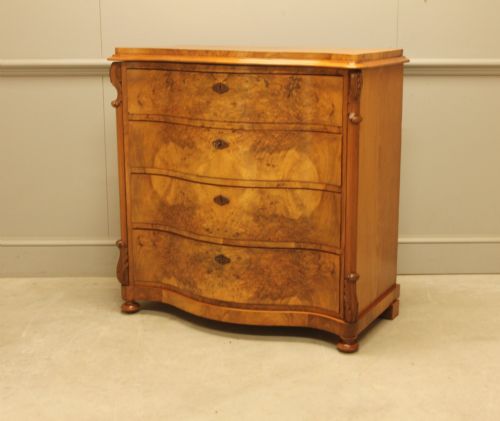
The most common version met on this page is the mahogany bowfront chest, typically featuring stacked graduated drawers raised on bracket feet. Makers also produced serpentine, bombé, and breakfront forms in satinwood, burr walnut, and painted wood.
Originating largely from British workshops alongside continental European and Scandinavian centres, these items served primarily as bedroom or parlour furniture. They combine practical storage capacity with sophisticated cabinetwork designed to catch the light across curved wooden grains.
How they were made
Cabinetmakers constructed these carcases using solid timbers and fine wood veneers, laying mahogany, walnut, and satinwood over secondary woods like oak or pine. The curved drawer fronts required careful steam bending or sawing from thick planks to achieve the desired sweep without splitting.
Surface decoration frequently incorporated boxwood inlay, contrasting stringing, and satinwood banding to frame the drawer edges. French polishing or wax finishes sealed the timber, while craftsmen fitted brass handles, escutcheons, and occasionally secret drawers into the framework.
Listings feature woods including mahogany, oak, walnut, satinwood, and painted surfaces across Georgian, Regency, and Victorian periods.
What varies in quality
The distinction between standard examples and superior pieces rests largely on the choice of timber and the precision of the cabinetwork. Highly figured mahogany or burr walnut veneers show deliberate grain selection, whereas utility pieces rely on plainer stock.
Structural integrity reveals itself in the dovetail joints of the drawer construction and the smoothness with which each drawer glides within its bay. Original brass hardware, intact bracket feet, and crisp inlay work separate workshop masterpieces from later adaptations.
The Curved Front Chest of Drawers Glossary
- Bowfront
- A convex curving cabinet front that projects outward in a smooth arc. This shape dominated British case furniture during the Georgian and Regency periods.
- Serpentine
- A curved front featuring a convex centre flanked by concave wings, or vice versa. It requires advanced carpentry skills to execute successfully.
- Bombé
- A swelling, bulging chest shape associated with continental European commodes and Dutch furniture. The sides and front curve outward in multiple directions.
- Bracket foot
- A simple structural foot formed by two mitred pieces meeting at a corner, shaped in an ogee or plain curve. They support many eighteenth- and nineteenth-century chests.
- Satinwood
- A pale, lustrous exotic timber native to India and Ceylon, used extensively for veneers and banding. Cabinetmakers prized it for its golden sheen and contrast against dark mahogany.
Curved Front Chest of Drawers: Frequently Asked Questions
What is a bow front chest?
A bow front chest is a set of drawers featuring a convex curved front that swells outward from the frame. This design softens the room's geometry while providing practical storage.
Cabinetmakers favoured this silhouette to display figured wood veneers and catch natural light from different angles.
How do I date a curved chest?
Dating relies on examining the timber species, construction methods, foot styles, and hardware fixings. Georgian and Regency pieces show hand-cut dovetails and specific proportions.
Later Edwardian or reproduction items often display machine-cut elements and different internal secondary woods.
Where should I place one?
These chests suit bedrooms, hallways, and living rooms where a flat-fronted cabinet might look too severe. Their curved profile makes them ideal for narrow spaces or corners.
Ensure the clearance allows the drawers to open fully without obstruction from nearby furniture.
What is a serpentine front?
A serpentine front is an undulating shape with a convex centre and concave sides, or the reverse. This intricate profile demands exceptional skill from the cabinetmaker.
Such pieces usually indicate high-status commissions from past centuries.