



Curved Back Leather Chair
A curved back leather chair offers deep comfort and structural grace, making it a foundational seat for studies and libraries.
Curved Back Leather Chair
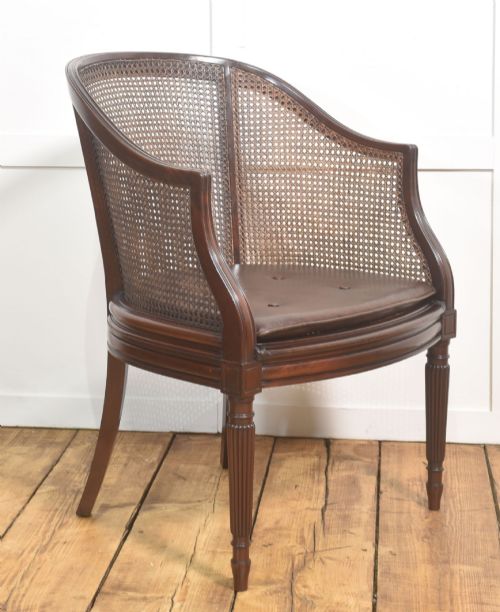
A curved back leather chair encompasses a range of seating forms designed to support the occupant through sweeping lines and supportive upholstery. When exploring a curved back leather chair, buyers encounter styles spanning the Georgian, Victorian, Edwardian and Art Deco periods, each bringing distinct proportions to the room.
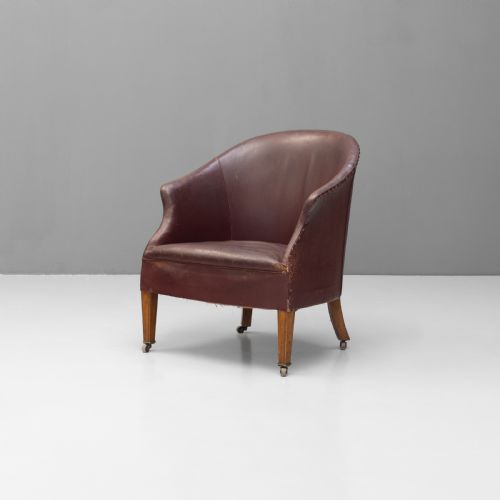
The most common incarnations on this page include mahogany desk chairs, low armchairs, and substantial library seating. Makers from the nineteenth and early twentieth centuries favoured curved timbers such as elm, walnut and mahogany to create enveloping tub and barrel forms.
Judging the quality of construction
Quality rests in the selection of timber and the integrity of the frame's joinery rather than surface ornamentation alone. Superior examples display dense, well-figured mahogany, walnut or burr elm, paired with substantial leather that retains its suppleness.
The refinement of the carving and the precision of the curved wooden elements distinguish higher-tier pieces from simpler workshops. Structural weight and the careful integration of brass fittings or cane work further separate standard utility chairs from exhibition-grade seating.
Several chairs feature revolving mechanisms that allow nineteenth-century clerks to pivot between desks with admirable Victorian efficiency.
Harry and Lou Epstein
The Curved Back Leather Chair Glossary
- Tub chair
- An armchair featuring a continuous curved back and arms that form a single low-slung enclosure. This form provides enveloping comfort and supports the occupant on all sides.
- Sabre leg
- A curved, outwardly tapering chair leg resembling a cavalry sword. It appears frequently on neoclassical and Regency dining chairs.
- Corner chair
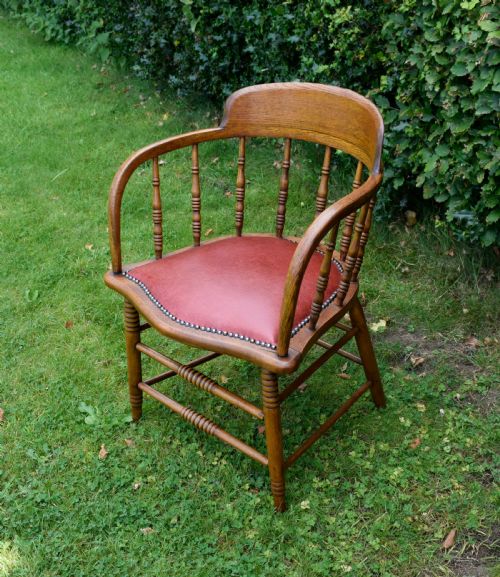
- A seat designed to fit into the corner of a room, featuring a diagonal orientation and a curved back rail supported by turned columns. These pieces often serve as desk or writing chairs.
- Burr elm
- A woody growth on an elm tree that yields timber with intricate, swirling grain patterns. Cabinet makers prize this material for decorative desk and table surfaces.
Curved Back Leather Chair: Frequently Asked Questions
What is a curved back leather chair used for?
These chairs serve primarily as functional seating in studies, offices, libraries and dining rooms. Their ergonomic curved backs provide substantial lumbar support for extended periods of reading or desk work.
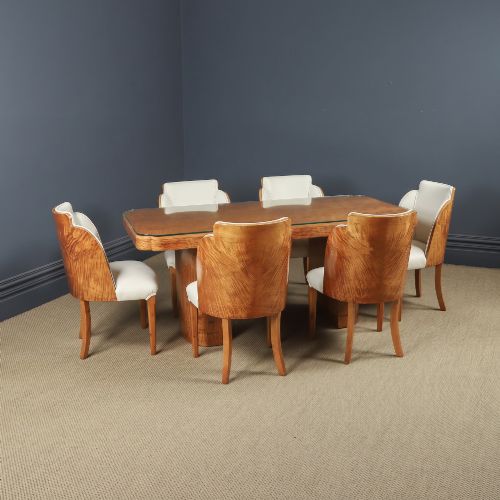
Dining suites featuring these chairs accommodate formal gatherings while introducing period character to a dining space. Smaller tub variants also suit bedroom dressing tables or quiet reading corners.
How do I identify the period of my chair?
Dating relies on examining the timber species, joinery techniques and stylistic motifs present in the frame. Georgian and Regency pieces display classical restraint and refined mahogany legs, whereas Victorian and Edwardian examples often feature heavier proportions and tub designs.
Art Deco items from the 1930s introduce streamlined curves, geometric walnut or maple veneers, and bold upholstered volumes. Comparing the structural framing against known period conventions clarifies the likely date of manufacture.
How do I care for the leather?
Leather upholstery benefits from regular dusting with a dry, soft cloth to prevent particulate accumulation in the grain. Conditioning products formulated specifically for antique leather help maintain suppleness and prevent cracking over time.
Keep the chair away from direct heat sources and prolonged sunlight, both of which dry out the hide and cause fading. Simple environmental stability preserves the original material integrity.
Are these chairs suitable for daily desk use?
Many of these pieces, particularly the nineteenth-century desk armchairs and revolving office chairs, were built specifically for workspaces. Their robust hardwood frames and supportive curved backs handle regular daily sitting.
When selecting a chair for heavy computer or desk work, consider the seat height and lumbar angle to ensure ergonomic compatibility. Solid mahogany and oak examples provide the necessary structural rigidity for routine use.