







Cubist Wall Art
Cubist wall art breaks down traditional perspective into geometric planes, offering collectors bold compositions from the early to mid-twentieth century.
Cubist Wall Art
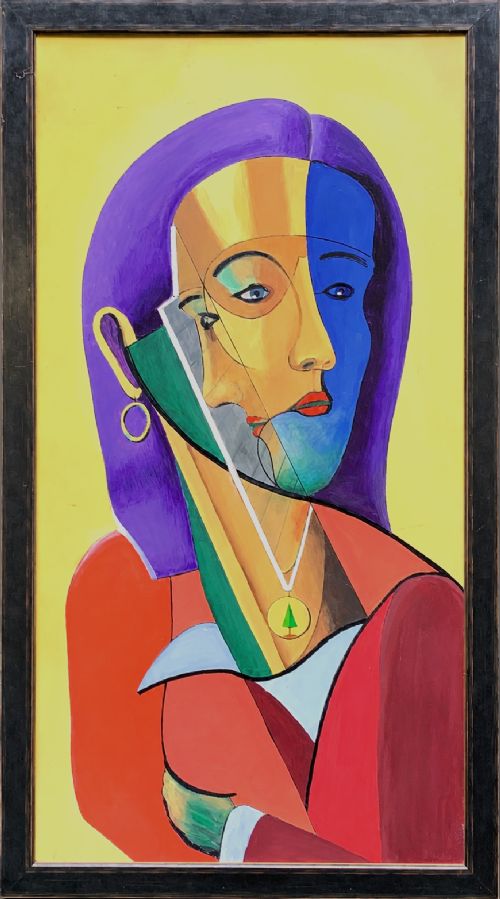
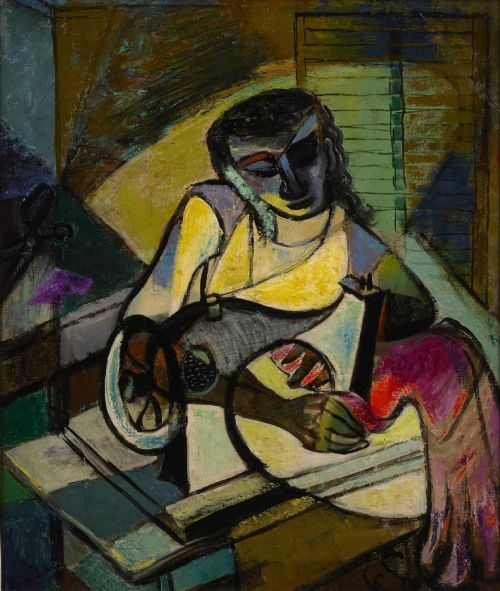
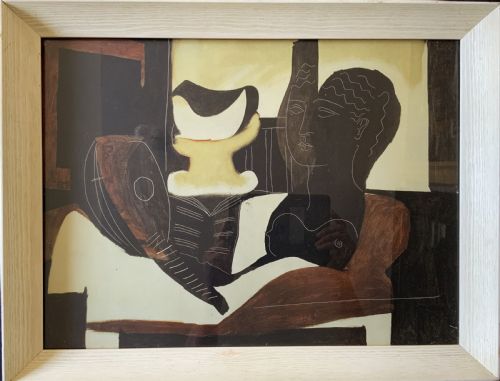
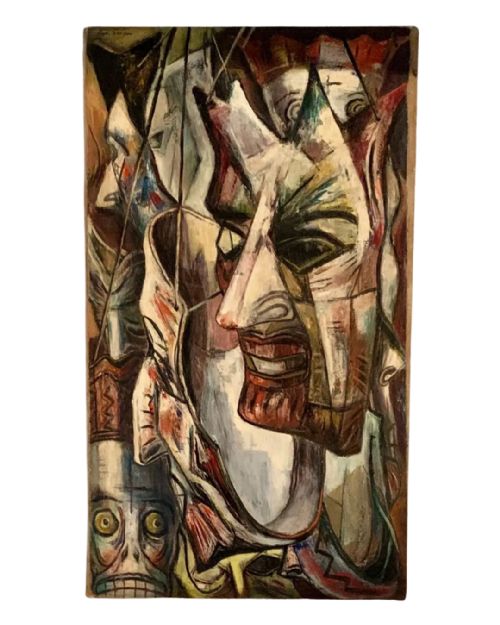
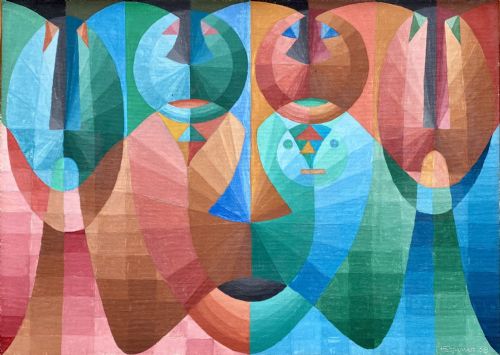
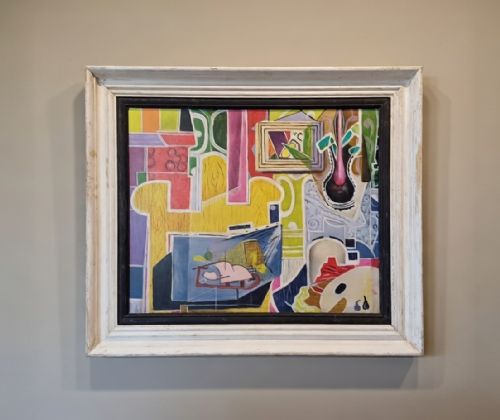
Cubist wall art encompasses paintings, prints, and wall hangings that adopt fragmented forms and multiple viewpoints. When you search for cubist wall art, you encounter everything from French modernist oils to mid-century abstract prints and watercolours.
The pieces on this page span several decades, with a strong representation of mid-century examples from the nineteen-fifties and sixties alongside earlier works from the nineteen-twenties and thirties. You will also find an occasional Victorian wall hanging sitting among these modernist compositions.
Subjects range from abstracted Mediterranean landscapes and domestic interiors to still lifes and figurative studies like faces. These works translate familiar scenes into stark geometries and vibrant palettes.
Materials and techniques
Canvas and paper serve as the primary supports for these works, carrying mediums such as oil paint, watercolour, and gouache. Artists also utilised wood, gesso, and glass to construct framed prints and painted panels.
Oil paint allows for rich, layered textures on canvas, particularly in mid-century compositions where brushwork defines the faceted planes. Gouache and watercolour on paper offer a more immediate, graphic application of pigment suited to sharper geometric outlines.
Cubist Wall Art Retail Price Guide 2026
Typical asking prices for cubist wall art among the pieces listed under this phrase on Sellingantiques today, from the lower quarter to the upper quarter. They describe what is for sale here now, not the wider market.
The selection includes pieces dated from the Victorian era through the nineteen-twenties, thirties, forties, fifties, and sixties.
Judging quality in modernist works
Quality rests on the surety of the composition and how effectively the artist manipulates space and form. Stronger pieces demonstrate a rigorous control of geometry, whereas lesser examples rely on formulaic arrangements without structural tension.
The handling of the medium further distinguishes the work, from the depth of oil on canvas to the precise application of gouache on paper. Condition of the underlying support and framing also plays a role in how well the piece survives.
Lena Gurr·Pablo Picasso·Gino Severini·Edward Carter Preston·Burr Singer
The Cubist Wall Art Glossary
- Cubism
- An early twentieth-century art movement that discarded traditional perspective in favour of fragmented geometric forms. Objects and spaces are broken down and analysed from multiple viewpoints simultaneously.
- Gouache
- An opaque water-based paint that dries to a matte finish. It provides strong, flat areas of colour favoured in modernist works on paper.
- Gesso
- A plaster-like mixture applied to surfaces to prepare them for painting. It creates a smooth, rigid ground for oil or tempera.
- Op art
- A style of visual art that uses optical illusions and geometric patterns. These compositions create a sense of movement or vibration on the flat surface.
Cubist Wall Art: Frequently Asked Questions
How do I identify cubist wall art?
Look for the breakdown of subjects into geometric shapes, multiple viewpoints shown at once, and a flattened perspective.
The pieces range from oil paintings on canvas to watercolours and prints on paper, spanning the nineteen-twenties through to the nineteen-sixties.
Where should I hang a large oil painting?
These works need wall space that allows the bold geometry and colour to breathe without competing with surrounding decor.
Ensure the wall is away from direct sunlight to protect canvas and paper supports from fading over time.
What is the difference between an oil painting and a print?
Original oil paintings feature textured brushwork and built-up layers of pigment directly on canvas or board. Prints offer a reproduction of a composition, sometimes produced in galleries during the mid-century period.
How do I care for works on paper?
Keep watercolours, gouache, and prints behind protective glass and out of humid environments to prevent buckling and foxing.
Framing with acid-free materials ensures the paper and pigments remain stable for years to come.