



Crystal Glass Tantalus Set
A crystal glass tantalus set guards your preferred spirits behind a locking frame, combining security with hospitality in one polished enclosure.
Crystal Glass Tantalus Set
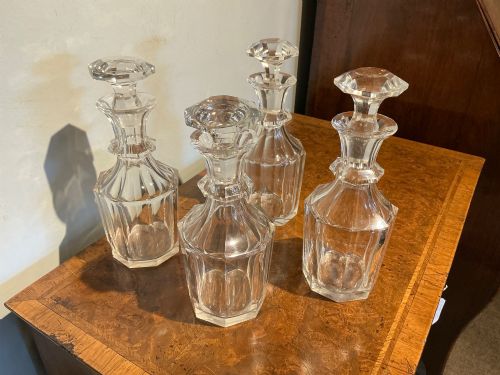
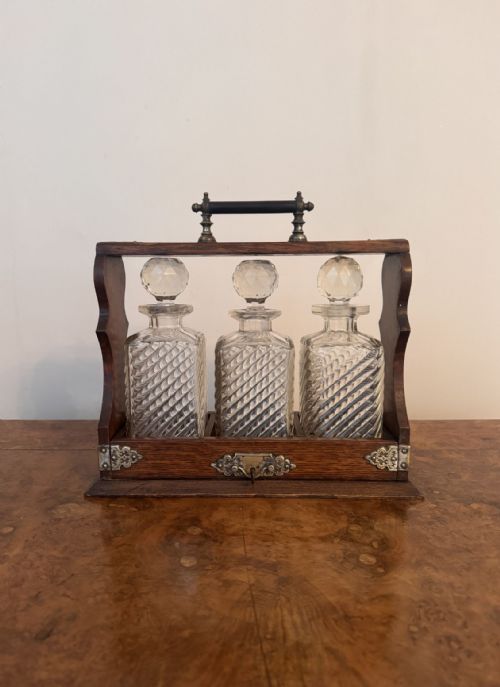
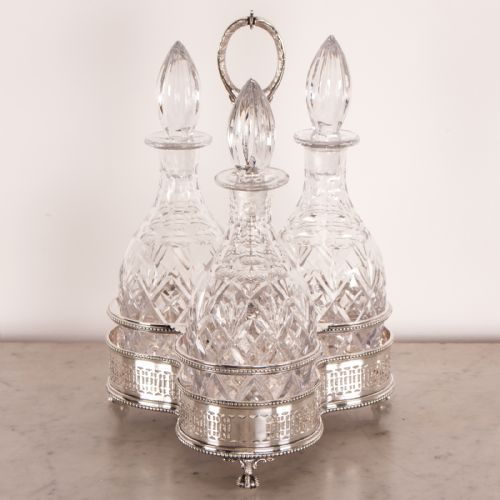
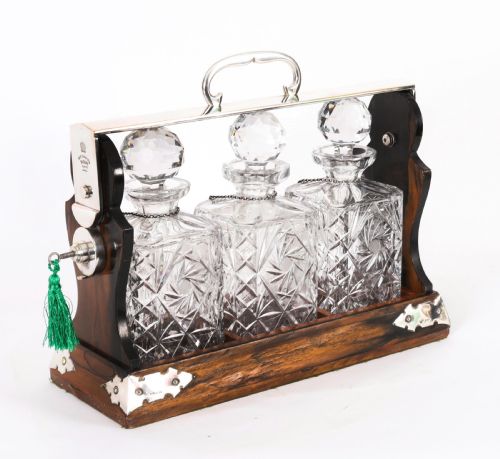
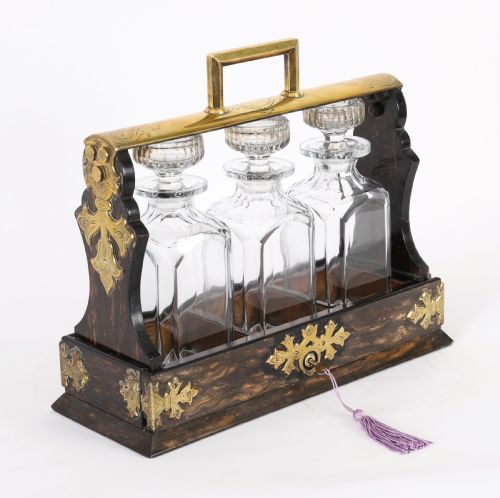
A crystal glass tantalus set comprises cut crystal decanters secured within a locking timber or metal frame, designed during the Victorian and Edwardian periods to restrict access to household spirits. The most frequent examples on this page are three-bottle setups housed in oak, coromandel, or mahogany frames fitted with silver-plated or brass mountings.
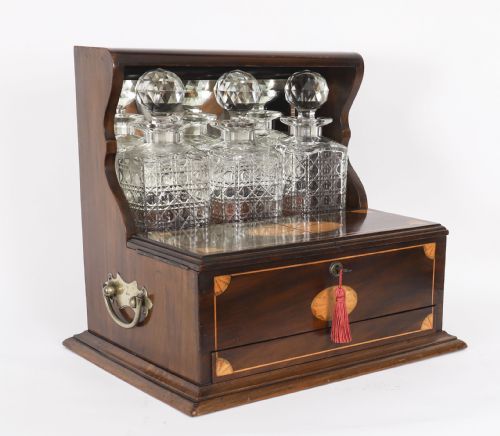
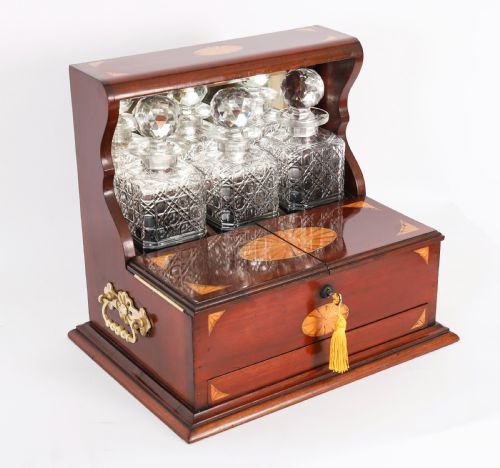
Many variants double as games compendiums or liqueur sets, incorporating compartments for cards, counters, or smaller glasses alongside the primary decanters. These pieces originate predominantly from late nineteenth-century English workshops, though French liqueur boxes and later Art Deco chrome examples also appear.
Materials and Technique
The frames rely on dense cabinet timbers such as oak, walnut, and coromandel, frequently enhanced with marquetry inlay or satinwood banding. Metal components combine cast brass or silver plating with complex locking mechanisms that engage the necks of the decanters.
Vessels are formed from heavy cut crystal or glass, often shaped into square decanters or cylindrical barrels. Skilled artisans cut geometric patterns into the glass blanks to refract light and obscure the level of the liquid within.
Listings span periods from the 1850s through the 1930s, featuring materials such as oak, coromandel, cut crystal, and silver plate.
Craftsmanship and Mechanism
Distinctions in quality rest upon the complexity of the locking mechanism and the precision of the cabinetwork. Superior pieces integrate smoothly operating spring-loaded bars that release all decanters simultaneously upon turning the key in the lock.
The weight and depth of the glass cutting dictate the standard of the decanters, alongside the quality of the silver plating on the handles, carrying frames, and nameplates. Finer examples combine fully functional locks with fitted interiors containing intact original glassware and games equipment.
Walker & Hall·Betjemann·Baccarat·Elkington·The Goldsmith Co.·Hukin and Heath·Philip Ashberry·Jacques Adnet
The Crystal Glass Tantalus Set Glossary
- Tantalus
- A locking drink container that displays the decanters while preventing unpermitted pouring. The name derives from the mythological figure Tantalus, who was kept just out of reach of food and water.
- Cave a Liqueur
- A French liqueur box or tantalus counterpart. These fitted boxes typically house a set of small glasses and gilded decanters within an ormolu-mounted wooden case.
- Coromandel
- A dense, heavily figured East Asian timber utilised in high-end nineteenth-century cabinetmaking. Its deep brown colour and dark striations make it particularly sought after for luxury tantalus frames.
- Silver Plate
- A layer of silver fused to a base metal foundation such as copper or nickel brass. This technique provided the gleam of solid silver for structural mounts and handles at a lower production cost.
- Games Compendium
- A multi-functional box incorporating a tantalus alongside compartments for playing cards, dice, and gaming counters. These multi-use items served as complete after-dinner entertainment centres.
Crystal Glass Tantalus Set: Frequently Asked Questions
How does a crystal glass tantalus set work?
A metal retaining bar locks across the stoppers of the decanters, preventing them from being lifted from the frame until the key is turned. This mechanism secures the contents from domestic staff or uninvited guests while displaying the bottles.
Unlocking the bar allows the retaining arm to swing or slide clear, releasing the decanters for pouring after dinner.
What is the difference between a tantalus and a liqueur cave?
A tantalus typically exposes the decanters upright within an open metal and wood framework secured by a locking handle. The bottles remain visible on the sideboard at all times.
A liqueur cave is a closed box with hinged doors or lids that completely enclose the decanters and glasses when locked. These French-origin boxes often feature intricate marquetry and internal ormolu stands.
Are keys usually included with these sets?
Many surviving pieces retain their original working keys, though replacement keys are frequently fitted by specialists due to the age of the mechanisms. The presence of a functioning original lock and key adds notable authenticity to the piece.
Collectors should verify whether the locking mechanism operates smoothly with the key provided before purchase.
How do I care for the wood and metal?
Timber frames benefit from occasional application of quality beeswax to nourish the grain and protect the polish. Avoid excessive moisture on both the wood and the silver-plated mounts.
Silver-plated components should be polished gently with a soft cloth designed for plated items to prevent wearing away the thin silver layer over the base metal.