
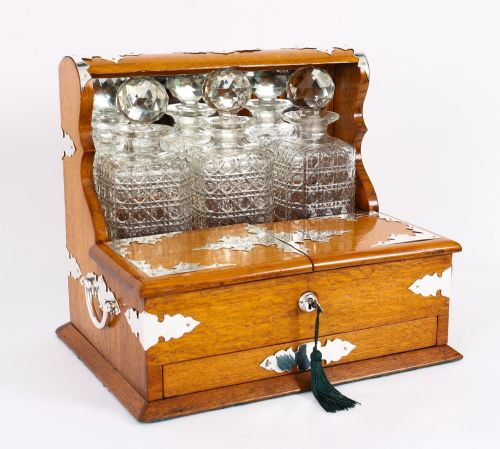
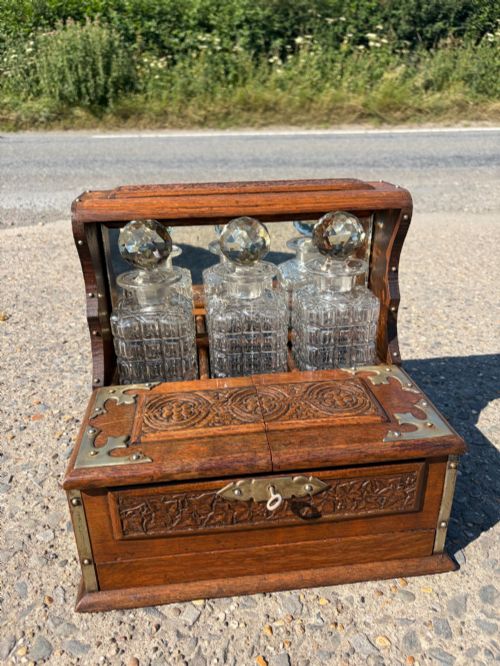
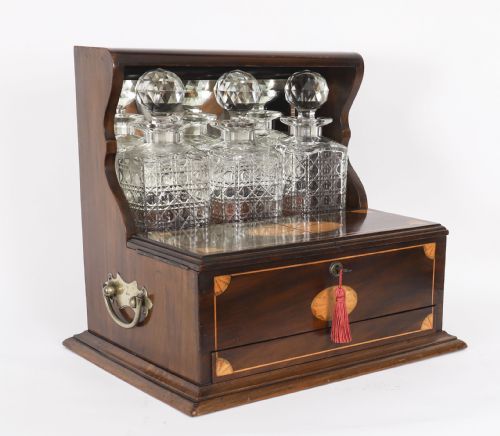
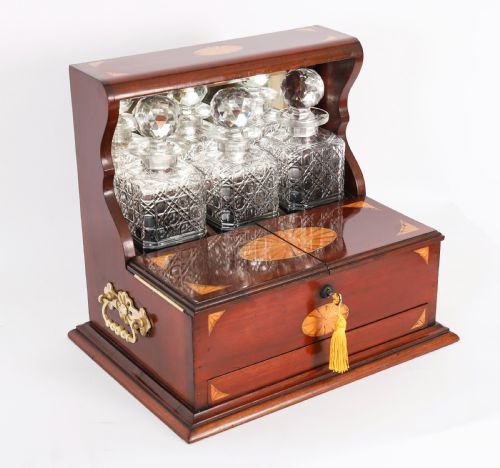


Cut Glass Decanter Chest
These cut glass decanter chest pieces, taking the form of tantalus and games boxes, secure and display your spirits with period elegance.
Cut Glass Decanter Chest
A cut glass decanter chest encompasses tantalus sets, decanter boxes, and liquor caskets designed to house glass vessels securely. When you search for a cut glass decanter chest, you encounter fitted wooden enclosures that combine barware storage with games compartments.
The pieces on this page emerge predominantly from the Victorian and Edwardian eras, spanning the nineteenth century into the nineteen-thirties. You will frequently find oak and mahogany constructions housing three cut crystal or cut glass bottles.
Certain examples incorporate brass mounts, mirror panels, and marquetry stringing alongside folding playing card surfaces. These multi-functional chest forms reflect the social habits of nineteenth-century drawing rooms and smoking dens.
Materials and construction methods
Cabinetmakers utilised hardwoods such as oak, mahogany, satin wood, and coromandel to build the structural boxes, often enhancing the surfaces with marquetry inlay. Brass hardware provides both structural reinforcement and locking mechanisms for the drop-front and lifting-lid designs.
The interior fitments require precise joinery to cradle cut glass and cut crystal decanters safely during movement. Glass components display deep wheel-cut facets that catch the light when housed within the polished wooden enclosures.
Distinguishing quality in decanter chests
The refinement of the cabinetwork dictates the distinction between standard boxes and superior compendiums. Finely figured timbers, intricate marquetry stringing, and heavy brass mounts signal elevated craftsmanship.
The integrity of the interior mechanism determines functional success, particularly in tantalus frames where locking bars secure the decanters. Complete sets retaining matching cut crystal bottles and intact games equipment carry greater architectural and decorative coherence.
The Cut Glass Decanter Chest Glossary
- Tantalus
- A locking security frame that holds decanters by their necks to prevent unauthorized pouring while still displaying the contents. The locking bar must be unlocked with a key before any bottle can be removed.
- Cave a liqueur
- A French fitted liquor chest, often containing decanters and cordial glasses resting on a gilded or mirrored interior platform. These portable cellars frequently feature ormolu mounts and exotic veneer surfaces.
- Compendium
- A multi-purpose box that combines a spirit service with compartments for playing cards, chips, and games. These pieces demonstrate the Victorian appetite for multifunctional drawing-room furniture.
- Marquetry
- Decorative woodwork where thin pieces of veneer are fitted together to form geometric or floral patterns on the box exterior. Craftsmen used contrasting timbers to create visual depth across the lid and front panels.
- Coromandel
- A dense, dark East Indian cabinet wood with contrasting light brown streaks, utilised for high-end Victorian decorative boxes. Its rich grain provides a striking background for brass mounts.
Cut Glass Decanter Chest: Frequently Asked Questions
How do tantalus locks work?
A metal bar engages with the stoppers of the decanters, preventing them from being lifted straight up out of their compartments. Turning a key in the integral lock swings or raises the bar to free the bottles.
Original keys are often missing due to the passage of time, though many locking mechanisms can be operated or replaced by specialist locksmiths.
What fits inside these chests?
Most interiors are partitioned to hold cut crystal decanters alongside spaces for tumblers, cordials, or playing card decks. Some configurations incorporate removable trays to access hidden compartments underneath.
Buyers should examine the internal layout to determine whether the vessel count matches the original design of the box.
Where were these boxes used?
Victorian and Edwardian hosts placed these chests in smoking rooms, libraries, and formal dining parlours to dispense after-dinner drinks. They served as both functional hospitality stations and decorative conversation pieces.
The locking mechanism allowed homeowners to secure expensive spirits from domestic staff while entertaining guests.
How do I care for the wood?
Maintain finished timbers with microcrystalline wax and avoid placing pieces near direct heat sources or strong sunlight. Gentle dusting preserves the polished patina of nineteenth-century oak and mahogany.
Inspect brass hardware periodically to ensure mounting screws remain secure without straining the surrounding wood.
How are periods identified?
Stylistic markers such as heavy brass mounts, satin wood inlay, and specific locking patents help narrow down the production era. Victorian pieces often display robust proportions, whereas Edwardian examples lean towards lighter woods and refined stringing.
Construction techniques like dovetailing and the style of the glass cutting offer further clues to the decade of origin.