
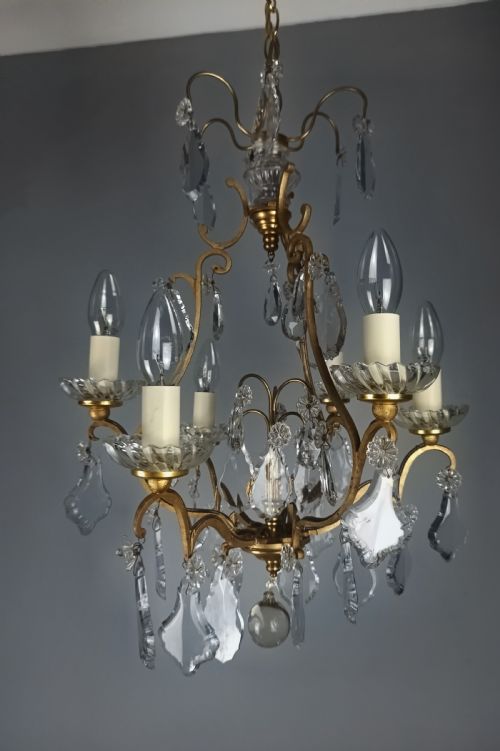
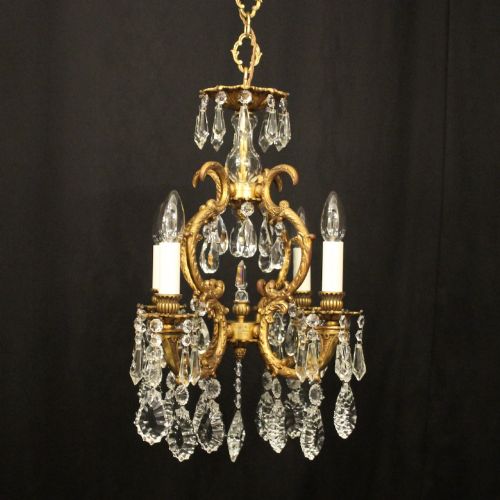
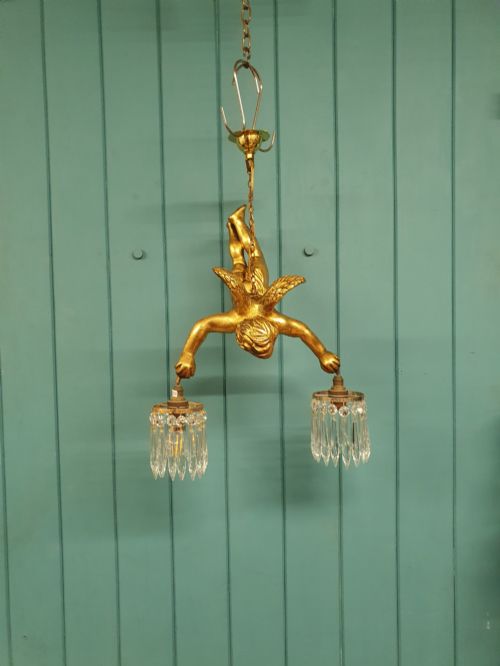
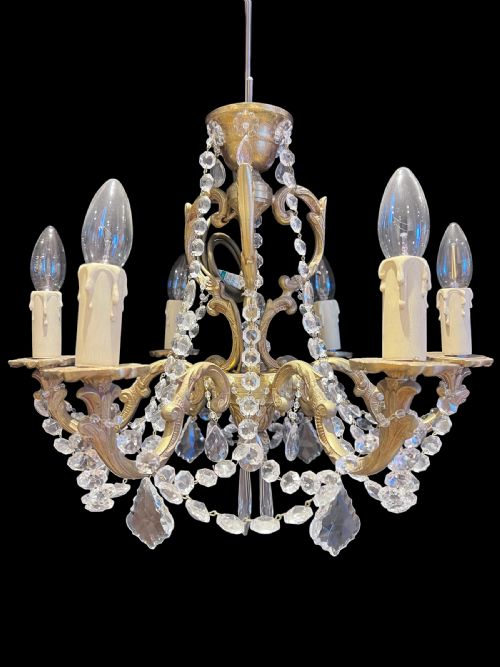

Crystal Glass Pendant Light
A crystal glass pendant light brings brilliant illumination and period character to a room through cut glass and polished metal.
Crystal Glass Pendant Light
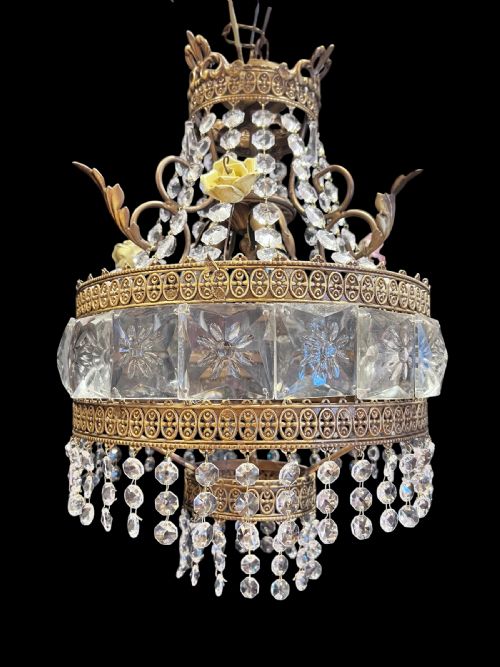
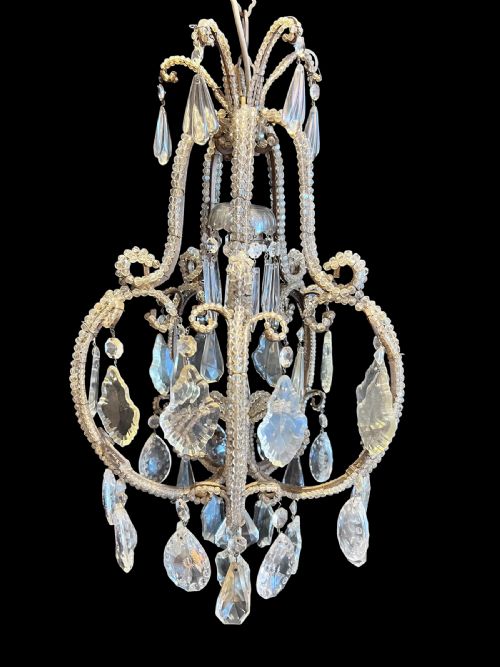
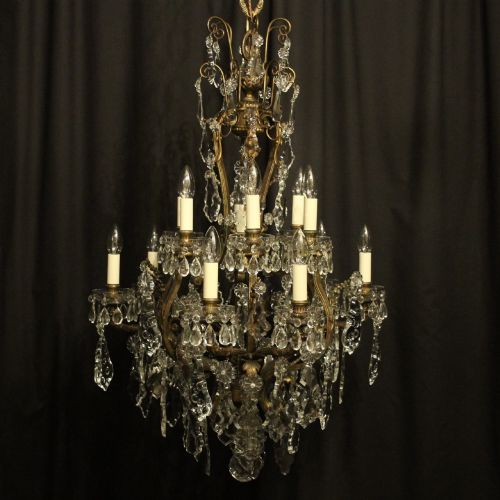
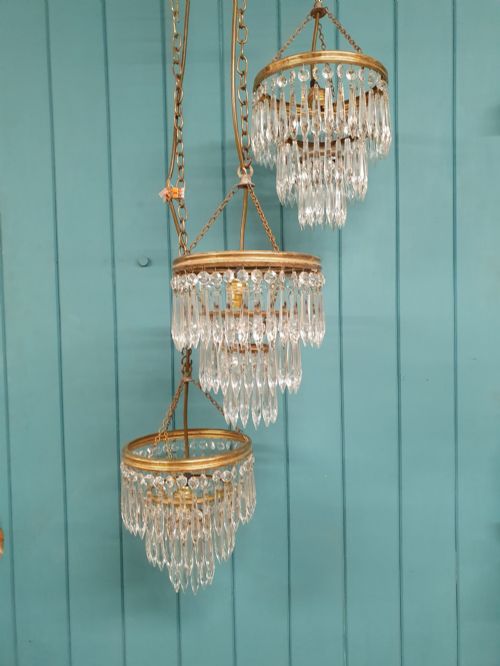
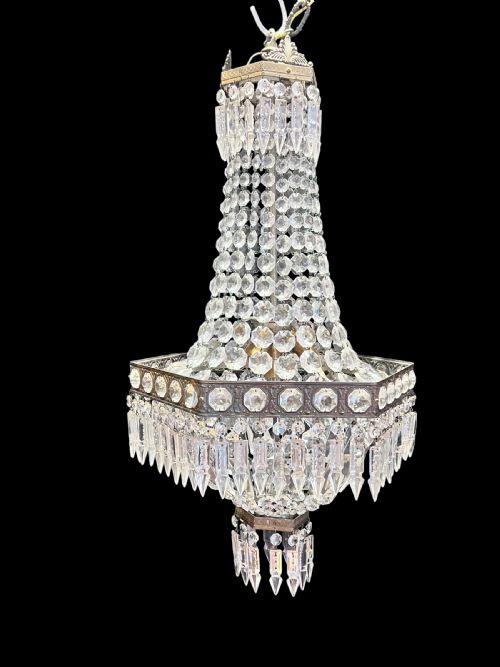
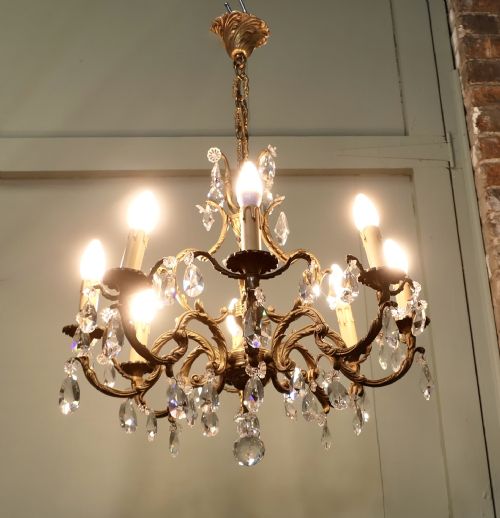
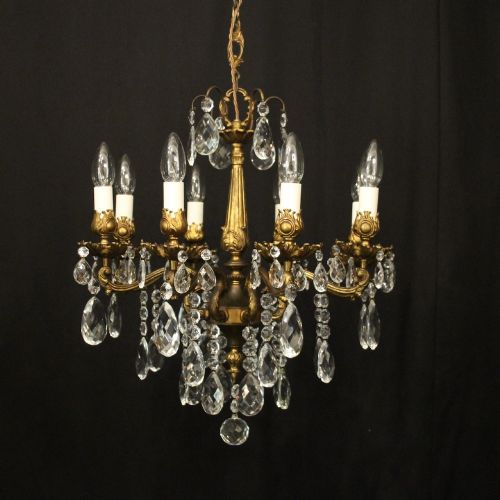
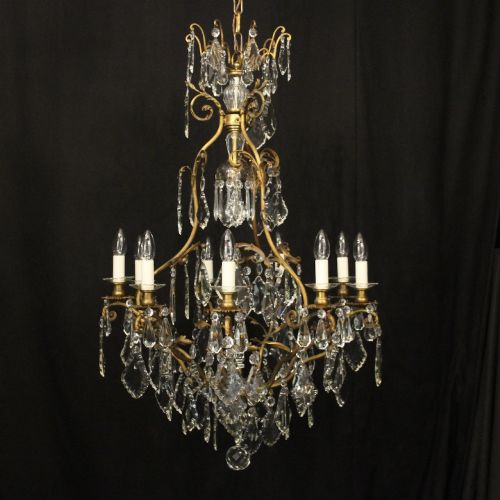
A crystal glass pendant light covers hanging ceiling fittings that distribute light through cut glass, crystal, and brass or bronze frameworks. These fixtures originate primarily from the Edwardian era and the early twentieth century, spanning earlier nineteenth century examples as well.
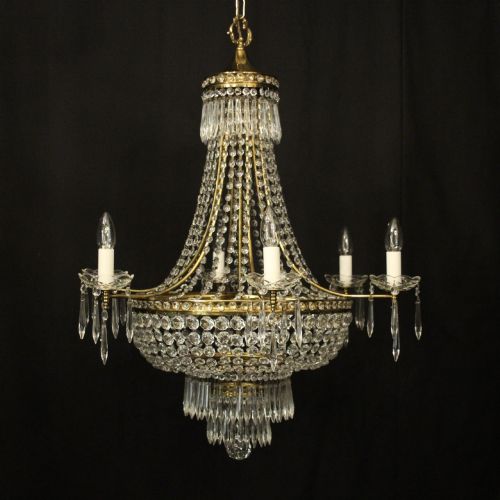
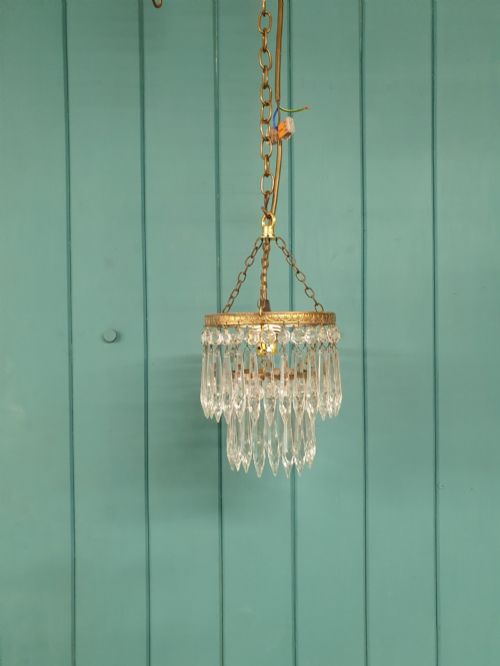
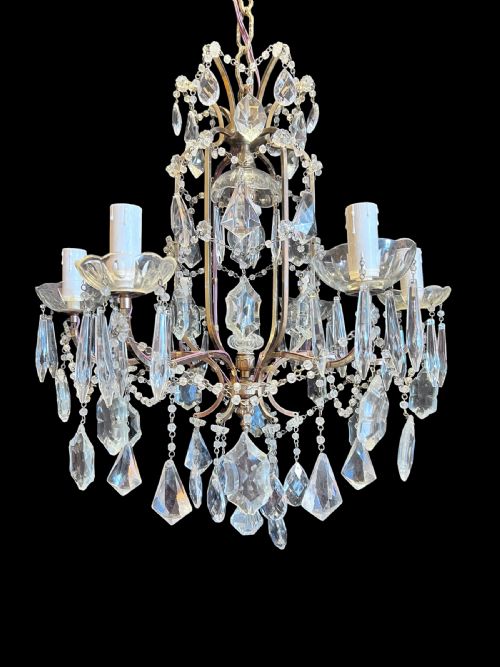
The selection includes single pendant ceiling lights equipped with decorated brass galleries, alongside multi-armed chandeliers featuring tent and waterfall configurations, beadings, and crystal lustres. French and Italian designs dominate the selection, bringing styles such as Empire, Rococo Revival, and Louis Revival into domestic spaces.
Buyers will encounter smaller dome and spike chandeliers measuring a few inches alongside larger ballroom pieces carrying multiple lights. Brass, gilt metal, and bronze frames support the glass elements, which range from simple acorn plafonniers to elaborate prismatic drops.
Materials and construction
Makers constructed the metal frameworks of these lights using cast brass, gilt bronze, and spun or cast metal, applying gilt finishes to enhance the reflective quality of the fittings. Original brass galleries secure the glass bodies, often retaining registration marks from the period of manufacture.
The glass components rely on crystal and cut glass, shaped into prisms, beads, coffin drops, and lustres that refract light across the room. Artisans wired these pendants to accommodate internal electrical fittings, sometimes retaining their original galleries and suspension chains.
Listings feature periods from the nineteenth century through to the 1930s, encompassing Edwardian styles alongside French Empire and Rococo revivals.
Distinctions in quality
Quality depends on the depth and crispness of the glass cutting, where sharper facets produce superior light refraction compared to moulded glass alternatives. The weight and finish of the metal mountings, from heavy cast bronze to lighter brass galleries, signal the standard of manufacture.
The integrity of the hanging configuration, including the completeness of matching crystal lustres, beads, and prisms, separates standard domestic pieces from grander salon fixtures. Superior examples maintain intact original metalwork and harmonised glass drops without mismatched replacements.
The Crystal Glass Pendant Light Glossary
- Plafonnier
- A ceiling light fitted flush or close to the ceiling rather than hanging on a long drop. These often feature bowl-shaped cut glass shades.
- Lustre
- A cut glass pendant drop hung from the arms or framework of a light fixture to catch and refract illumination. They appear in various shapes including spears, beads, and teardrops.
- Gallery
- The metal collar or rim at the top of a shade that holds it in place beneath the ceiling fixing. Original galleries frequently bear manufacturer registration marks.
- Tent and waterfall
- A chandelier style featuring an upper conical section of strung glass beads leading down to a cascading arrangement of crystals. This configuration creates a dense curtain of reflective glass.
- Spike chandelier
- A compact hanging light featuring a central glass spike surrounded by metal arms and crystal drops. These smaller fixtures suit tighter spaces or hallways.
Crystal Glass Pendant Light: Frequently Asked Questions
How do I hang a heavy crystal pendant?
These ceiling lights require secure fixing to a ceiling joist or a suitable metal hook capable of supporting the combined weight of the metal frame and glass components. Professional installation ensures the electrical supply connects safely to the suspension chain.
Weight distribution matters because larger brass and bronze chandeliers exert considerable downward pull. Using appropriate fixings prevents structural strain on the ceiling.
Can I replace missing crystal drops?
Matching replacement lustres and prisms requires careful attention to the cut pattern, glass clarity, and attachment method of the existing drops. Antique dealers and specialist suppliers provide period-appropriate glass elements to complete incomplete fixtures.
Matching the drop size and facet style maintains the visual balance of the chandelier. Even small differences in glass tint become noticeable once the light is switched on.
How do I clean an antique chandelier?
Cleaning involves wiping individual glass drops with a mild cleaning solution while they remain on the frame, or removing them entirely for washing in warm soapy water. Metal components require gentle dusting rather than abrasive polishing to preserve patination.
Support the fixture from underneath while cleaning to avoid straining the arms and wiring. Allowing the glass to dry naturally prevents lint transfer from cloths.
Are these lights compatible with modern wiring?
Many Edwardian and early twentieth century pendants arrive rewired for contemporary electrical standards, while others retain older setups requiring modern conversion. A qualified electrician can adapt the internal lampholders to accept standard modern bulbs.
Checking the wiring condition before installation ensures safety and compliance with current regulations. Modern LED bulbs generate less heat, which protects fragile vintage glass components.
How do I date a crystal ceiling light?
Dating relies on stylistic markers such as brass gallery designs, metal casting techniques, and the cut of the glass prisms. Edwardian and 1920s pieces often exhibit lighter brass frames, while nineteenth century examples display heavier gilt bronze casting.
Registration marks on metal galleries provide specific registration years for the hardware design. Comparing the drop shapes and frame configurations against documented periods clarifies the age.