
Beaded Crystal Chandelier
A beaded crystal chandelier catches light through hundreds of small strung drops, bringing warmth and sparkle to a room.
Beaded Crystal Chandelier
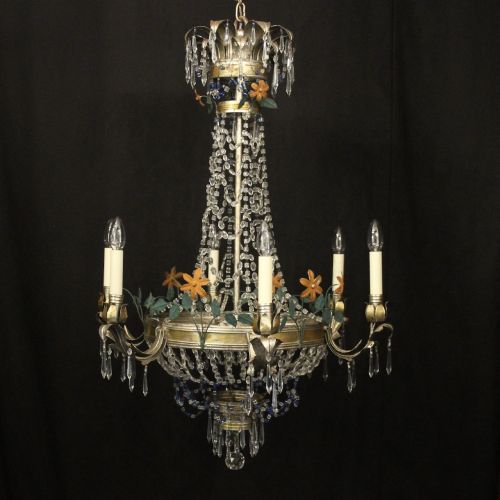
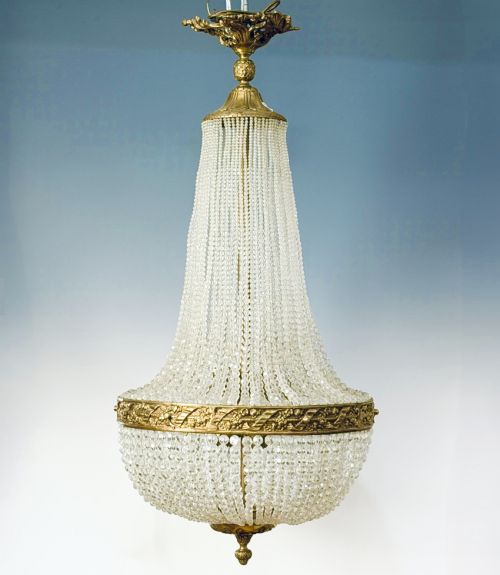
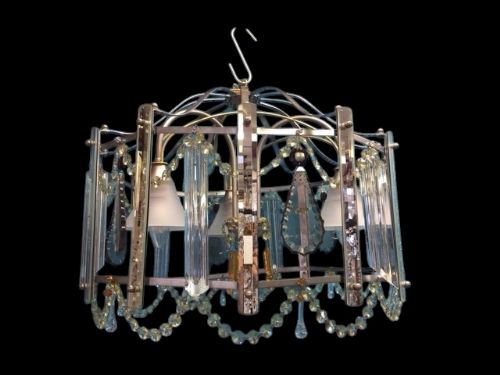
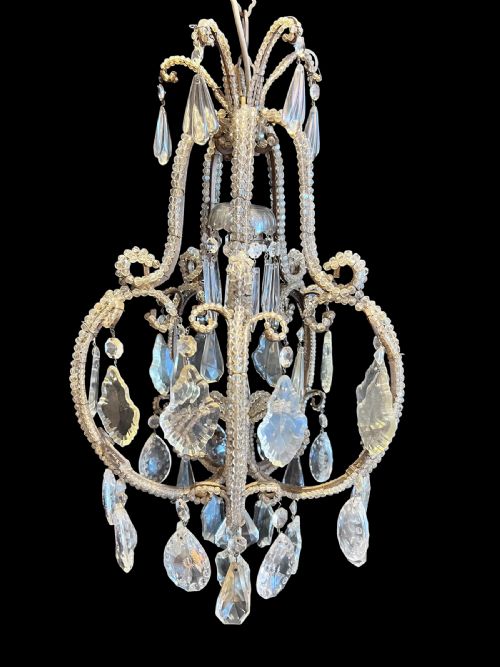
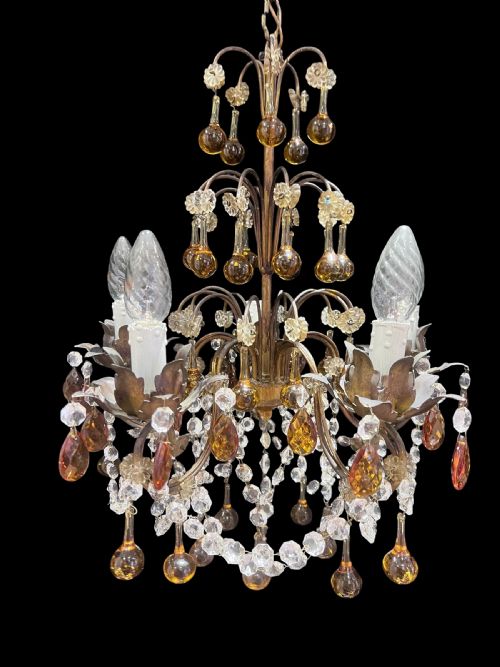
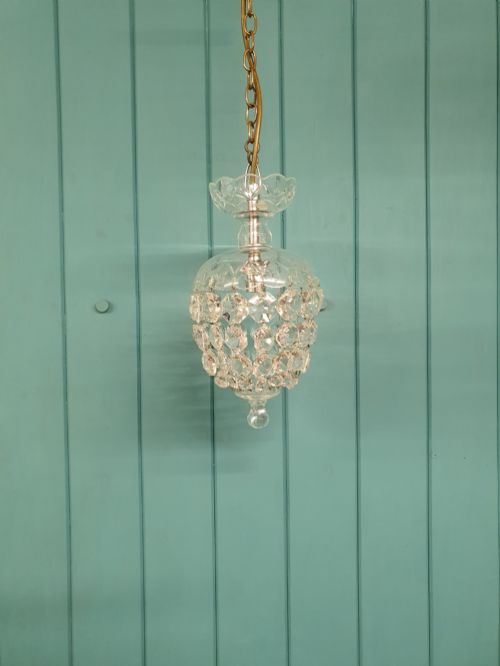
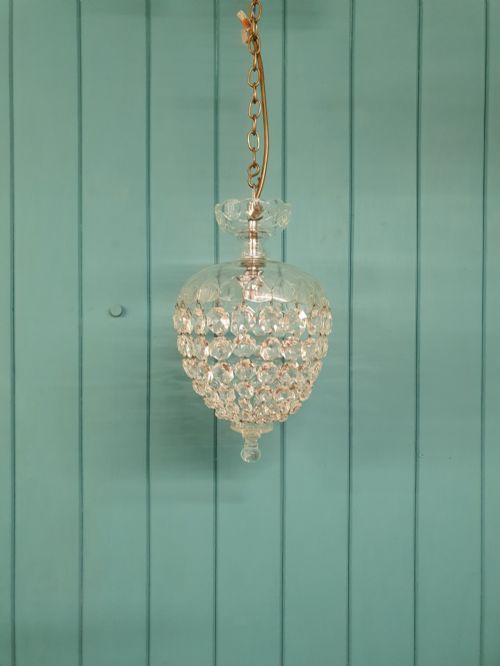
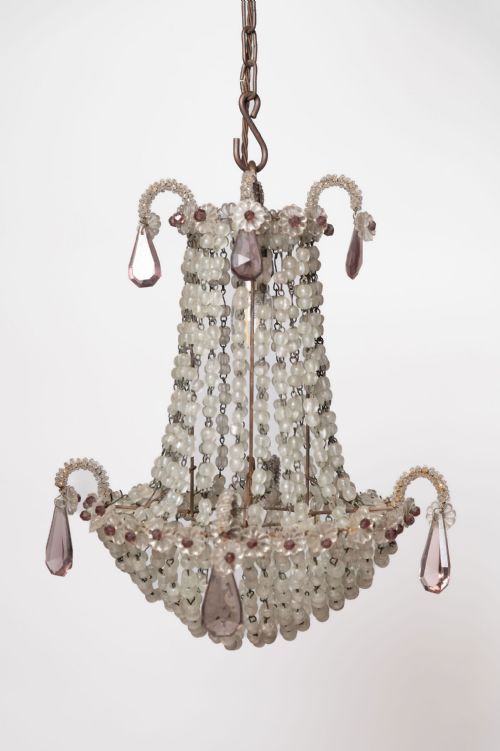
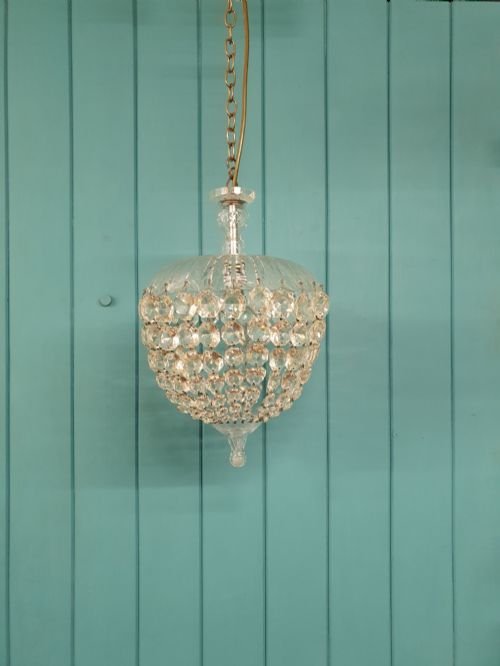
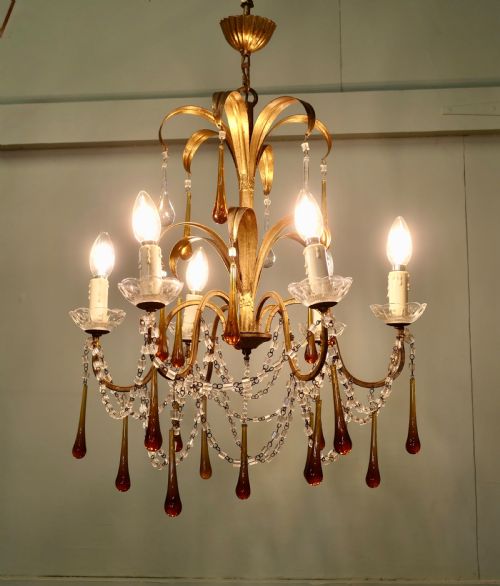
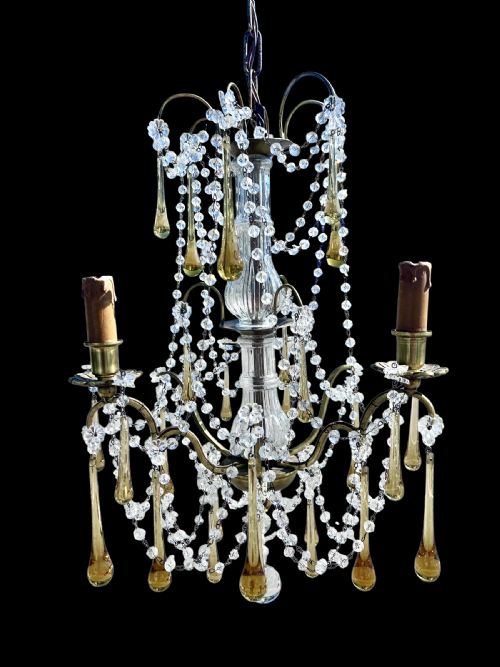
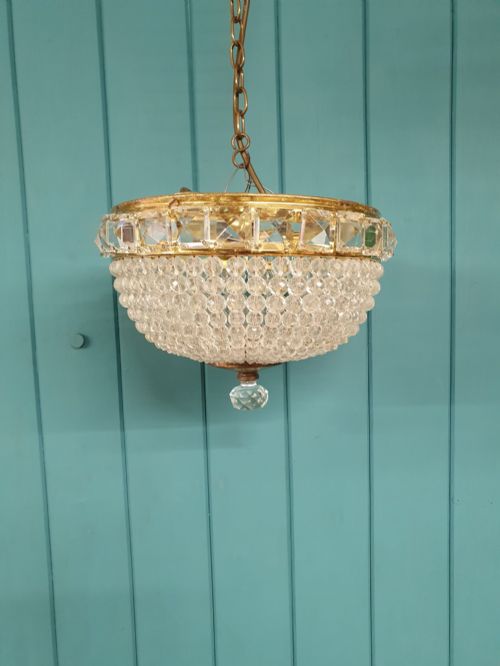
A beaded crystal chandelier is a ceiling light defined by strings of small glass beads that drape around a metal frame. When you search for a beaded crystal chandelier, you find hanging light fittings spanning from the nineteenth century through the Edwardian era and into the 1920s, 1930s, and 1960s. The selection on this page leans heavily into early twentieth-century Italian and French designs, alongside English basket forms and Edwardian dome tops.
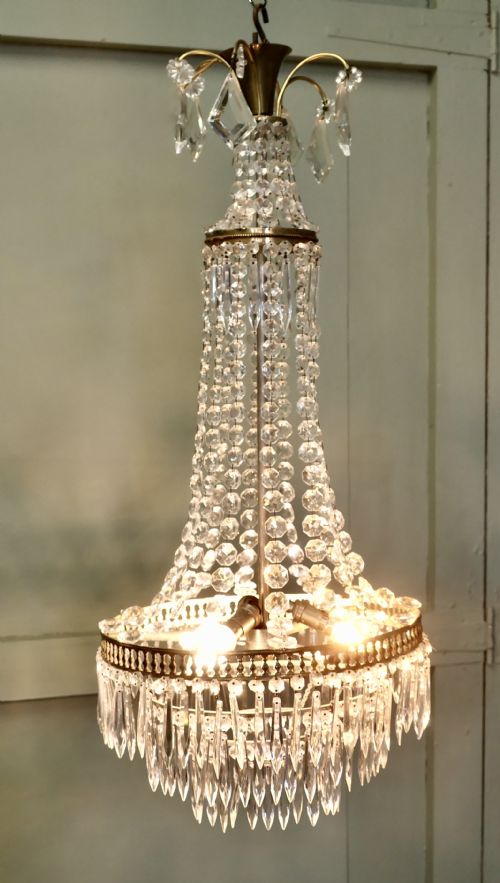
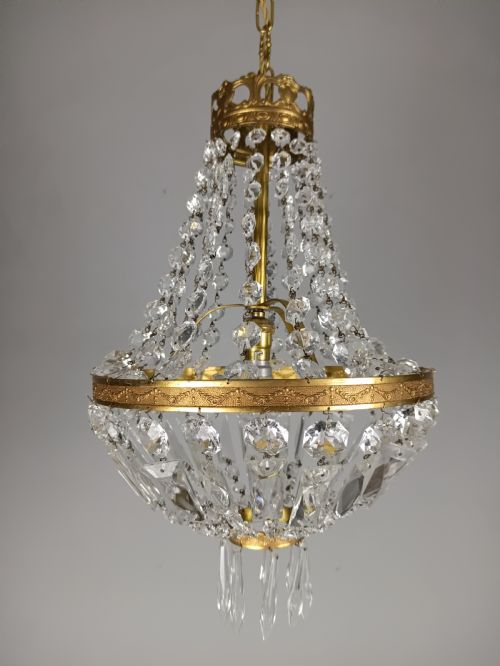
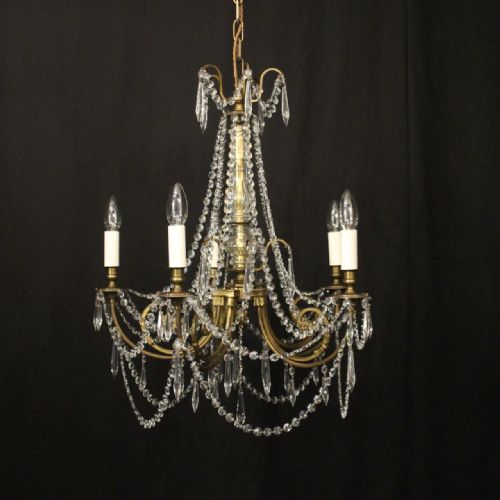
Italian examples often take the form of galleons, pods, or multi-light fixtures adorned with coloured crystals and gilt frames. French pieces tend towards the Empire style, featuring tent and waterfall configurations hung with amber or clear drops. Smaller bag chandeliers and dome top fixtures appear frequently, offering compact options for lower ceilings while maintaining the characteristic beadwork.
How they were made
The construction of these light fittings relies on a metal armature of brass, gilt metal, iron, or wire that supports the weight of the glass components. Workers wired individual glass and crystal beads into strands, which were then draped in precise patterns around frames such as baskets, bags, or tents. Cut glass drops, prisms, and teardrops hang from these beaded networks to refract light from the internal bulbs.
Frames received various surface treatments, including gilding, silver plating, or painted finishes like white and cobalt. The integration of brass and cut glass demanded careful hand assembly, particularly in complex forms like the Florentine multi-light fixtures and the detailed French Empire styles.
Listings feature periods from the nineteenth century through the Edwardian era, 1920, 1930, and up to 1960.
What varies in quality
Quality in these lighting fixtures rests on the clarity and cut of the glass components rather than sheer size alone. Finer pieces employ high-grade crystal that refracts light sharply, paired with substantial brass or gilt frames that hold their shape securely over decades of hanging. The intricacy of the bead wiring and the uniformity of the cut glass drops distinguish standard production from superior examples.
The integrity of the metalwork and the preservation of original surface finishes, such as period gilding or silver plating, mark the difference between well-maintained originals and heavily altered pieces. Balanced proportions in tent and waterfall configurations show the hand of a skilled maker who understood how weight and light distribution interact.
Wedgwood
The Beaded Crystal Chandelier Glossary
- Bag chandelier
- A light fitting shaped like a flat-bottomed bag or pouch, formed from dense vertical strands of glass beads hanging from a circular metal band.
- Tent and waterfall
- A lighting configuration where beads form an upper conical tent shape that flows down into a wider, tiered waterfall of cascading crystals.
- Cut glass
- Glass shaped by cutting facets into the surface on a wheel, which increases the sparkle and light refraction of drops and prisms.
- Gilt metal
- Metal coated with a thin layer of gold leaf or gilt paint to give a decorative golden finish to the frame.
- Prism
- A geometric cut glass pendant designed to split light into spectral colours as it hangs from the chandelier arms or base.
Beaded Crystal Chandelier: Frequently Asked Questions
How do I clean a beaded crystal chandelier?
Cleaning requires a gentle hand and a specialised spray cleaner designed for glass and crystal lighting fixtures. You should spray the solution carefully while placing a towel underneath to catch drips, allowing the dirt to run off the beads without scrubbing.
Avoid submerging wired frames or harsh rubbing that might damage old metal plating or weaken the stringing of the beads. Regular dusting with a soft feather duster keeps the crystal clear between deeper cleans.
Are these chandeliers difficult to wire for modern ceilings?
Most antique light fittings require rewiring to meet current electrical standards before installation in a modern home. A qualified electrician can easily adapt the internal wiring while preserving the original sockets and exterior appearance.
Weight is often a greater consideration than wiring, as large Florentine or Empire fixtures require secure ceiling joists and appropriate fixings to support the combined mass of metal and glass.
How do I tell an Edwardian chandelier from a 1930s piece?
Edwardian fixtures often feature dome top designs and delicate brass frames that reflect earlier Victorian sensibilities with lighter proportions. They frequently incorporate subtle cut glass details and simpler basket forms.
Pieces from the 1930s tend to embrace cleaner lines, occasionally intersecting with Art Deco influences or more adventurous use of coloured crystals and structured bag shapes. Examining the mounting hardware and the style of the metalwork helps clarify the decade of production.
Where should I hang a small bag chandelier?
Small bag chandeliers work exceptionally well in cloakrooms, hallways, bedrooms, or above kitchen islands where ceiling height is limited. Their compact profile allows them to deliver significant sparkle without dominating a modest room.
Because they direct light downward through a flat or rounded base, they provide focused illumination while serving as a decorative focal point in more intimate spaces.