



Crystal Drops Candelabrum
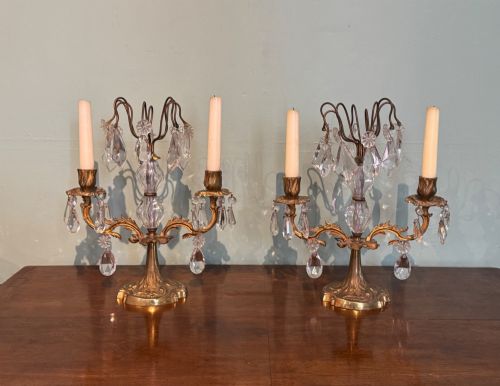
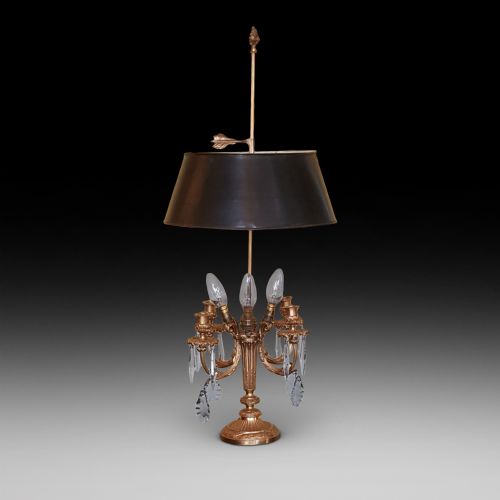
These crystal drops candelabrum selections bring heavy French and Italian metalwork paired with gleaming glass pendants into a room.
Crystal Drops Candelabrum
When you search for a crystal drops candelabrum, you encounter multi-armed lighting pieces designed for tabletop or wall placement. The pieces seen on this page span the nineteenth century through the early twentieth century, drawing on French and Italian origins.
You are most likely to meet two or three branch forms executed in brass, gilt-brass, or ormolu. These metal frameworks support hanging glass pendants that catch and reflect candlelight or electric illumination.
Materials and construction
The heavy frames combine cast brass, gilt bronze, and ormolu to provide structural stability for multiple branches. Artisans shaped these metals into scrolling arms and decorative mounts reflecting styles from Regency to Rococo Revival.
Cut glass and crystal drops dangle from the metal frameworks, attached by small wire loops. This combination of cast metal and faceted glass creates the distinctive sparkle associated with these lighting fixtures.
The listings span the 19th Century, Edwardian, and Regency periods, utilising brass, crystal, ormolu, and silver metal.
Assessing quality and execution
Quality rests in the crispness of the metal casting and the depth of the hand-cutting on the glass drops. Superior examples display sharply defined ornamentation on the bronze or brass alongside clear, heavy crystal pendants.
The weight of the metal components and the complexity of the arm configuration also distinguish finer items. Simpler single or twin light versions contrast with substantial multi-armed chandeliers and six-armed candelabras.
The Crystal Drops Candelabrum Glossary
- Ormolu
- Gilt bronze produced by applying a mercury and gold amalgam to a bronze object. This technique creates a durable, rich golden finish characteristic of fine antique metalwork.
- Lustre
- A candelabra or candlestick hung with cut glass pendants designed to reflect light. These decorative glass drops add brilliance to the metal base.
- Rococo Revival
- A nineteenth-century design style mimicking the ornate, asymmetrical scrolling curves of the eighteenth-century French movement. This aesthetic appears frequently in the cast metal frames of these pieces.
- Wall Sconce
- A light fixture fixed to a wall rather than resting on a table. Several examples in this category are designed specifically for wall mounting.
Crystal Drops Candelabrum: Frequently Asked Questions
How do I clean a crystal drops candelabrum?
Remove the glass drops individually and wash them gently in warm soapy water to restore their clarity. Wipe the metal frame carefully with a dry cloth, avoiding harsh chemical polishes that can damage gilt surfaces.
Take care when reattaching the glass pendants to ensure the wire loops remain secure. Regular dusting prevents grime buildup in the intricate cast metal crevices.
Were these pieces originally electrified?
Most pieces from the nineteenth century were designed strictly for wax candles. Conversion to electricity often occurred later during the twentieth century to suit modern domestic use.
Examine the wiring pathways and candle tubes to determine if alterations were made. Retaining original candle sockets adds interest for collectors of period lighting.
Where should I place a candelabra?
Tabletop versions suit dining surfaces, sideboards, or mantels where they serve as decorative focal points. Wall sconces require secure mounting studs to support the combined weight of metal and glass.
Position them away from heavy foot traffic to protect the dangling crystal drops from accidental knocks.
How can I tell a French piece from an Italian one?
French examples frequently exhibit Louis XVI style restraint or ornate Rococo Revival scrolling. Italian pieces, such as those from Genoa, often display distinct regional cast metal ornamentations.
Comparing the casting style and proportions helps identify the likely workshop origin.