
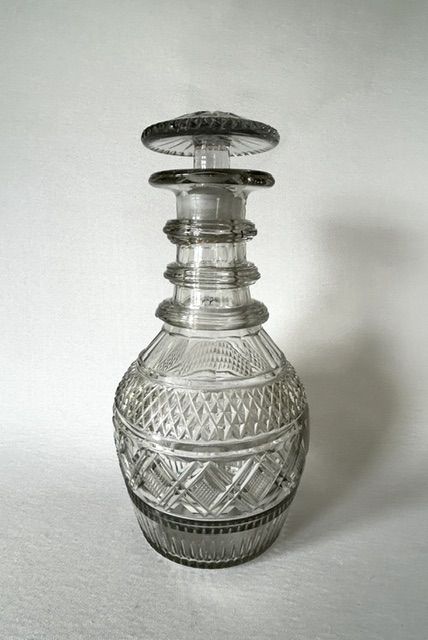
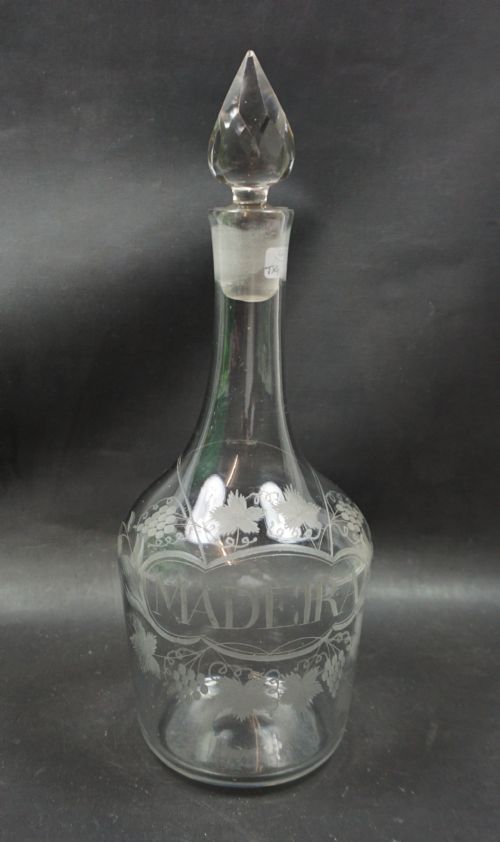

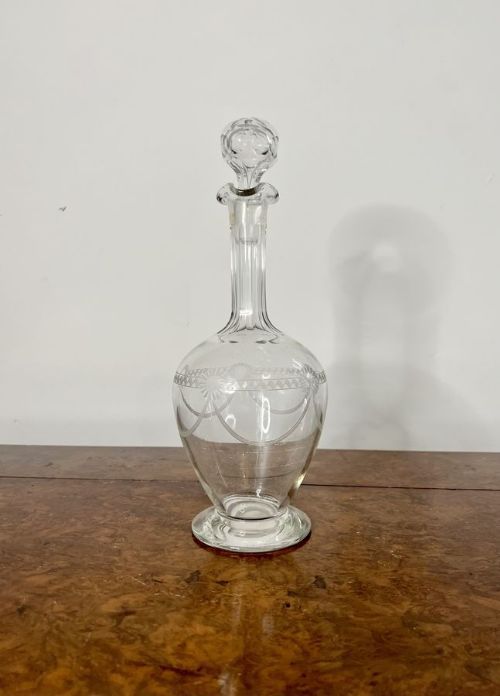


Crystal Decanter Stoppers
Crystal decanter stoppers complete these glassware items, and buyers search for replacement parts or period integrity.
Crystal Decanter Stoppers
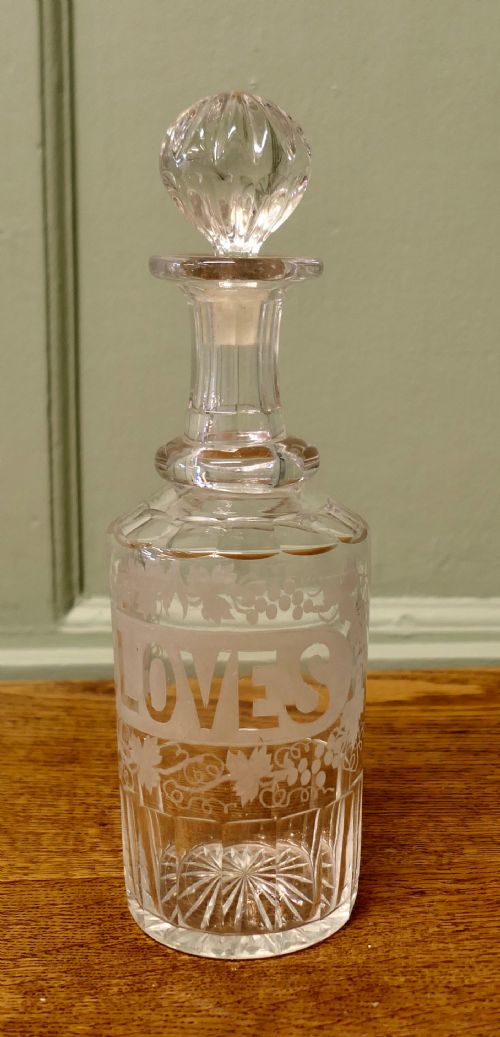
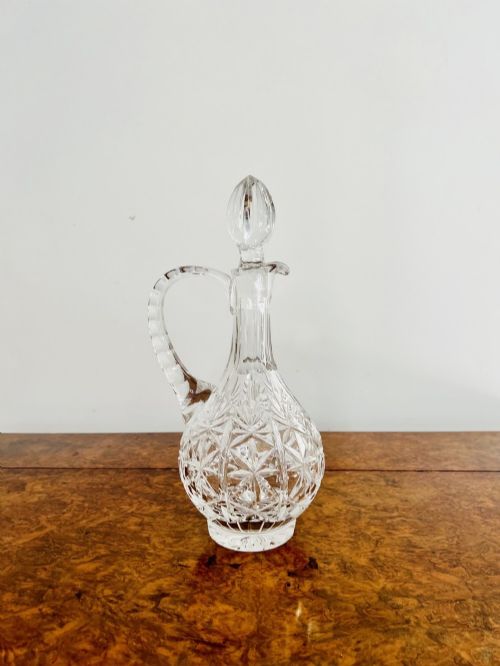
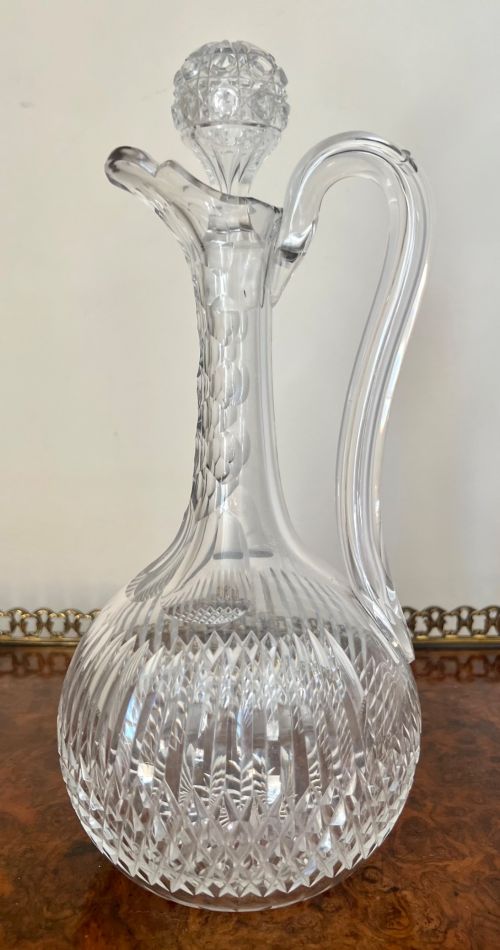
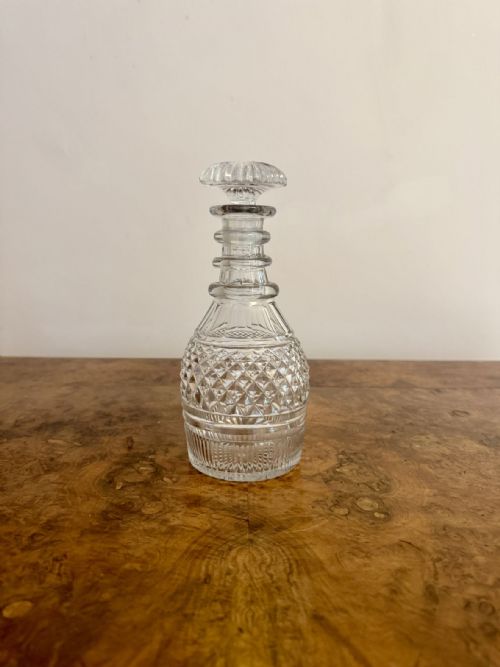
Crystal decanter stoppers represent small glass and crystal closures designed to fit the necks of antique bottles and jugs. When looking for crystal decanter stoppers, buyers encounter items originating from Georgian, Victorian, Edwardian, and Art Deco periods.
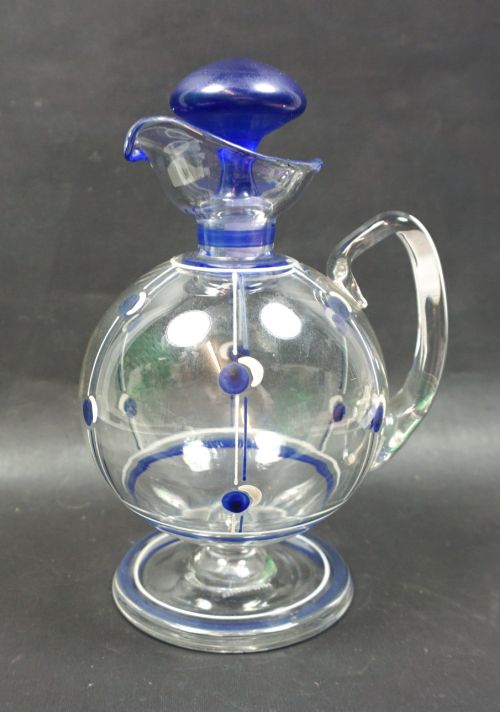
The inventory on this page ranges from cut glass examples to pieces featuring sterling silver collars and blue enamel decoration. Many items take the form of decanters, scent bottles, and wine jugs dating from the nineteenth and early twentieth centuries.
How they were made
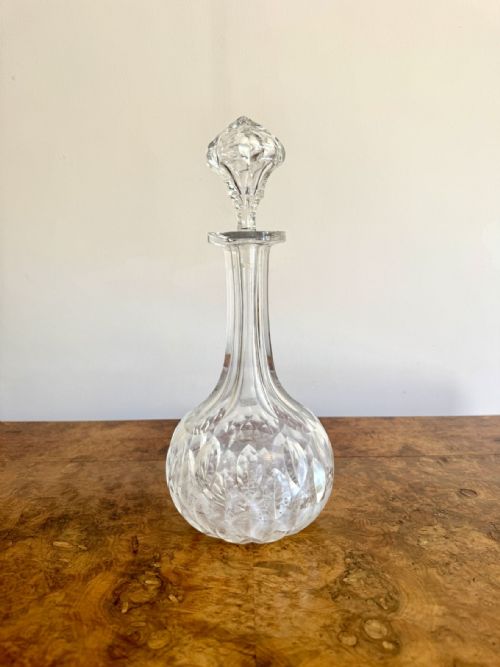
Makers utilised clear glass, lead crystal, and cut glass, often shaping pieces through blowing and heavy cutting techniques. Victorian and Edwardian workshops applied wheel cutting to achieve deep geometric patterns and faceted profiles.
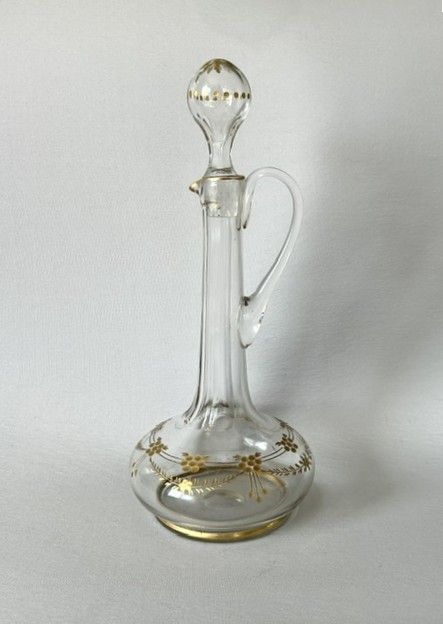
Certain examples incorporate sterling silver collars or mountings, while others display gilded highlights or ruby overlays. Bohemian and English pieces demonstrate precision moulding and hand polishing to create reflective surfaces.
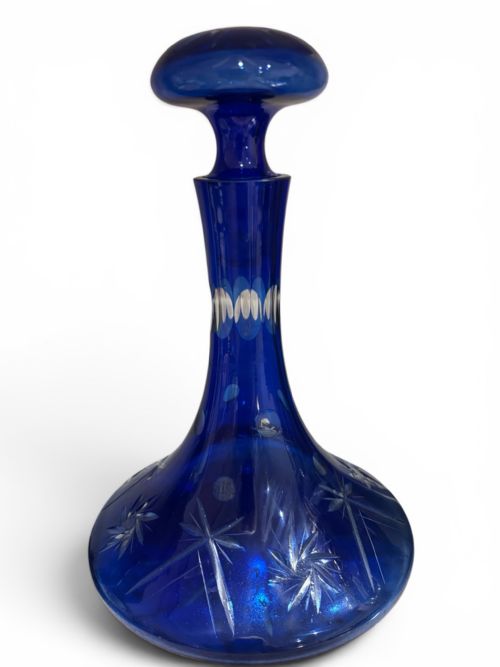
Ship's decanters possess wide bases designed to stay upright during rough seas.
What varies in quality
The standard of cutting and the clarity of the material separate standard examples from finer items. Crisp, deep facets and heavy lead crystal indicate superior craftsmanship compared to lighter, moulded glass.
The preservation of original collars, gilding, and matching stoppers influences the overall character of each piece. Finer examples show precise finishing around the rims and bases without distracting surface wear.
The Crystal Decanter Stoppers Glossary
- Lead crystal
- Glass containing a proportion of lead oxide, which increases weight, brilliance, and refractive index. This material allows for sharper cutting.
- Cut glass
- Glass decorated by holding it against a revolving abrasive wheel to carve patterns into the surface. It forms the primary decorative technique seen across Victorian and Edwardian pieces.
- Sterling silver collar
- A band of high-purity silver fitted around the neck of a bottle or jug. These mounts often bear hallmarks indicating the date and place of assay.
- Ruby overlay
- A layer of red glass fused over a clear glass base before cutting. The cutter removes parts of the red layer to reveal the clear glass beneath.
- Ship's decanter
- A decanter with a wide, stable base and a conical body designed to prevent tipping at sea. These forms date primarily from the Georgian and Regency eras.
Crystal Decanter Stoppers: Frequently Asked Questions
How do I date a stopper?
Dating relies on the manufacturing technique, the clarity of the glass, and the style of the cutting. Earlier pieces often display hand-cut facets and heavier lead content.
Matching the form of the stopper to the neck style of the decanter helps confirm the correct period.
Are sterling silver collars marked?
Many silver-collared items feature hallmarks stamped directly onto the metal. These marks indicate the assay office, the maker's mark, and the year of testing.
English pieces from the Victorian and Edwardian eras commonly display these stamps.
What is Bohemian glass?
Bohemian glass originates from the historical region of Bohemia, now part of the Czech Republic. Makers there became renowned for coloured crystal and intricate gilding.
Pieces from this region often feature cobalt or ruby tones combined with heavy cutting.
How should I clean crystal?
Cleaning requires warm water and mild detergent rather than harsh scrubbing. Avoiding sudden temperature changes prevents thermal shock to older glass.
Soft cloths help dry the surface without leaving lint behind on cut facets.