

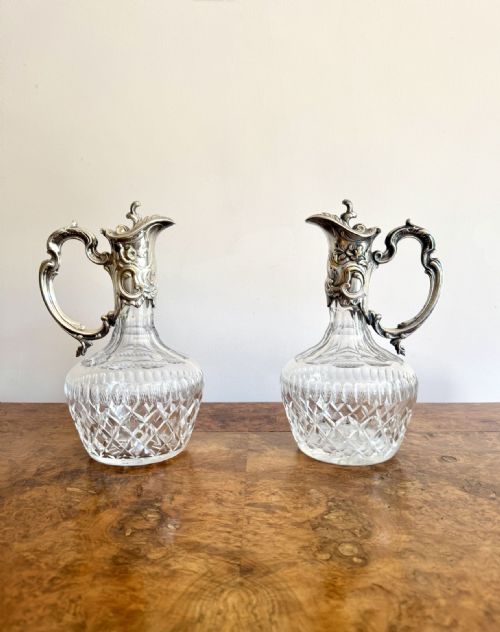

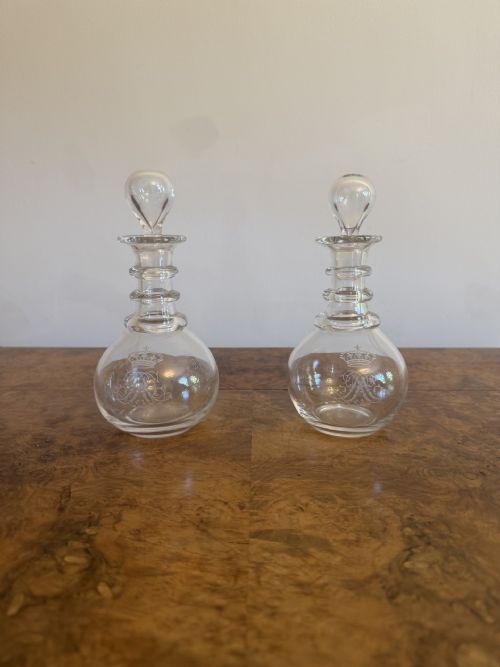
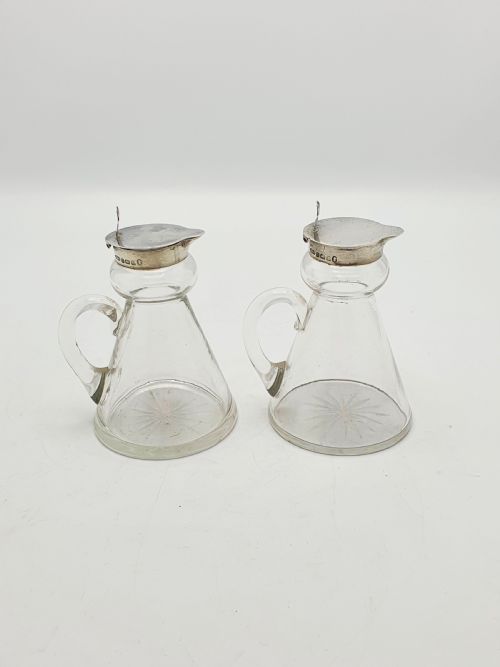
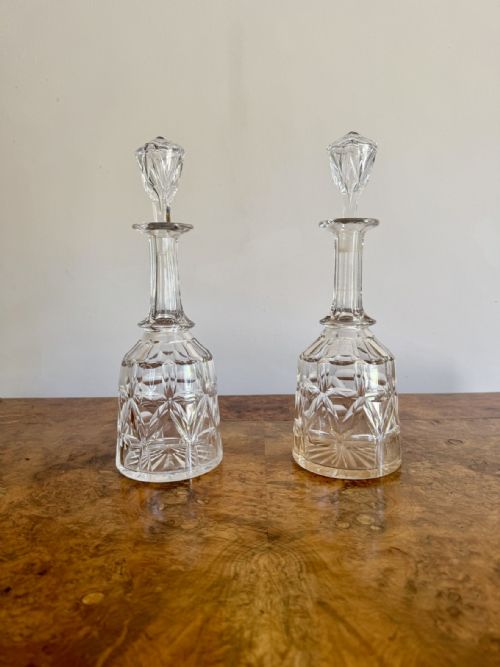

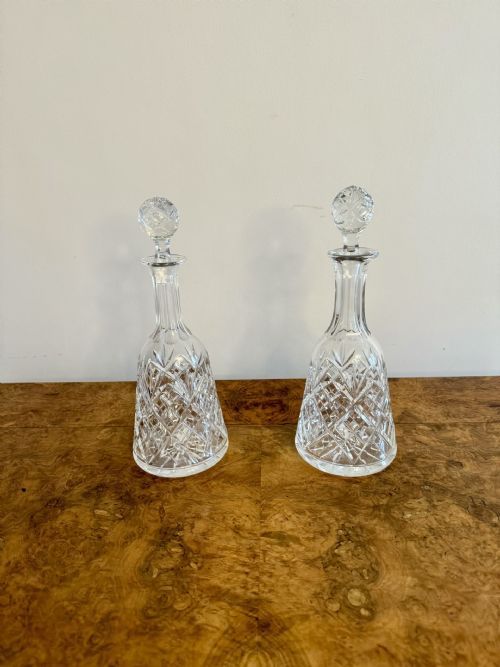


Edwardian Glass Decanters Pair
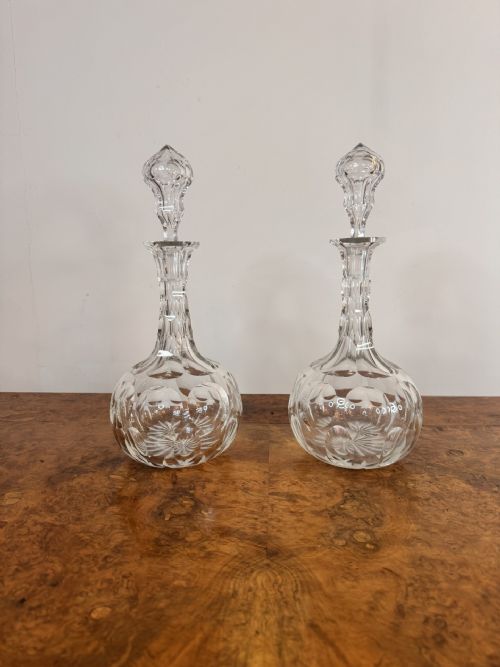
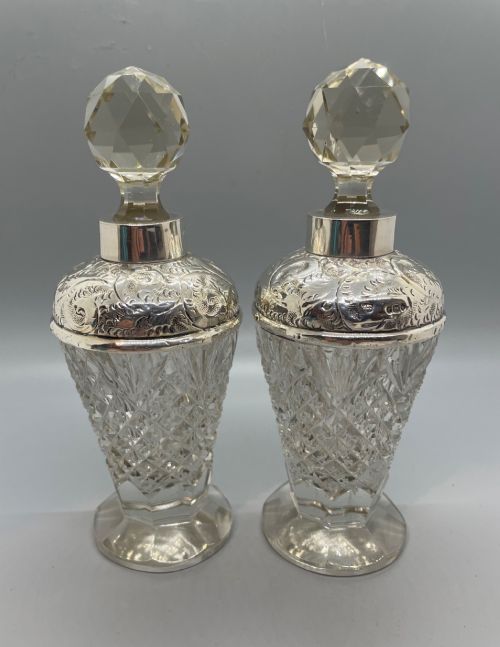
Edwardian glass decanters pair items bring matched symmetry to a sideboard, combining heavy lead crystal with bright silver mounts for formal service.
Edwardian Glass Decanters Pair
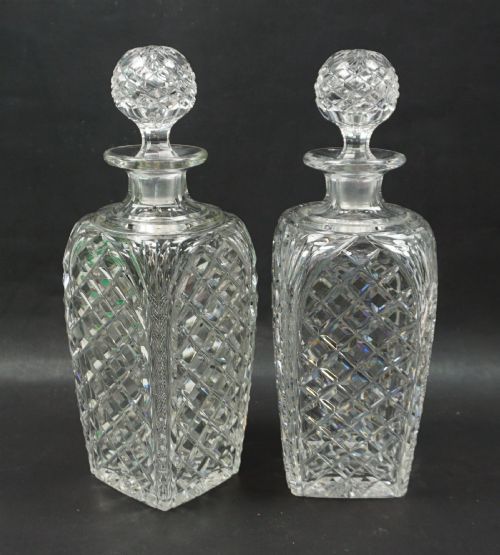
When you search for an edwardian glass decanters pair, you encounter matched vessels designed for serving spirits, wine, and liqueurs during the early twentieth century. The selection spans straightforward square section spirit bottles alongside bell-shaped forms, all produced to sit together on the dining table or drinks tray.
The dominant style on this page dates firmly from the Edwardian period and the surrounding decades of 1900 to 1910, though examples stretch from Victorian production to later George V items. Alongside standard decanters, related drinking vessels like whisky noggins and perfume bottles appear in matched sets.
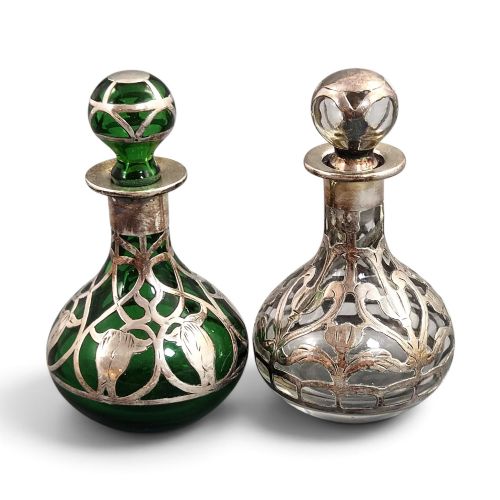
Makers utilised clear crystal and coloured glass, often pairing the blown vessels with sterling silver collars, stoppers, and overlay decoration. English production dominates the offerings, supplemented by continental European pieces featuring pewter and silver mounts.
Materials and methods
Glassmakers formed these vessels using lead crystal and standard glass, shaping them through blowing techniques including optical blowing and hand-moulding into square or bell profiles. Cut glass decoration required skilled wheel-cutting to carve geometric patterns across the heavy body.
Metalwork mounts, collars, and stoppers utilise sterling silver, silver plate, and pewter, often bearing hallmarks that date the metal components precisely. Silver overlay and pierced metal collars were applied directly to the glass necks and bodies.
Edwardian Glass Decanters Pair Retail Price Guide 2026
Typical asking prices for edwardian glass decanters pair among the pieces listed under this phrase on Sellingantiques today, from the lower quarter to the upper quarter. They describe what is for sale here now, not the wider market.
Materials recorded across the inventory include lead crystal, green glass, ruby glass, sterling silver, silver plate, and pewter.
Standards of execution
The distinction between ordinary and superior pieces rests on the weight and clarity of the crystal, alongside the crispness of the wheel-cut facets. Deep, sharp cutting catches the light significantly better than shallow or pressed imitation patterns.
Mounts contribute heavily to the overall standard, with substantial sterling silver collars and original matching stoppers elevating a pair far above examples with plated replacements or missing components.
Gorham·James Powell·Hukin & Heath·Mappin & Webb
The Edwardian Glass Decanters Pair Glossary
- Decanter
- A vessel designed for holding and serving wine or spirits, typically fitted with a ground glass stopper. These items often feature heavy bases to prevent tipping.
- Whisky noggin
- A small personal spirit decanter or jug, usually holding a single serving and often fitted with a sterling silver rim and a small handle.
- Cut glass
- Glass decorated by holding it against a rotating abrasive wheel to cut geometric patterns into the surface. The process leaves sharp, clean facets.
- Sterling silver mount
- A collar, neck band, or cap made from silver of standard fineness, fitted to the glass neck to strengthen the top and hold the stopper.
- Optical blown
- A glassblowing technique where molten metal is inflated inside a ribbed mould to create faint internal fluting or patterns within the walls.
Edwardian Glass Decanters Pair: Frequently Asked Questions
How do I clean antique glass decanters?
Wash the interior carefully with warm water and specialised cleaning beads, avoiding sudden temperature changes that can crack old crystal.
Dry the pieces thoroughly and store them with the stoppers resting loosely to permit air circulation.
Are the stoppers original to the decanters?
Original stoppers generally share the same cut pattern, tint, and degree of wear as the decanter body itself. A numbered grinding mark on both the neck and the stopper base often confirms they were ground together.
Replacements may fit loosely or display mismatched glass clarity under bright light.
What is the difference between crystal and glass?
Lead crystal contains a percentage of lead oxide that increases the weight, refractive index, and ringing sound of the material compared to standard soda-lime glass.
This heavier composition allowed Victorian and Edwardian glassmakers to cut deeper, sharper facets without compromising the structural integrity of the vessel.
How were whisky noggins used?
Whisky noggins served as miniature individual decanters placed on a tray for a single guest during the Edwardian period.
They allowed diners to pour their own measure of spirit at the table without relying on a large central decanter.