

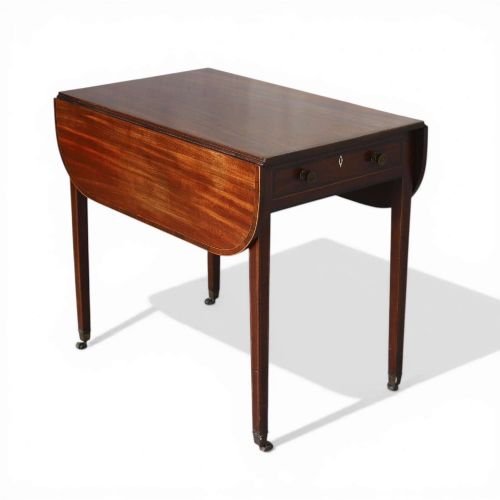
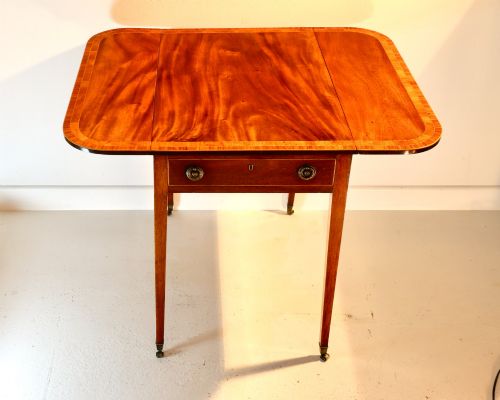


Crossbanded Occasional Table
A crossbanded occasional table brings figured timber and contrasting borders together in a compact form designed for daily use.
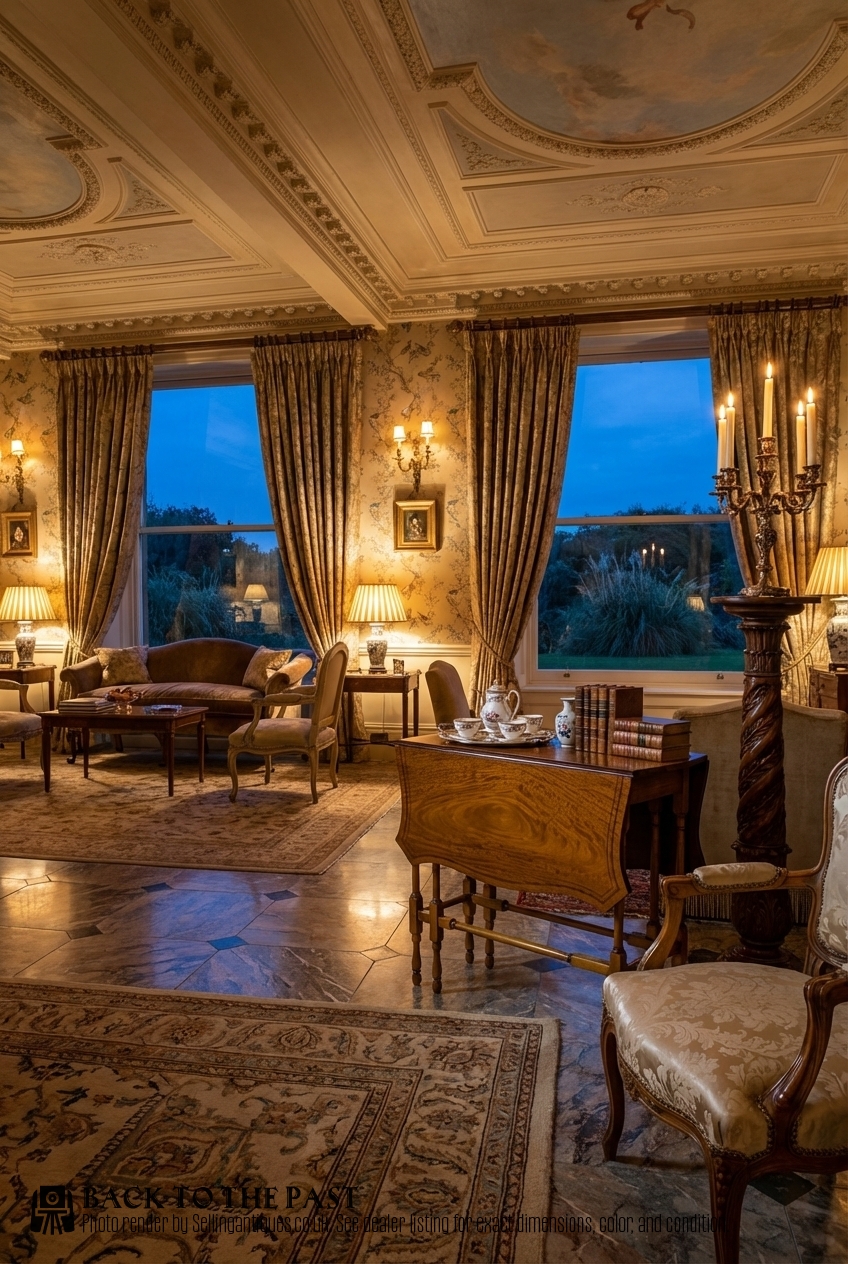
Crossbanded Occasional Table
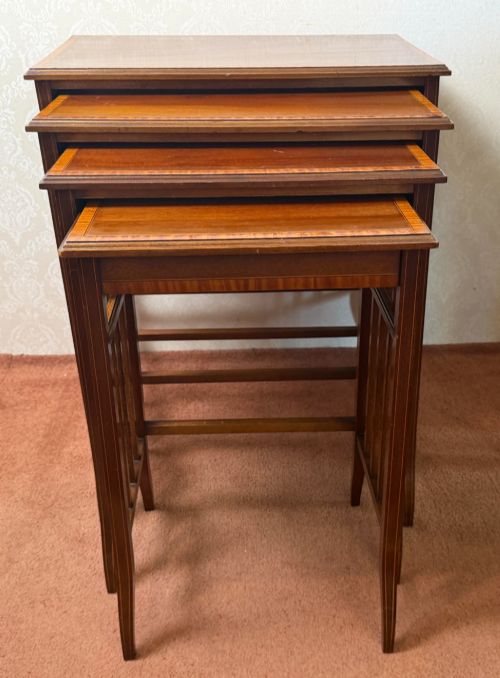
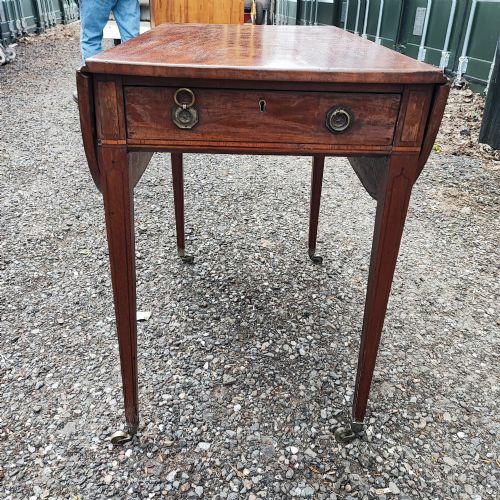
A crossbanded occasional table is a small, movable piece of furniture designed for specific tasks around a room, such as holding a lamp, drinks, or books. When looking for a crossbanded occasional table, you will encounter diverse forms including pembroke tables with drop leaves, nesting quartetto sets, and sofa tables.
The selections span several distinct historical eras, with pieces originating from the eighteenth century, the regency period, the victorian era, and the edwardian period. These tables frequently appear in mahogany, satinwood, and rosewood, often enhanced by distinctive decorative borders.
How they were made
Cabinetmakers constructed these tables using a hardwood base, such as mahogany, walnut, or oak, onto which thin layers of decorative timber veneer were applied. The characteristic crossbanding involves laying narrow strips of veneer so that the grain runs at right angles to the main surface, often framed by fine contrasting stringing lines in boxwood.
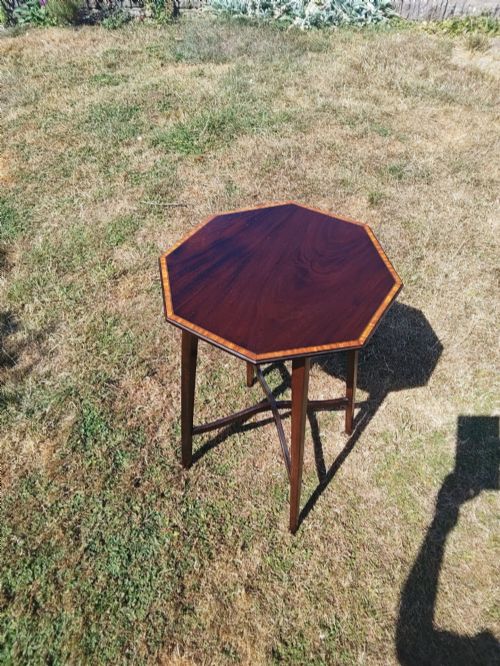
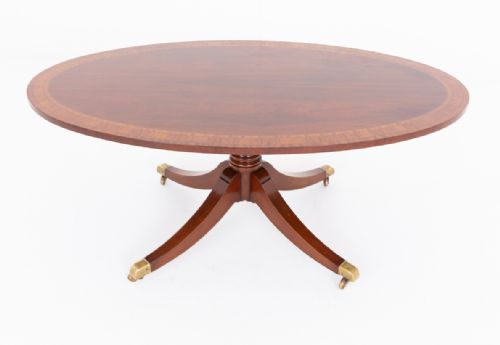
Surfaces were shaped into rectangular, oval, circular, or octagonal forms, sometimes supported by square tapered legs, pillar pedestals, or brass frames. Drop leaves on pembroke and sofa tables relied on hinged rule joints, whilst multi-tiered tables incorporated turned columns or tiers fixed securely within the frame.
Materials appearing across the inventory include mahogany, satinwood, rosewood, walnut, birchwood, and brass framing.
What varies in quality
The distinction between standard and superior examples lies in the selection of the timber figures, such as highly figured flame mahogany, rich rosewood, or finely patterned satinwood. Cabinetmakers who achieved seamless mitred corners in their crossbanding and delicate, precise inlay demonstrated a higher level of workshop skill.
Proportion and structural integrity separate simpler utility pieces from finer drawing-room furniture. Tables featuring substantial brass fittings, well-balanced underframes, and harmonious secondary timbers command greater appreciation for their craftsmanship.
James Mein·Willmington and Cope
The Crossbanded Occasional Table Glossary
- Crossbanding
- A border veneer applied to the edge of a table top where the grain runs perpendicular to the main panel.
- Pembroke table
- A small occasional table featuring two hinged drop leaves on opposing sides, introduced during the eighteenth century.
- Quartetto tables
- A nested set of four graduated tables designed to slide one beneath another when not in use.
- Satinwood
- A pale, lustrous yellow timber from tropical trees, frequently used for contrasting veneers and inlay work.
- Stringing
- Thin, narrow lines of inlay used to outline table tops, drawer fronts, and borders.
Crossbanded Occasional Table: Frequently Asked Questions
What is a crossbanded occasional table used for?
These versatile tables served multiple purposes in period drawing rooms and parlours, functioning as lamp stands, wine tables, or small writing surfaces.
Drop-leaf versions like pembroke tables could be extended when needed and tucked against a wall to save space.
How do I identify a georgian table?
Georgian pieces typically display proportion and restraint, utilising solid mahogany or carefully chosen veneers with minimal, high-quality inlay.
Look for hand-cut dovetails in the drawer construction and traditional timber movement accommodated within the frame.
What is the difference between a sofa table and a pembroke table?
A sofa table is traditionally a long, rectangular piece designed to stand behind a sofa, featuring two drop leaves on the shorter ends.
Pembroke tables are generally more compact with drop leaves on the longer sides, originally intended for light dining or writing.
Where should I place an occasional table in a room?
Because these pieces are compact and finished on all sides in better examples, they sit comfortably beside armchairs, sofas, or empty corners.
Nested tables can be separated across a room to hold drinks and scattered items when entertaining guests.