
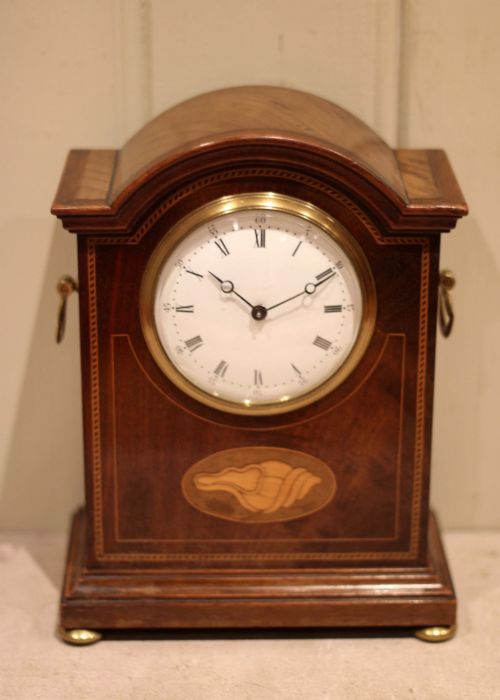
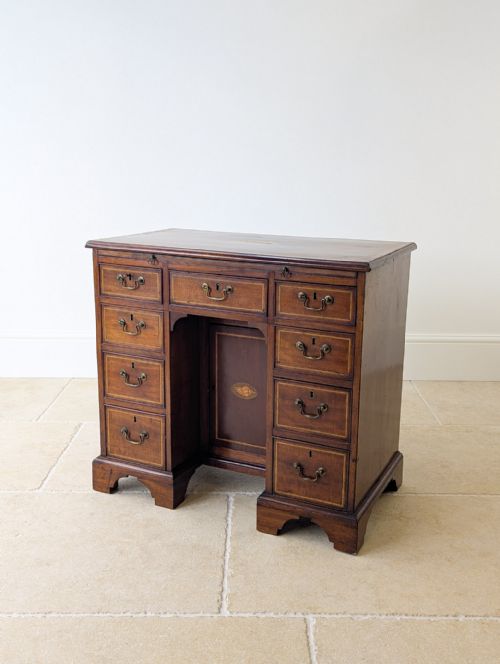
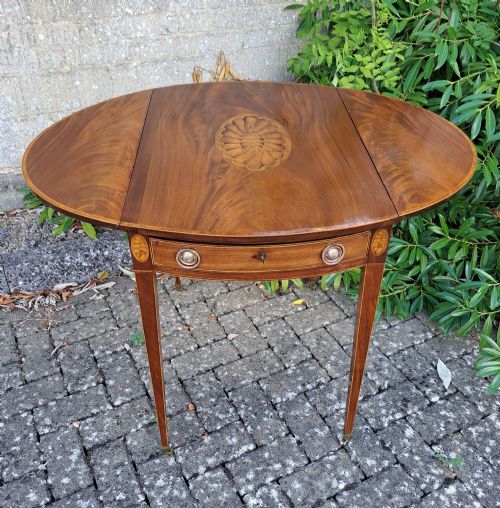


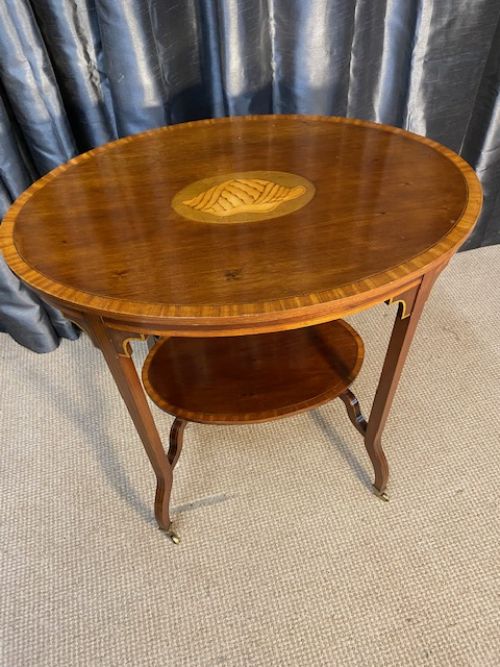


Shell Inlay Table
These shell inlay table pieces bring genuine craft into a room, offering warm timber surfaces alongside delicate shell detail.
Shell Inlay Table
When you search for a shell inlay table, you are looking at occasional tables, work tables, and serving trays that incorporate mother-of-pearl or nacre alongside timber work. The listings here encompass pieces from the Georgian period through to Edwardian Sheraton Revival examples, spanning mahogany and satinwood. You will most commonly encounter Edwardian occasional and centre tables featuring lighter wood stringing or panel work.
Earlier Georgian examples demonstrate rigorous proportions, while Edwardian pieces often revive Sheraton forms with lighter construction. Occasional tables and work tables dominate the forms, frequently utilising mahogany as the primary timber. Each piece reflects the prevailing taste of its decade, from the restraint of the late eighteenth century to the lighter decorative mood of nineteen hundred.
How they were made
Cabinetmakers constructed these pieces primarily in solid mahogany and satinwood, applying marquetry inlay and boxwood stringing to create decorative borders. Artisans cut thin sections of nacre shell to fit precisely into channelled recesses within the timber surface. The shell elements contrast sharply against darker woods, secured with traditional animal glues.
Workshops utilised brass fittings for handles and hinges on related forms, while French polishing brought out the grain in the mahogany. Surface decoration relied on meticulous hand-cutting rather than mechanical production, ensuring each inlay sits flush with the surrounding timber.
One past piece featured Syrian carved hardwood with nacre-shell inlay, proving that intricate shell work travels far beyond standard European tables.
What varies in quality
The standard of a shell inlay table rests upon the precision of the timber joints and the crispness of the inlay work. Finer pieces display tight, seamless joins where the shell meets the wood, without excessive filler or widening gaps. The depth of colour in the mahogany and the complexity of the satinwood borders further separate standard domestic items from superior examples.
Proportion and balance dictate the aesthetic success of the piece, particularly in revival styles where excessive ornamentation can overwhelm the structure. Superior examples maintain structural integrity in the legs and frame while preserving the delicate integrity of the shell motifs.
The Shell Inlay Table Glossary
- Marquetry Inlay
- A decorative technique where thin pieces of wood, shell, or brass are fitted into a veneer to form a picture or pattern. It creates ornamental surfaces on table tops and trays.
- Satinwood
- A durable timber with a characteristic golden-yellow sheen used extensively for stringing and banding in fine cabinetmaking. It provides a bright contrast against darker woods like mahogany.
- Boxwood
- A dense, pale wood traditionally used for fine stringing lines and delicate inlays. Its uniform grain allows for precise cutting.
- Edwardian Sheraton Revival
- A late nineteenth and early twentieth-century style imitating the lighter furniture designs of the eighteenth century. These pieces often incorporate delicate inlay work upon mahogany foundations.
- Nacre
- The iridescent inner layer of mollusc shells, commonly known as mother-of-pearl. It provides the reflective white or tinted material used for shell inlay.
Shell Inlay Table: Frequently Asked Questions
Are these tables suitable for daily use?
Most occasional and work tables function well in modern interiors for light display or as bedside surfaces. Care should be taken with liquids and hot items near the polished timber and shell.
Regular polishing with appropriate wax preserves the finish without harming the delicate shell inlay.
What is the difference between Georgian and Edwardian examples?
Georgian pieces generally display heavier timber framing and restrained, structural inlay work from the eighteenth century. Edwardian items tend to feature lighter proportions and brighter satinwood contrasts.
Revival pieces from the early twentieth century often copy earlier Sheraton designs while utilising contemporary workshop practices.
How should I clean a shell inlay surface?
Dust gently with a dry, soft cloth to prevent scratching the polished mahogany or satinwood finish. Avoid chemical sprays that can degrade the adhesive holding the shell inlay.
Apply a quality beeswax sparingly when the timber appears dry, buffing it to a soft sheen.